New report: Five gaps are holding back better obesity care in Canada. Learn more

Home • Scale Up Your Practice podcast • Multidisciplinary care in obesity management: Dr. Rishi Handa & Khalid Bhatti



🎙️ This episode is sponsored. Obesity Canada received an unrestricted educational grant from Eli Lilly Canada to produce this episode.
Multidisciplinary care can transform obesity management for patients — but what does it actually look like in practice?
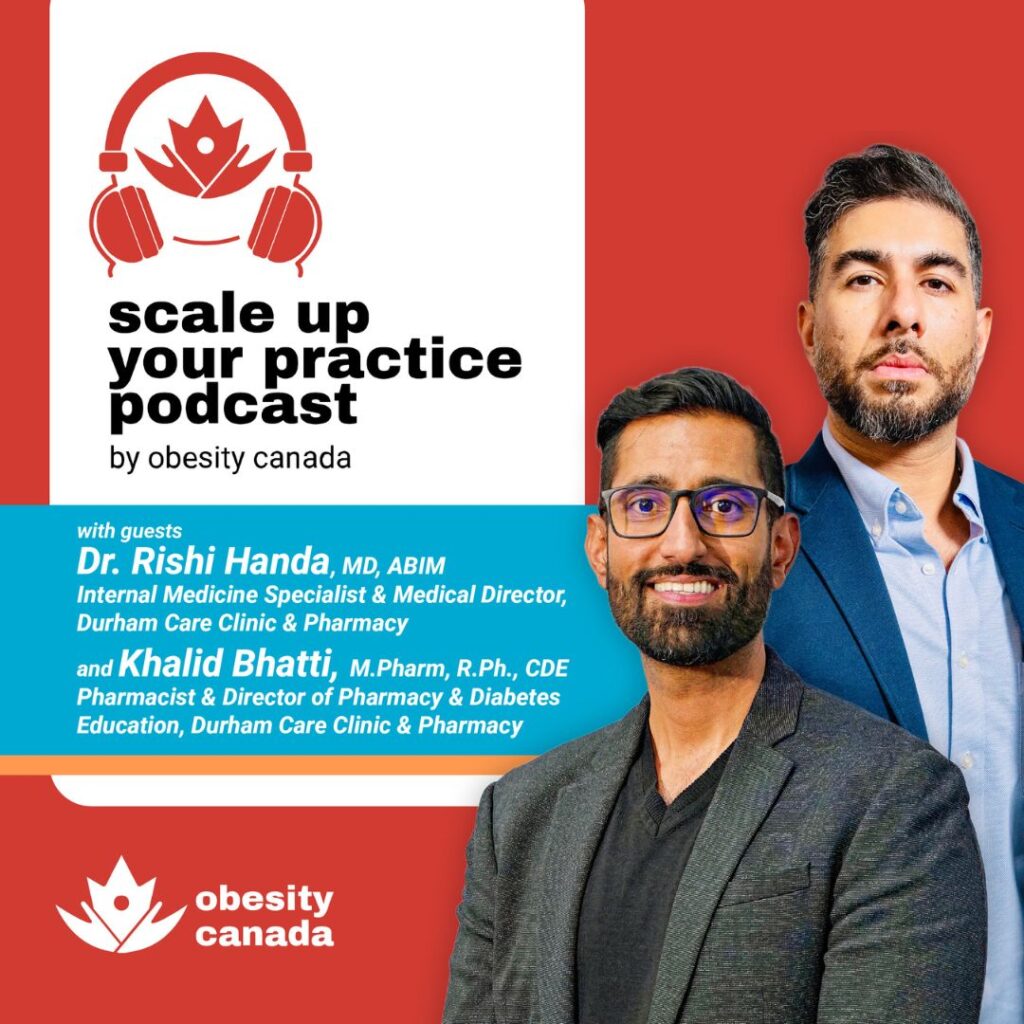
In this episode of Scale Up Your Practice, we sit down with Dr. Rishi Handa, internal medicine specialist, and pharmacist Khalid Bhatti, co-founders of Durham Care Clinic + Pharmacy in Oshawa, Ontario, a collaborative care model bringing physicians, pharmacists, and allied health professionals together to support patients living with obesity and related chronic diseases.
From shared decision-making to the use of the Canadian Adult Obesity Clinical Practice Guidelines, this conversation explores how teamwork can improve outcomes, reduce bias, and make obesity care more connected, compassionate, and effective.
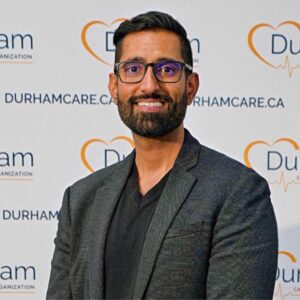
Dr. Rishi Handa is an internal medicine specialist and Medical Director at Durham Care Clinic + Pharmacy. He also leads the Durham Care Diabetes Education Program and Handa Medicine Research, focusing on diabetes care, weight management, and cardiology.
Dr. Handa trained in New Jersey, where he served as Chief Resident and Cardiac Rehab Supervisor, before bringing his expertise to Oshawa, Ontario. He is a Collaborating Physician at multiple diabetes education centers and a Principal Investigator at Centricity Research, leading studies on cardio-metabolic disorders.

Khalid Bhatti is a pharmacist, Certified Diabetes Educator, and advocate for improving care for people living with diabetes and obesity. As Director of Pharmacy and Director of Education at Durham Care Clinic + Pharmacy, he focuses on patient-centered care, medication optimization, and education.
A nationally recognized speaker, Khalid is committed to bridging gaps in healthcare and empowering patients through knowledge and innovation.
Obesity Canada’s flagship scientific congress returns March 25–29, 2026, in Montréal, Québec. It’s five days of learning, collaboration, and community—all centred on the theme:
“Obesity Across the Lifespan: Connecting Research to Real-World Care.”
✨ Early bird registration is open until November 30, 2025.
Learn more and register here
✅ Share this episode with a colleague or your care team
✅ Subscribe on your favourite podcast platform
✅ Leave a review to help more listeners discover the show
Thanks for listening — and stay with us as we continue to scale up your practice.
– Welcome back to “Scale Up Your Practice,” the podcast from Obesity Canada. I’m Dr. Roshan Abraham, a family physician and associate professor at the University of Alberta.
– And I’m Michelle McMillan, a lived experience advocate with Obesity Canada. This podcast is where we bring together research, clinical expertise, and lived experience to explore how obesity care can be more compassionate and evidence-based.
– Today’s episode is supported by an unrestricted educational grant from Eli Lilly Canada. Many clinicians are helping patients manage obesity within solo practices, but in our conversation today, we’re exploring a different approach. One built on collaboration. We’ll be talking with the co-owners of the Durham Care Clinic & Pharmacy in Ontario, a multidisciplinary team bringing together diverse expertise under one roof. Our guests today are two people who live this every day. Dr. Rishi Handa, an internal medicine specialist and pharmacist Khalid Bhatti.
– We’ll talk about how their team approaches adult obesity and chronic disease management, the role of pharmacists and other allied health professionals, what it takes to make a multidisciplinary care team in practice, and the positive effects it’s had for patients and the healthcare professionals alike.
– Dr. Handa, Khalid, welcome to the show.
– Thank you for having us.
– Thanks very much for having us.
– Awesome. So before we dive into the clinical side, let’s actually start with how Durham Care Clinic and Pharmacy came to be. What led you to create this model and what gaps in care were you trying to address?
– So Durham Care Clinic & Pharmacy, I think started during the pandemic. Both Khalid and I had very different starts to our careers. I practiced in a different few different settings. Primarily I was doing ICU in hospital care and I also had private practice as well. So, you know, the lens that I brought in was I’m seeing a lot of patients in the beginning stages of their diseases, but you know, unfortunately I was seeing them in an ICU setting as well. So, you know, that really helped me see how my private practice outside of the hospital was quite different from what we see in the hospital. And there’s many different steps in between. And during the pandemic we were all, I guess, sort of forced to change the way we practiced a bit and a year and a half into COVID what we had decided was we want to see how we can improve patient care. And from an ICU perspective, I wanted to keep patients out of the ICU and have chronic diseases get to that point. And Khalid had some similar thoughts at that time and I’ll leave it to Khalid where he basically had that deciding factor. But I brought the medicine part of my expertise into the mix and Khalid brought his pharmacotherapy aspect in and education background in to help get patients best care possible.
– So you’ve kind of mentioned that the primary thought and obviously the challenge of working within the pandemic was to keep people out of the ICU. So I’m curious how you thought bringing different disciplines together under one roof would kind of move the needle towards that goal?
– So, you know, one of the things even before before the pandemic, what we found was there was a lot of scattered care being delivered to patients. My private practice was basically east, sort of the east end, east of Toronto. I would say about, you know, one of my offices was about an hour away from Toronto. The other one was about 30 minutes away from Toronto. But there was a very big difference as to what the specialists were like, what was available to patients. We unfortunately had, and we still have an issue with primary care, as does the rest of Canada, but patients found it very difficult to get the care they needed. So both Khalid and I decided that we would try to build a practice where not only our patients’ family practice needs met, but they would have access to specialist care, they would have access to educators and various different types of specialists, you know, pharmacy, also have access to medication navigators or benefits coordinators because that’s another big part of what we do. So we first sort of started that off as a diabetes education program with a multi disciplinary approach. And then we expanded it to our obesity care program as well, which we now have as well. And what we found was going from a scattered approach to a more patient-centric approach, patients were getting the care they needed much quicker. And all the providers that, you know, patients could have had were all speaking to each other and had similar goals for the patient. And that really made a big difference for a lot of our patients.
– So Khalid, when you were starting out, was there any experiences that made you think we need a more connected approach to care?
– Yes, for sure. When we started out the model was to bring a better experience for patients. And having gone through with family members and experiencing what some of the hurdles are like in the healthcare system, we thought, you know, there’s definitely ways to do this better and make the navigation easier for patients. So that was kind of some of the initial inspirations behind what we wanted to do.
– Yeah, I mean, as a patient who has experienced both as I would call, do it yourself healthcare, where you gotta put everything together yourself and then having the experiences working as a team and the differences that it made in my care, I can entirely appreciate it. But I’d like to hear from both of you, once you began working as an integrated team team, what differences did you start to notice with your patients?
– I was just going to say, I think, you know, one thing that we saw was less stress on the part of the patients from that do it yourself side. But then we also start to see markers improve. As Rishi said, you know, we started primarily in the diabetes space and so we would notice A1C, blood pressure, cholesterol, a lot of things that the physicians would look for starting to come down much faster than we would’ve seen previously when we had scattered care for those patients.
– As a primary care provider, that’s music to my ears. I am actually very excited to hear a little bit about what that actually looks like in practice, especially on a day-to-day basis. So how does that multidisciplinary approach unfold day-to-day? And maybe we’ll get Rishi to comment on that.
– Yeah, sure. So I mean, with a multidisciplinary approach, patients do get the opportunity to have multiple providers to speak with them. I think what Khalid was mentioning was, you know, improvements in parameters. And a lot of that’s due to the fact that when a patient’s able to talk to an educator about their diet or a certified diabetes educator about medication, titration, they don’t end up having to wait multiple weeks before the MD comes in and is able to guide them, right? So for example, if one of our patients has just seen me, you know, I’ve done my best to explain the next steps. We’ve come up with a plan that we’re both agreeable to, but the patient might not com completely feel comfortable maybe asking me some questions or there may be some hesitation that the patient might not be able to express to me. But then with one of our certified diabetes educators or one of our dieticians, they might be able to pop that question and feel a little bit more empowered and have a little bit more guidance rather than wait, six to eight weeks later when there’s a call with myself and we really structure it according to what an individual patient needs. So maybe I’ll take the opportunity to sort of mention what our multidisciplinary team includes. So at the center of this team, I would like to say is the patient, so the patient is empowered and it’s explained to the patient that we want them to feel comfortable, to feel like they’re in control and they fully understand the complete picture. So we have various different educators, whether it’s a cognitive behavioral therapist, whether it’s a dietician, a registered dietician, whether it’s an exercise coach. Obviously I’m speaking primarily in terms of obesity care. Then we have a navigator, a prescription navigator or a benefits coordinator as well that’s a part of that puzzle. We have a pharmacist that’s in that mix as well. And then of course there’s either a nurse practitioner or a physician that’s a part of that team. So there’s really multiple levels of care and touch points that the patient has access to.
– That’s honestly incredible. And I think Michelle and I are kind of speechless and I work in an academic setting at the University of Alberta. And so I mean, I hope we get to explore a bit of how you’re able to do this because that’s always the impediment for us, even in academia, yes, funding ends up being less of an issue, but getting the right people is always a bit challenging. Just from the patient perspective, because we do want to talk about that. What does that first visit look like? Because I am actually curious, like who do they meet on that first visit?
– The first visit will always be with a physician. So for example, if I’m seeing a patient, the first touch point would be with myself let’s say. I am completely responsible to get all background information to understand that patient’s journey thus far. Different clinics have it structured differently. I actually prefer asking even allergy information and medications and I find that, you know, anything that if I do it myself or if a physician does it themselves, they do truly get to understand a lot better. And that first appointment, I really try to understand what the patient’s goals are and make sure they understand why they’ve been connected with me because a lot of the times a patient might not be fully aware of why they’ve been sent to a specialist, right? So I do make it a point to discuss a general overview of what we are trying to accomplish here. And then the next touchpoint will be with my staff so that that patient will then get scheduled with follow-up appointments, blood work requisitions, but then they get the opportunity to have further appointments with other educators. We don’t force appointments to our patients. So for example, some of our patients are healthcare providers themselves. And they don’t always feel the need to talk to someone about their exercise regimen or diet and that’s completely fine. So all those appointments are made and then I do structure an appointment depending on what I’m seeing the patient for anywhere from four to six weeks out and then take it from there.
– Wow. I just have to say I love the fact that you make it very patient centric because, you know, it sounds like there’s some power within the patient too. No, I don’t really feel like I need to see the exercise specialist, you know, and I love that. But you know, it is of course a collaboration. So I’m curious how you decide who goes where and how you coordinate that with the patient. And in cases where the patient may not see the need for something, but you as a professional might see that need. I mean, it’s a very tricky thing and I’d be curious just to see how you’d navigate that.
– I mean, part of it’s just a simple like discussion with them. I first start off by explaining to the patient that although I have expertise in medicine and how, you know, different medical problems take place in the body and maybe some treatment recommendations. I’m not a registered dietician nor do I know how to exercise. And I think, you know, putting it in that, explaining to the patient that even the physician or someone that they’re coming to for medical advice isn’t completely comfortable with talking about these things, right? So it allows them to, I think it does allow them a little bit of a, I think they feel a little bit more comfortable having that conversation with somebody, right? And I know that I personally wouldn’t do justice explaining what an ideal nutrition outline would be to the patient or how to work out. I can give general ideas to the patient, but I think when it comes to getting meaningful results, having a structured care plan and avoiding a lot of just generalized recommendations is better, it’s best for the patient. So to answer your question, I think just trying to get a feel of their comfort level and then just making suggestions and seeing how they go about it.
– Really love that. And it sounds like there’s a comprehensive patient-centered approach, again, in line with the adult obesity clinical practice guidelines, which were released around the time that you likely started the clinic. How have these guidelines actually shaped how your team delivers and communicates care? And I’d love to hear Khalid’s perspective as well on that, whether or not you’ve reviewed the guidelines and what sort of impact they’ve potentially had on the clinic.
– Yes, absolutely. So the short answer is yes, definitely. They have kind of guided that, you know, even in traveling to ADA, a lot of kind of consensus guidelines around the world are now, you know, obesity management needs a team approach. And the way we always like to talk about it is that an endocrinologist or a diabetes specialist would never treat diabetes without a team, right? You have huge diabetes education centers that are in place to treat diabetes. And so that same model needs to be applied to obesity management. And that’s kind of the summation of our model I think.
– I love the patient-centric approach and I’d be curious when you’re helping your patients manage obesity along with, you know, there’s lots of comorbid disorders and chronic conditions that go alongside may or may not be directly connected such as diabetes and hypertension. I’d be curious how do the clinical practice guidelines around obesity kind of structure your care for people who are dealing with multiple issues, with multiple guidelines? You know, how do you weave that very tricky path of dealing with all those conditions?
– I think it’s a combination of working with the patient and working with everybody in the team. We have regular meetings with all of the physicians, the educators, the pharmacy team, and we’re always kind of keeping up to date with our CMEs. Whenever new guidelines come out, we share them amongst the clinic. So we try to keep on top of those things. And I think it comes down to a collaborative effort between the provider and the patient figuring out what might be the most pressing thing for the patient if they come in with goals, you know, maybe they want to get their blood pressure down or they want to get their diabetes better under control, but obesity is also something that they want to work on. So it really changes patient to patient. But we try to incorporate all of the guidelines together in looking at what’s the priority for each patient.
– Rishi, did you wanted to add anything to that about how the clinical practice guidelines are potentially being applied in your practice or how you can help patients and guide them through these decisions?
– Yeah, sure. So in our practice, in my particular office actually we do have a poster that we use commonly to show to patients, you know, the various different medications in this instance it’s all the diabetes medications that are available. So I call it the menu. And the purpose of explaining that to the patients is to show them that there’s just so many different options. And in our practice we do try to touch upon all the obesity and diabetes related comorbidities, whether it’s blood pressure, cholesterol, MASH, MACLD, whatever the case may be. We do have a medical expert in-house that can help navigate all those things, chronic kidney disease. It’s a matter of like Khalid had mentioned what the patient is is open to talking about at the moment. Our patients have a list, a checklist if you would, you know, of what they want to discuss with the physician. But you know, the physician also has to go through certain things to make sure their risk of developing further complications can be reduced. So I think that one of the things that we aim to do in our practice is not have a tunnel vision and just focus on one medical problem, but sort of structure it as much as we can and have various different appointments. Not necessarily with, for example myself, but I might have a colleague that will focus on liver health with the patient. I might have another colleague that might focus on lipids. And that way things can be more organized and whatever length of the appointment that there is, we can focus and accomplish something. Otherwise, what ends up happening is there’s just too many things, nothing really gets done. And then the patient feels that they’re just left with this long prescription of medications that they have to go on. Yeah, I really appreciate you breaking it. As a patient, someone who, as I often say, I didn’t go to med school, never taken an anatomy class, dunno, never, don’t know a lot about a lot. So yeah, breaking it into smaller pieces ’cause I think a lot of patients can feel like you go to appointment and you just feel like you get all this information and you’re like, okay, I only remember like 10 minutes of this. So I really love that you’re breaking it down into pieces that the patients can actually take in and take away with them. That is so amazing. I love that.
– So offline, we were talking a little bit and we didn’t include this in the script, but we thought it’d be actually pretty important to talk about maybe some of the more granular details about your team. Rishi, could you tell us a little bit more about how your team came to be and how it’s been going so far?
– Yeah, and thank you Roshan for the question. I I want to start off by saying that when Durham Care was first started, this was started years and years ago, and it wasn’t this big team that it is now. It was a single provider, you know, my wife was a part of the team and we had a medical admin that was there and we really, truly had to grow it slowly, we added more and more team members, educators, physicians to the team. And for all of all of those providers and healthcare providers out there that are looking to do something like this, it’s not going to happen overnight, right? It takes time and resources are obviously tight, right? So one of the ways that we’ve managed to build this is by keeping, obviously keeping the patient at the center of the model is super key. We wanted the patients that come to Durham Care to feel supported and have as many resources as possible. So we have tons of videos for patients that are available on YouTube. We also have a social media presence on Good Self, which is a free health care app that’s available for patients as well. You know, one of the things that really affected me as a provider and might affect many listening is having tools in our arsenal like medications but patients having difficulty affording them. This was one of the biggest issues that I faced, like morally. I was like, how can I have something available and know that something would really help a patient but not be able to give it to my patient and they may not be able to afford it. So part of the reason why we got into clinical trials was to make available all various different cutting edge medications, technologies that we know would benefit patients. So having patients seen throughout our practice, we give them the education that’s needed as much as we can, but when it comes to medications we do have a separate stream available for those patients that cannot afford medications and hopefully they can fit into one of the clinical trials and get the care they need. It’s unfortunate that it has to be done this way, but like I mentioned earlier, the system, how we practice medicine in Canada, how we reimburse needs to change. The change can’t happen soon enough. So this was a unique way that we found we could help support our patients and that’s why we ended up doing clinical trials as well.
– And I really want to highlight, so that’s incredible all on its own, but many times, and this is a real big pinch point in clinical medicine in Canada and potentially other places in the world as well. For listeners, the fee-for-service system is the system by which most physicians in Canada are reimbursed in the sense that for every patient that’s seen by a clinician, by a physician, there is a billing code and usually a diagnostic code that is attached to every single visit. And that is then sent to the provincial authority who then reimburses the physician on a, again, fee-for-service basis. Not going to get into some of the pros and cons of all the different types of compensation models, but one of the challenges with chronic disease management, as has been seen in the literature for years is the fee-for-service model because it doesn’t really incentivize the type of work that you’re doing. How have you worked around that? Because it doesn’t sound like you have any big government grants. You’re not like me who works in an academic center. All of these clinicians who are working in your group all have a singular mindset, a singular vision and goal, and you’re all fee-for-service. So I really need to highlight that because that is absolutely incredible. And I know there are other clinics doing it probably, but this is the first time we’ve heard about it on our podcast and we want other clinicians to hear that this is possible. Like, I want to hear that this is possible. So yes, we need changes to the system from a compensation standpoint, but you are showing that it is possible, and I think you had even mentioned in our conversation offline that this is even potentially helping with you to see more patients, right? So I’d love for you to expand on that.
– Yeah, I mean, at the end of the day, if we can provide good quality care for our patients, that is seen by other providers in our area. So as a specialist physician referrals come to me from GPs, nurse practitioners, and they’re only going to send us patients if they feel, if they get that feedback, it’s word of mouth. So if a patient feels supported and they feel like their health concerns are properly being addressed, they feel heard, we will end up getting more patients referred into our program. And Roshan, like you mentioned, we are fee-for-service. Yes, our overhead is different than other clinics, meaning we allocate quite a bit of our overhead to having staff that provides education to our patients. But at the same time, you know, that leaves us more time to see patients do what we do best. And that time that’s spent with the educator does save us time and allows us to see more patients as well. And let’s be honest, you know, I’m not the person to come to for dietician advice or you know, exercise advice, right? And so it would be best suited for that patient to get it from someone that has studied that aspect of medicine, that knows how to explain it and teach it. That saves us time, that provides the patient better care. And it translates to happier patients, healthier patients, and then more referrals that come into us.
– We’ll get back to our conversation in a moment, but first we want to tell you about something big coming up next year. The Canadian Obesity Summit 2026 is happening March 25th to 29th in Montreal. This is Obesity Canada’s flagship scientific congress on obesity, bringing together researchers, healthcare professionals, and policy leaders from across the country and around the world. It’s five days of learning, collaboration, and community, all centered on this year’s theme. Obesity across the lifespan, connecting research to real world care. If you’re planning to be there, now is the time to get your tickets. Early bird registration is open until November 30th, 2025. So don’t wait to secure the best pricing. Learn more and secure your spot at the link in the show notes or by scanning the QR code on screen if you’re watching on YouTube.
– I was going to ask Rishi, you know, if there was a particular patient story that stands out to you where you saw that that bias and that bias can be on both sides of the conversation, right? The patient carries their own biases, the healthcare professional carries theirs, but I was wondering if you had an example where you kind of saw that shift start to happen and maybe a light bulb moment for one of the other parties, and do you think that the teamwork that you work as a team right, helped change that? Or was it listening or is it just that you have a new approach to things which helped shift that bias? Do you have a story?
– Yeah, I mean, so I have a confession to make. So, you know, early in my career where I didn’t particularly manage and help treat obesity and diabetes a lot and we’re talking about 2016, 2017, this was actually straight out of residency, my training, and this was when I was first starting and opening up my office, and a lot of this is just looking back and realizing as a physician we don’t realize what type of bias we have, right? So something as simple as just purchasing office chairs, for example. And I still remember ordering equipment and ordering chairs and I purchased a set of I think 12 chairs for my waiting room. And I didn’t realize, you don’t realize this, but exams chairs, the way that your office is structured, if you don’t, and you can’t accommodate for everybody, that’s a bias, right? So I had patients initially, I didn’t notice this right away, but I had patients that were not comfortable sitting in the chairs with armrests and they were sitting more towards the edge because they were having difficulty feeling comfortable in the chair. So one of the things that we quickly, one of the changes that we quickly made was we need to have a variety of different chairs in our waiting room. So we ended up getting chairs where there were no arm rests. Some of them, there were, there were specific chairs that are more comfortable for individuals that are larger and they can feel more comfortable. So that was just from a practicing physician standpoint, not even realizing that this was a sort a bias that was in my own practice, right? And, you know, as I practiced more and more, got more experience, I realized I need to take a look and sort of survey my whole practice here and make sure that patients feel comfortable when they come in. So that was just one of the things personally I found.
– So I’d be interested, I’m picking your brains for advice for our listeners, you know, for clinicians who want to take a more multidisciplinary approach, but they don’t at the moment have a full team under one roof, you know, that would be ideal, but we have to deal with the real world. What would be your suggestion on where they start? You know, particularly there are many primary care physicians in smaller or rural communities who, you know, they just don’t have the access that you have. So if you could invite them one place to start, what would be the place to start?
– I think that’s a great question. And when we first started, we didn’t have a full team either. And one of the things that we did was we looked in the community, we saw what was around us, we saw what providers were in our area. And for example, at that time when we first started, we didn’t have any dieticians or certified diabetes educators that worked with us. So we sort of went out, we asked around, and there were other providers that were open to being a part of our team and sort of, we had a conversation and at the end of the day we made sure that if we weren’t able to provide that service, that we would be able to connect the patient to that service. So as our team grew, we were able to add certified diabetes educators, we were able to provide exercise coaches. Now we have someone doing CBT. So I would say you don’t have to necessarily have all these resources in your own practice right off the bat. You can expand outwards and see what’s around you, what resources are available to you, and just connect the patient and get them the resources that they need. Because a lot of it is that, you know, we may feel or we may find that the patient would benefit from this, but we can’t expect the patient to know where to go looking either, right? So giving them a little bit of guidance, even something like posting it on, if you’re a provider and you have a website, you can have these sort of vetted resources in the community and even something as simple as having some phone numbers and some emails that the patients can feel comfortable with contacting themselves, it’s a place to start. And as you have more resources that become available, of course having them in-house allows you to have a proper communication channel with all the providers as well. But you can always start off by seeing what’s around you and connecting the patients that way.
– So just to follow up on my last question a little bit, you know, for teams who are just beginning to adopt this multidisciplinary care model, what would be one practical change that they could make tomorrow that you think would make a real impact?
– I think that’s a great question. So I think if providers and clinics were looking to make one change that would make a meaningful impact on their practice, I think the time we spend with patients in understanding where they are in their journey, if we can spend more time understanding what’s been done a little bit better would make the biggest impact. And what I mean by that is, you know, in this day and age we’re very, very quick to jump to treatment options without really understanding, I don’t want to call it the root cause, but you know, what an individual patient’s journey has been like. I’ll give you an example. You know, there’s a lot of online resources or online companies that do help weight management, they’re doing great things because they have a lot of reach, but sometimes I feel like the thinking is always, well, why can’t this patient go on this particular treatment? It’s not, well, we have these different options available and all of these different options work in very different ways and could benefit the patient if we pick and choose the right treatment option. So in order to do that properly, I think we do need to communicate with our patients and understand what they’ve been going through, what they’ve tried. And only then I think that we will be able to have a successful treatment plan for our patients.
– Yeah, I love that. I mean, we started this discussion with, you know, you talking about patient-centric care, right? They’re the center of the team and now you’ve just followed it up with this and listen as a patient, I love that. It’s so good. Thank you.
– This is really inspiring, honestly, from a primary care standpoint. I’m very excited to even follow up after the podcast because I’d love to hear a little bit more about how the model works and hopefully there are more people wanting to learn about this because this, in many ways what you’re describing is what we see through the guidelines. I mean, so we use some tools here that are based off the Five A’s approach at the U of A and at some of our academic clinics because the work that Denise Campbell-Scherer does or has done around very specific in her Five A’s team has done around this. And a lot of what you describe is actually seen in that assessment where we really take a really in-depth sort of view of the patient’s story, not just their history, but their story and ensure that their values are coming through, which you’ve also highlighted earlier, but also that we’re not just sort of talking over them that as soon as we see a problem, like what we do a lot in medicine is we see a problem and we automatically reach for a solution that is within the menu that we understand it as, as opposed to what our patients see their options are, which are based off of their own story. And I think it’s really powerful to hear that that’s being done in a community setting. I mean hearing it at all is great, but hearing it being done in a community setting is again, music to my ears. So this is actually really inspiring to hear, and I’m so glad that this is being done at a community level. Looking ahead, Rishi, what do you think needs to happen at the clinic system or education level to make team-based obesity care easier to put into practice?
– Roshan, I think we really need to, you know, start from getting not only, you know, providers updated and educated about this, but also policy makers, right? Because as a provider, I know what needs to be done, right? I know that a patient needs to be guided and needs to feel comfortable and supported, just like if they have diabetes, right? So Khalid had mentioned earlier, we have a great diabetes care model that’s in place in a lot of communities, right? We have diabetes education programs, these are funded by the government, but when it comes to obesity care programs, we don’t have any, right? There’s sort of different initiatives that are being done across Canada. Durham Care is one center that’s trying their best to provide the best care possible, but a lot of different centers are trying their best, right? And a small piece of the puzzle is pharmacotherapy coverage, right? Getting patients the medications they need, they deserve, but also providing education to those patients should be covered, right? And I think it’s tough battle, but it has to be something that is done. Because in order to give the patients the best care possible, we need to give them the most support, right? And given supports from different ways. So I think that a system change needs to be done and we have Obesity Canada doing some great advocacy stuff and other organizations trying their best as well. But you know, us as providers I know are trying our best as well. But you know, unless that’s done, unless we give obesity the recognition and important it deserves, we’re not going to be able to provide high level quality care.
– I a hundred percent agree.
– So thank you both for the work that you’re doing and for showing us what’s possible when we stop working in parallel and start working together.
– As always, if you found this conversation helpful, share it with a colleague or a team member or your mom, leave us a review and don’t forget to follow or subscribe to be notified as soon as the new episode watches.
– Until next time, stay curious, stay kind, and keep scaling up your practice. This podcast is intended for informational and educational purposes only, and does not constitute advice. The content shared in this podcast should never be used as a substitute for professional medical advice, diagnosis, or treatment. Always seek the guidance of a qualified healthcare professional with any questions you may have regarding your health or a medical condition. The information and treatments discussed in this podcast are based on Canadian guidelines and approved practices as of the time of recording. If you’re listening from outside of Canada, please consult your local healthcare professional to ensure compliance with your region’s medical standards, guidelines, and recommendations. The creators of this podcast disclaim all liability for any decisions or actions taken based on the content discussed. Listening to this podcast does not establish a professional or patient client relationship.
Be the first to know about new education and resources for healthcare professionals from Obesity Canada.