New report: Five gaps are holding back better obesity care in Canada. Learn more

Home • Scale Up Your Practice podcast • Body image & mental health after bariatric surgery with Dr. Sylvain Iceta

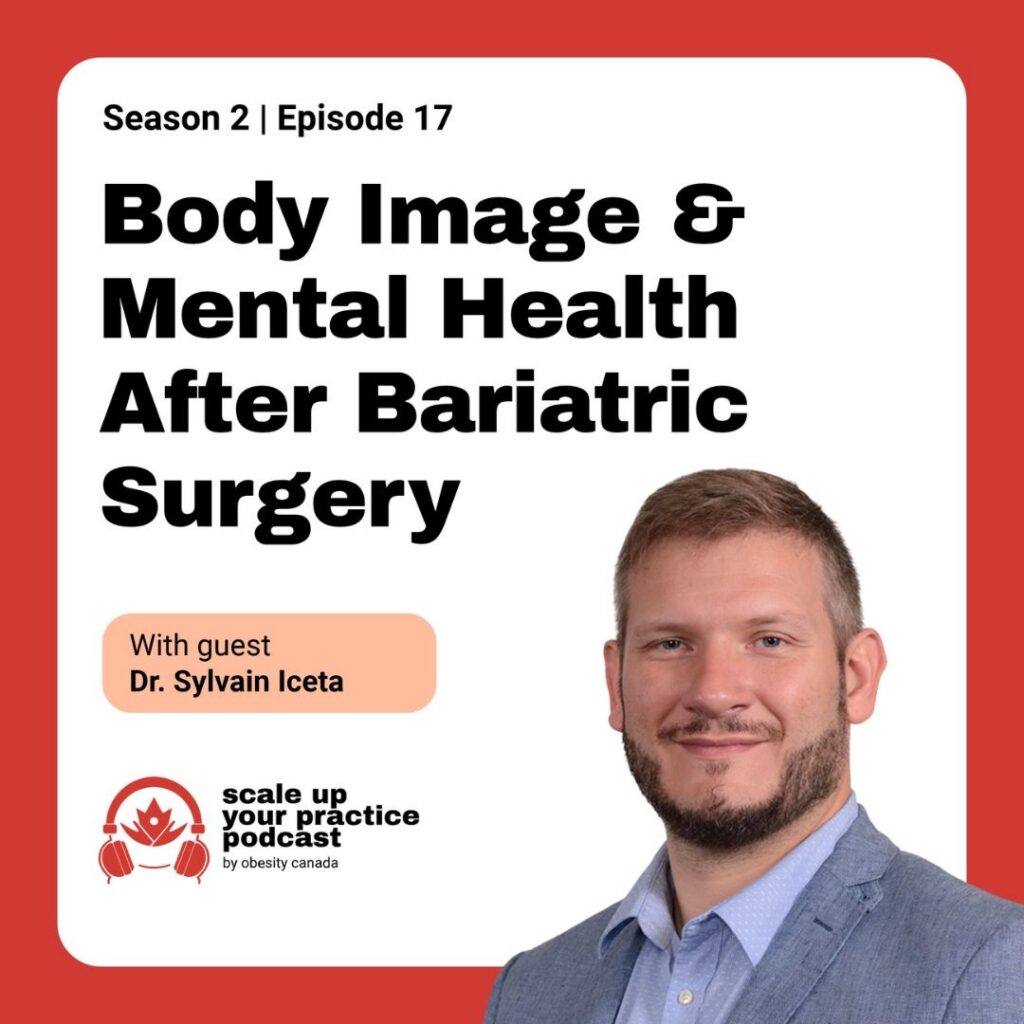


Body image after metabolic bariatric surgery can be more complicated than the number on the scale suggests.
For some patients, weight may change while expectations, self-image and years of stigma remain. That can create a difficult disconnect between what someone hoped surgery would change and how they actually feel in their body afterward.
Dr. Sylvain Iceta joins us on the podcast to explore the psychological side of life after metabolic bariatric surgery, including the concept of natural weight, realistic expectations, body image, disordered eating and the importance of ongoing mental health support.
Dr. Iceta also discusses why clinicians should look beyond weight alone when defining treatment success, and how conversations about function, quality of life, self-perception and patient goals can support more compassionate, individualized care.
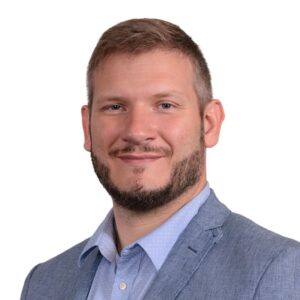
Dr. Sylvain Iceta is a psychiatrist, assistant professor in the Department of Psychiatry and Neurosciences at Université Laval, and clinician-scientist at the Institut universitaire de cardiologie et de pneumologie de Québec (IUCPQ).
His research focuses on the intersection of mental health and chronic disease, with particular interests in eating disorders, obesity, type 1 diabetes, body image, interoception and weight-related stigma. He studies how these factors can influence eating behaviours, engagement in care and experiences along complex care pathways, including while patients are waiting for metabolic bariatric surgery.
Trained in medicine and psychiatry in France, he also holds a PhD in neuroscience and cognition from Université Claude Bernard Lyon 1 and completed postdoctoral training in nutrition at Université Laval. His work brings together clinical research, patient and family partnerships, and interdisciplinary collaboration to improve care and support for people living with chronic diseases.
00:00:00:00 – 00:00:16:24
Dr. Sylvain Iceta
The number on the scale is like the number of the likes on a Facebook post. Do you really think it’s defining yourself? If the answer is yes, we’re really going through a long therapy.
00:00:16:26 – 00:00:26:24
Dr. Roshan Abraham
Hey, everyone. Welcome back to Scale Up Your Practice, brought to you by Obesity Canada. I’m Roshan Abraham, family physician and associate professor at the University of Alberta.
00:00:26:27 – 00:01:02:20
Michelle McMillan
And I’m Michelle McMillan, a lived experience advocate with Obesity Canada. Roshan, before we bring in today’s guest, I was thinking about something that comes up constantly in patient communities, and I’ve thought the same thoughts myself. When patients undergo bariatric– metabolic bariatric surgery, they often carry a silent expectation. I know I did. We look at the highly polished, curated photos on social media and think, “If I just work hard enough, I’ll get down to that normal weight.”
00:01:02:21 – 00:01:27:28
Michelle McMillan
But I know now the biological reality: even with the absolute best surgical outcomes, a patient’s body may not match the image they had in their mind. And when the scale doesn’t match the dream, oh, those old feelings of shame and failure and guilt come rushing right back in.
00:01:28:01 – 00:01:55:13
Dr. Roshan Abraham
Exactly, Michelle. As healthcare professionals, we often fail these patients by framing success after metabolic bariatric surgery as simple subtraction. How much weight was lost? How much their BMI changed? How close someone came to a specific target. In doing so, we ignore the complex neurobiology of the brain and the deep psychological shifts that happen after surgery. Today, we are talking about how to help patients move their focus from the scale to health, function, and quality of life.
00:01:55:15 – 00:02:02:24
Dr. Roshan Abraham
We’re diving into the vital role of post-surgical psychological support and a concept called natural weight.
00:02:02:27 – 00:02:24:00
Michelle McMillan
So we’re focusing today on post-surgical care and managing expectations. We want to look at how clinicians can assess the psychological health of their patients to support long-term well-being, regardless of whether mental health is your specialty.
00:02:24:02 – 00:02:41:12
Dr. Roshan Abraham
Today, we are thrilled to welcome psychiatrist and clinician scientist Dr. Sylvain Iceta. Dr. Iceta is an assistant professor in the Department of Psychiatry and Neuroscience at Université Laval and a researcher at the IUCPQ. Sylvain, thanks so much for being here with us today.
00:02:41:15 – 00:02:44:21
Dr. Sylvain Iceta
Hi, Roshan and Michelle. Thank you so much for the invitation.
00:02:44:23 – 00:03:19:16
Michelle McMillan
Welcome, Sylvain. To start this off, for patients living with obesity, treatment can change the body, but it doesn’t automatically undo years of stigma, shame, and difficult healthcare experiences. So I wanna ask you a question. Why is mental health support such an important part of care, especially after metabolic bariatric surgery? And why is it particularly important at this stage of our understanding of obesity currently?
00:03:19:18 – 00:03:46:22
Dr. Sylvain Iceta
Thank you so much, Michelle, for this question. It’s a very good question. I mean, I would say that mental health is, you know, the best and most important part of the metabolic and bariatric surgery journey. We want that the well-being increase, improve. But just before answering more to this question, I just want to come back to what you said a little bit earlier about the silent expectation,
00:03:46:26 – 00:04:19:09
Dr. Sylvain Iceta
and I think a part of the response is in this silent term. Why? Why should patient expectation be silent, you know? It’s kind of, if we do not allow the patient to really tell us what he’s wanting or what she’s wanting to get after the bariatric surgery, we… And that’s terrible. I mean, if you wish to gain back a weight you were at when you were younger, or if you have an expectation of looking like someone, something,
00:04:19:11 – 00:04:43:08
Dr. Sylvain Iceta
why couldn’t we speak about that? And I think, you know, that’s another aspect of stigma in obesity, and that’s terrible. I think we should really be aware of what our patient expectations are. I have some examples in my career of patients that have just lost just a few weights, not enough for the surgeon, for the clinician.
00:04:43:08 – 00:05:07:08
Dr. Sylvain Iceta
But, you know, patients just say, “Okay, I’m really good like that, you know. I regain mobility. I’m more physically active. I’m good like that.” But you feel me ashamed not to have lost enough weight. That’s terrible. So I think, you know, this is kind of part of the mental health. We should really focus more on non-weight indicators after bariatric surgery,
00:05:07:08 – 00:05:36:07
Dr. Sylvain Iceta
but after every treatment, I would say globally in physical and mental health. But really mental health is really important after bariatric surgery, to come back to your question. It’s also because you can have the best body you imagine, but if you’re sad, if you’re experiencing too much anxiety, you know, your quality of life won’t improve in accordance to the body shape.
00:05:36:10 – 00:06:03:28
Dr. Sylvain Iceta
And so it’s very important to help patients to be more, I would say, congruent between the image and the expectation, but also to help them rebuild their self-perceived image, because I think we’re gonna speak a little today about body image and self-image, and, you know, it’s very different if you are considering the way the others are seeing you, the way you are seeing yourself.
00:06:04:00 – 00:06:09:12
Dr. Sylvain Iceta
And so self-image is a very, I say, complex construct.
00:06:09:14 – 00:06:26:08
Dr. Roshan Abraham
Absolutely, and thank you for sharing that. Sylvain, you have a unique perspective working at the intersection of psychiatry, clinical care, and obesity research. What initially drew you to focus so deeply on the mental health and psychological aspects of metabolic bariatric surgery?
00:06:26:10 – 00:06:56:10
Dr. Sylvain Iceta
Okay. That’s quite a personal question also. But no, truly, the fact is I’ve always been interested in eating disorders in my whole entire life. I mean, I did psychiatry studies because I was interested in eating disorders, so that’s my really main focus, initial focus. And that’s very funny because at the beginning of my senior practice in psychiatry, you know, there is this, in France, we have this mandatory psychiatric assessment before bariatric surgery,
00:06:56:13 – 00:07:07:03
Dr. Sylvain Iceta
and almost none of my colleagues really like this type of consultation, or it’s kind of, I think, really stigma bias again. And so my
00:07:07:07 – 00:07:28:00
Dr. Sylvain Iceta
chief just gave me this consultation, and I was like, “Okay, am I really sure I want to do that?” And I saw my first patient experiencing so many issues, so much distress to face obesity in her life, eating behaviour-related difficulties,
00:07:28:04 – 00:07:53:18
Dr. Sylvain Iceta
and I mean, I fell in love with mental health and obesity questions. There are so many challenges. So we lack so much support for this aspect in our care, so the researcher in me said, “Oh my God, there are so many things to learn and to discover.” So I was kind of very dropped in and never quit this aspect in my career.
00:07:53:20 – 00:08:15:19
Michelle McMillan
Wow. I love that, how you stepped into a space where your colleagues were like, “Yeah, not my thing,” and then found your home, right? A place where you wanted to work and make a difference in the world. That’s amazing. And as… I’m not one of your patients, but as someone who’s in the community, I really appreciate it
00:08:15:20 – 00:08:38:10
Michelle McMillan
when people like yourself step into the space and are willing to work with people living with obesity ’cause, as we say on the podcast, obesity is maybe not the sexiest of diseases to live with, right? No, we sometimes joke that no one’s gonna make a billion dollars as a clinician working in this area, right?
00:08:38:12 – 00:09:03:08
Dr. Sylvain Iceta
Also, just because it’s very interesting, I think it’s 15 years ago I started to work especially in obesity and mental health. And what I’ve seen for this long time is that more and more of my colleagues are interested in. Because, you know, it’s kind of general mental health. We can address many diseases for psychiatrists. We have ADHD, anxiety, depression, bipolar disorder.
00:09:03:10 – 00:09:34:22
Dr. Sylvain Iceta
Most of our treatments make people gain weight, and we know, and that’s a fantastic period we are living, we know with the medical treatment of obesity we can address the secondary effect of our psychiatric treatment now. So, you know, more and more psychiatrists are really interested in, and also the science is helping us because we are discovering so many biological mechanisms with inflammation, insulin resistance that contribute also to mental health disorders.
00:09:34:25 – 00:09:49:03
Dr. Sylvain Iceta
So it’s very much a growing area of interest, even for my community. So it’s very good to see our communities are joined together to help people experience a better life.
00:09:49:05 – 00:10:14:17
Michelle McMillan
Oh, that’s wonderful. So we touched on it briefly before, the concept of natural weight. So I’d like you to expand on it a bit. So for our care teams listening, how do you define natural weight, and how does it challenge our usual focus on BMI or what the number on the scale is?
00:10:14:19 – 00:10:27:15
Dr. Sylvain Iceta
Yeah, that’s, natural weight is also an emerging concept, I would say. You know, we still need to better define what we’re speaking about when we say natural weight.
00:10:27:17 – 00:10:51:14
Dr. Sylvain Iceta
But the idea behind that is really, and I fully agree, just to stop looking at the number on the scale, which is terrible, you know. What I’m saying to my patients, you know: “The number on the scale is like the number of the likes on a Facebook post. Do you really think it’s defining yourself? If the answer is yes, we’re really going through a long therapy.”
00:10:51:17 – 00:11:17:00
Dr. Sylvain Iceta
“If the answer is no, so stop. Stop addressing the number on the scale, like if it’s, you know, your value.” And so natural weight is, I think, very close to this by saying, “Okay, you know, my body should or would have gained this weight through its natural evolution.” And which is very useful for me as a psychiatrist is to underline that
00:11:17:01 – 00:11:44:10
Dr. Sylvain Iceta
the current weight may be due to the restriction of all these things that you were considering good because someone tells you that you have to go on diet, to move more, et cetera, to fight against some kind of biological, genetic predetermination of your weight. So you went through so much frustration, and, you know, you are trying to fight against something which is natural.
00:11:44:17 – 00:12:09:17
Dr. Sylvain Iceta
And also, it’s the occasion to explain to the patient that, you know, having natural weight, even if it’s higher than the other people around yourself, doesn’t mean that you are in a bad health. And that’s also very important, you know, to say that the number on the scale is not equivalent to the dysfunction of your adipose tissue or your metabolic risk.
00:12:09:22 – 00:12:42:06
Dr. Sylvain Iceta
That’s different things. And we have really better indicators than the weight. So I think, you know, it’s important to just address this concept with our patients. And also we have many studies that show, you know, to constrain your natural weight to be lower, to make all these diets, make you gain more weight, et cetera, and results in a poorer health than if you have just ongoing, you know, just follow your natural weight all your life.
00:12:42:09 – 00:12:53:04
Dr. Sylvain Iceta
So it’s, I think, a very interesting construct to help patients also realize what really did happen in their life.
00:12:53:06 – 00:13:22:23
Michelle McMillan
Yeah. I mean, it’s an important concept, right? And especially when you said the number on the scale doesn’t talk about how the extra adipose tissue is impacting your health, right? It’s not measuring that whatsoever, right? So yeah, sometimes those rigid clinical expectations can really be a barrier for patients. I’m gonna share a little bit of my own experience with you.
00:13:22:25 – 00:13:47:21
Michelle McMillan
So I had a sleeve gastronomy. Gastrectomy, sorry. Not a doctor here. I struggle with the medical terms sometimes. And to be honest, a great clinical team, they told me what the expectation of weight loss would be. And if you do the math, still my BMI would still settle, even with the best results from surgery, would still settle in the obese range.
00:13:47:24 – 00:14:12:27
Michelle McMillan
But I think, I feel like a lot of people that have struggled with their weight, you’re like, “I’m an overachiever in every other aspect of my life,” right? So, like, “I am just gonna somehow overachieve this and move the scale, and the math and the biology don’t apply to me.” And I think probably, as you spoke to before, that probably was a silent expectation on my part.
00:14:12:28 – 00:14:38:13
Michelle McMillan
Like, I didn’t come into my clinical appointments and go, “Yeah, you said this, but I don’t believe you.” So, for our listeners here, how can care teams communicate realistic, biologically determined results of surgery while still supporting a patient’s goals and dreams and all the things that come with it?
00:14:38:15 – 00:14:46:04
Dr. Sylvain Iceta
Oh. That’s… First, thank you for saying
00:14:46:07 – 00:15:15:28
Dr. Sylvain Iceta
this story, this part of your story, because I think, you know, that’s what I have to face in every consultation I have with a patient expecting a bariatric surgery. And I always say to my patients that, I quote, most of my patients, you know, think that they will overcome the prognosis, et cetera, and that this doesn’t concern them, et cetera. And that’s true,
00:15:15:28 – 00:15:53:24
Dr. Sylvain Iceta
and we are doing the same. If you consider just any other treatment, you are all expecting that, you know, we will do better than the prognosis. And I mean, another very important aspect about, you know, the expectation is, and I had a discussion with my colleague a few days ago here at IFSO about, you know, the expectation, and we did the comparison with the pain. You know, and there are many studies that have shown that, okay, patients with a higher expectation regarding pain treatment will have the best results.
00:15:53:26 – 00:16:18:25
Dr. Sylvain Iceta
Whatever was the prediction or the medical result expected. So, and I do not know if it’s the case for the weight. I don’t say that, you know, science says that, but I think there is an open question here. Should we really say to our patients that their expectations are too high? High expectations can result in also high results.
00:16:18:27 – 00:16:44:00
Dr. Sylvain Iceta
I mean, can lead to higher results. So we really need to search more for a better response to this question. That’s an open question. So I’m very careful when I’m assessing this aspect, and we are speaking of this with patients. But the question I like the most, when, you know, patients just give me a number, you know, it’s to go deep into what is behind this number.
00:16:44:04 – 00:17:07:18
Dr. Sylvain Iceta
Is it kind of a threshold? You know, is it 200? Is it 300? It’s a very symbolic threshold sometimes, so we have to understand why. And the other question I really like to ask my patients is, “When did you have this weight the last time in your life? And how were you at this time?” And that’s very interesting because sometimes the response is, “Oh, I was bad.”
00:17:07:19 – 00:17:33:05
Dr. Sylvain Iceta
Okay. So really, why do you want to be at this weight, whereas it was the worst time in your life? You were sad, tired, et cetera. And sometimes it’s very different. Sometimes the response is at the opposite: “Oh, yeah, it was my marriage. It was very nice. It was the best day of my life.” You’re like, “Okay, but it’s 40 years ago. You had four kids. You changed your job. You moved three times.”
00:17:33:05 – 00:18:04:21
Dr. Sylvain Iceta
So see how many things you faced during your life. So is it really normal? Is it a really good expectation to go back to a weight that’s kind of a fantasy? I mean, an idealized weight. So it’s very interesting to see what is behind the expectation. And that’s, you know, important because even if the patient always answers, “For my health,” you know, we really know that the answer is more complex.
00:18:04:21 – 00:18:32:03
Dr. Sylvain Iceta
And again, you shouldn’t have any silent expectation. Speak of that with your healthcare professional. And it’s really important for me at this point. You know, many, many, many patients don’t allow themselves to say what they want to their physician. So it’s kind of something we are not seeing as a professional because you are not educating us, and that’s terrible.
00:18:32:04 – 00:18:52:29
Dr. Sylvain Iceta
That’s a reverse charge. I mean, but I ask my patients to educate me, and I’m working a lot with patient partners in my research, and that’s the best thing I have done in my life, is to work with patients in research. I’m learning so many things. But really, tell your physician what are your expectations. Ask your physician the question you already have in mind.
00:18:53:05 – 00:19:14:10
Dr. Sylvain Iceta
It’s so important because, you know, many of my colleagues, and sometimes I, do not have any answer for my patients. But that’s very good. That’s an opportunity for me to go deep into that, to better understand, to find the answer I do not have. But if you never ask, we will never answer, and we will never learn. So please, Michelle, I agree with you.
00:19:14:12 – 00:19:20:07
Dr. Sylvain Iceta
Feel free to ask any of your questions to your physician. It’s very important. It helps us.
00:19:20:10 – 00:19:46:16
Dr. Roshan Abraham
Those are such incredible and valuable clinical points. Moving a little bit to something else that we see in clinical practice: when patients try to force their weight below that biologically protected natural weight, they end up sliding into highly disordered eating behaviours. Sylvain, how does weight stigma in the medical system actually perpetuate this disordered thinking post-surgery?
00:19:46:19 – 00:20:20:04
Dr. Sylvain Iceta
Again, I think we are at a turning point where now, you know, the relation to eating behaviour is more and more considered. But honestly, all this public campaign about, you know, “eat less, move more” just has a crazy impact on eating disorders and disordered eating. You know, and we have many studies that demonstrate that restricting, thinking to restrict your amount of food, will just increase your calorie intake.
00:20:20:09 – 00:20:49:23
Dr. Sylvain Iceta
So we know that having this cognitive restriction will lead, you know, to increase at the end your weight, not maybe immediately, but at the end it will result in this. So that’s something that we should really avoid now, having this restrictive discourse. And, you know, the prevalence of disordered eating in patient candidates for bariatric surgery
00:20:49:24 – 00:21:17:07
Dr. Sylvain Iceta
is really high. It’s like 60 to 70%, depending on the type of disorder. It’s up to 30% when we are looking really to restriction. We also face what we call atypical anorexia nervosa, which is all the symptoms of anorexia nervosa, but with a normal or upper weight. So there is a real spectrum. The whole spectrum of eating disorders can be found in bariatric surgery candidates.
00:21:17:08 – 00:21:49:24
Dr. Sylvain Iceta
So, and we never ask about that, or really not enough, I would say. And that’s terrible also because a part of me is just thinking that, you know, it’s important to ask before, because it’s a good opportunity to help. But we also know that the prevalence or the presence of an eating disorder, disordered eating before bariatric surgery does not automatically result in a poorer weight loss.
00:21:49:26 – 00:22:32:10
Dr. Sylvain Iceta
So we have to be very careful about the prognostic value of disordered eating before bariatric surgery. So assess before to support, reassess after to address, because you can have a de novo eating disorder, that’s also very frequent. So I think it’s really a dynamic process we should have along the metabolic and bariatric surgery journey, and just not having the preconceived idea that a patient with an eating disorder is a bad candidate for bariatric surgery. Because we won’t operate half of our patients. It makes no sense.
00:22:32:12 – 00:22:58:23
Dr. Sylvain Iceta
I mean, but we can help, support, see what is behind. I think something very important, but before bariatric surgery, people having emotional eating, for instance, it’s a very good opportunity to understand what is with emotional eating. You know, is it anxiety? Is there any depression we didn’t see before? Is there any unresolved trauma in childhood that we need maybe to address before or after bariatric surgery?
00:22:58:25 – 00:23:28:19
Dr. Sylvain Iceta
And again, we need to be very close to our patient expectations. You know, sometimes the distress due to the weight is so high that you won’t be able to work on psychological components before bariatric surgery, while when the weight loss occurs, you know, the body changes, sometimes self-esteem increases, you know. So people just feel they’re safe, more able to address psychological issues that are present
00:23:28:21 – 00:23:54:09
Dr. Sylvain Iceta
under this behaviour. So timing is really important to just discuss with our patient and not consider that our timing is the best one. That’s also something I learned with my practice, is, you know, really ask the patient what is the best timing for him or her to speak about the psychological issue or impact. And again, this is not like a free card for bariatric surgery.
00:23:54:09 – 00:24:19:06
Dr. Sylvain Iceta
You know, we should really assess, you know, what we call the major psychological disorders. Like, you know, someone going through bipolar disorder that is having an acute phase, that’s not a good time for a surgery. You know, that’s clear. And a binge-eating disorder that is, you know, in a kind of acute phase with an increase of the binge-eating episodes, you know, okay, we should stabilize
00:24:19:09 – 00:24:44:00
Dr. Sylvain Iceta
that first. But it’s not a contraindication to the bariatric surgery. It’s really a moment to rethink the journey to the bariatric surgery. I always say to my patients, you know, because that’s funny, because every patient, we speak about, you know, expectations, Michelle, every patient when they come to see me are expecting that I will say yes or no for the bariatric surgery. You know,
00:24:44:02 – 00:25:09:06
Dr. Sylvain Iceta
so sometimes I just start my consultation saying, “Okay, you know, I’m not a judge. I’m a physician, you know. My job is not to be a judge. And please don’t ask me to be that. I hate this type of position. But we have one hour now, so we will try to understand what is the best option for you. Maybe what I’m gonna say to you won’t be the thing you were expecting me to say, and sometimes it will be to delay the surgery, for instance.”
00:25:09:06 – 00:25:20:05
Dr. Sylvain Iceta
“But, you know, we try to build the best option with you, and I will only give you a recommendation, you know. You’re the captain, not me.”
00:25:20:08 – 00:25:48:20
Michelle McMillan
Sylvain, when a patient who has spent their entire life trying to out-achieve their biology, when they finally sit down with someone like you who validates their natural weight, that it’s not a number on the scale, and maybe celebrates non-number goals like functional health, improved mental health, all of those things that you’ve spoken a little bit about,
00:25:48:25 – 00:26:02:25
Michelle McMillan
I’m just wondering, from your experience, what does that moment of that cognitive shift in a patient, what does that actually feel like for them? And how do you feel when you see that they get it?
00:26:02:28 – 00:26:31:29
Dr. Sylvain Iceta
Oh, that’s more an emotional shift than a cognitive shift. That’s very interesting because when we finally, you know, succeed in joining our definition of what is weight and what should be the expectation, really, I think many of my patients just experience the idea that they are not a monster or abnormal. And, you know, we agree. That’s a moment I think fantastic.
00:26:32:00 – 00:26:56:24
Dr. Sylvain Iceta
You know, just to help the people feel themselves again, you know. It’s just, “Oh, you’re not a monster. You know, you’re just going through natural processing that everyone experiences in this situation. You know, you’re not abnormal, you’re not bizarre. You’re just, you know, like everyone. You’ve tried to respond to a false injunction to constrain natural weight.”
00:26:56:24 – 00:27:20:23
Dr. Sylvain Iceta
“So it’s not possible, you know?” And so you’re not weak, and that’s a very, I think, you know, that’s a very gratifying moment for me in consultation, you know. And I feel really thankful that patients share also this emotional experience with me, you know. It’s really like, “Okay, my God, I did a good job.” That’s for me the best part because I really feel useful.
00:27:20:25 – 00:27:46:00
Dr. Sylvain Iceta
But it’s also very important for the patient, at kind of a rebuild point, where then we will have another discussion. And, you know, sometimes it’s not like a one-second moment. Sometimes it will take me many consultations to just arrive to this point. That’s also very important to say, you know, it’s not a revelation. A cognitive switch can be a very long process.
00:27:46:03 – 00:28:05:00
Dr. Sylvain Iceta
And that’s a word maybe for my colleagues, you know: don’t stop. You know, because sometimes you just address the natural weight concept, and it feels like the patient doesn’t understand this thing, and your colleagues sometimes never understand this thing too. So, but, you know, it’s very important to just go back, go back and sometimes take time.
00:28:05:00 – 00:28:26:07
Dr. Sylvain Iceta
Sometimes even drawing on my flip chart, you know, what would have been the weight if we didn’t go through all this diet, et cetera. So maybe you need to change the way you speak of, the type of support you use, et cetera. So cognitive shift is not always an immediate thing. It’s important to say. But yeah, surely that’s the best moment for me in consultation.
00:28:26:09 – 00:28:40:29
Dr. Roshan Abraham
It’s so gratifying to hear that, that spark that’s still there for you in clinical practice and how you can… I’m grateful for your contributions to the science as well as to the clinical practice itself.
00:28:41:04 – 00:29:09:27
Dr. Sylvain Iceta
Yeah. Thank you. And, you know, that’s interesting also because this moment is, I say, the beginning of another thing I really love to address with my patients. You know, there is a very important concept for me, and I’m sorry because when I’m saying that in English, I’m always doing it wrong because it’s very difficult to articulate. But it’s, you know, learned helplessness. It’s the idea that you stop trying to do a thing because you failed in the past,
00:29:10:03 – 00:29:36:08
Dr. Sylvain Iceta
and that’s terrible because in weight battle, we like to say, because we have kind of a war vocabulary here, you know, people just discourage themselves because we attribute to them the responsibility of succeeding to fight against their natural weight. So it’s kind of, I think, an impossible task to do, not succeeding in doing the task, and say, “Look, it’s my fault.”
00:29:36:10 – 00:30:09:06
Dr. Sylvain Iceta
So you try, you fail, you try, you fail, you stop trying. And that’s terrible because when things change after metabolic and bariatric surgery, after incretin analogue or any other treatment that can help, you know, the opportunity to change is here. But as you’ve learned that you were not able to, so motivation is very difficult to regain at this point. So it’s a concept I’m really trying to address
00:30:09:07 – 00:30:39:00
Dr. Sylvain Iceta
with my patients, just, you know, to go deep into that and say, “Okay, you know, past is past, and what you’ve done to try to succeed in this task, this impossible task we gave to you, are competencies that we can now use.” It’s not failure, you know? It’s just some competencies that you tried, you developed, but did not succeed because the task was not a possible one.
00:30:39:03 – 00:31:01:21
Dr. Sylvain Iceta
So really don’t forget that you’ve built so many things, so many competencies across your weight journey. I can say that like this. And this is not lost, you know? We can use them now. And it’s not your fault. That’s also very important. You know, it’s not because I’m not able to understand quantum physics that I’m stupid,
00:31:01:22 – 00:31:26:16
Dr. Sylvain Iceta
you know? I don’t consider myself too stupid, but I’m really unable to understand some aspects of complex physics things, you know? And that’s normal. You know, everyone has his own competencies, his own abilities, his own background, and we really need just to start from that. And learned helplessness is a concept that is very important for me to address, and just go after this, you know, cognitive switch of,
00:31:26:18 – 00:32:03:12
Dr. Sylvain Iceta
“Okay, I’m not abnormal. And now, okay, I understand that, you know, I’ve been put in some situations where I was led to failure because the task was not possible, and it’s not because I was bad. So okay, I have built competencies, so I will be able to use them after bariatric surgery or in my daily life.” You know, when you think what people face with all the stigma, all these things in life, you know: assertiveness. When you have to ask for another chair in a restaurant because you’re not able to sit on the one they gave you,
00:32:03:14 – 00:32:27:19
Dr. Sylvain Iceta
you know, that’s kind of, you know, you need to be very assertive to ask something like that in a restaurant. I’m not sure I will. You know, so it’s very good. You have competencies. You have developed things in this life, and, you know, feel free to use them now, and you will see that, you know, this will gain some of, you know, a virtuous cycle.
00:32:27:21 – 00:32:41:22
Dr. Roshan Abraham
Oh, thank you for that. And again, looking long term, how does integrating those supportive habits like intuitive eating, sleep, stress management, and joyful movement create a more sustainable, compassionate path to well-being?
00:32:41:25 – 00:33:13:06
Dr. Sylvain Iceta
That, you know, that’s part of the next step of my previous answer, you know. By saying to the patient, “You can do that,” you just do it, you know? You just try, and changing of outcome to saying, “Okay, behind this number on the scale, experience pleasure in moving, having less pain.” And it’s very important to try to take the time to mark all these little successes in your journey,
00:33:13:08 – 00:33:35:14
Dr. Sylvain Iceta
you know? Sometimes a patient, you know, after bariatric surgery just comes back and says, “Okay, it’s still very difficult to do sports. I hate sports. It’s terrible. You know, I’m a bad patient.” I’m like, “Oh, my God. You really think I’m enjoying doing sports at the first time? No.” You know, so sometimes I advise the patients just go to the gym if you want to go to the gym. See, take the time,
00:33:35:18 – 00:33:55:15
Dr. Sylvain Iceta
just take the habit to do so, and then the pleasure will come because you have so many things to face. We spoke a lot about stigma, and, you know, when you go back to the gym for the first time, you still perceive the look of the others like it was before the surgery, even if you lost weight.
00:33:55:15 – 00:34:21:14
Dr. Sylvain Iceta
So you’re still considering yourself as not at a good place. So you have all this hesitation, all this shame that comes back directly in your mind. So it’s normal process. You know, it’s just memory. Your brain is just coming back to what it knows the best, stigma, shame, et cetera. So just take the time to be in the place, accept to being there to do that for you.
00:34:21:16 – 00:34:57:24
Dr. Sylvain Iceta
I think this compassionate or self-compassion approach is very important, so take the time to highlight all the small successes. You know, there is this metaphor about the ladder. If in a ladder the space between each step is very high, it’s very difficult to climb. But if you just have little space to little space, step by step, you can climb the highest mountain. And that’s very important, I think, for the long-term outcome, because if you want to go too fast, you will probably feel discouraged.
00:34:57:27 – 00:35:24:21
Dr. Sylvain Iceta
And then we go back to learned helplessness, you know? While just addressing these small objectives one by one and focusing on pleasure, but yeah, the same pleasure is to consider carefully, you know? Pleasure is not joy, is not this positive emotional dominant thing we should… I always say to my patients, you know, “If you’re still with the same emotion, it’s like a flat curve. It’s not a good thing, you know?”
00:35:24:22 – 00:35:49:28
Dr. Sylvain Iceta
If your electrocardiogram is flat, it’s very not a good sign, not for you. So it’s normal to have emotions that vary, you know. You can’t be positive every time, and that’s normal. So take the time, you know, to just rebuild all this positive signal all around the changes. And it’s a long journey, I think. But it’s worth it.
00:35:50:01 – 00:36:07:05
Dr. Roshan Abraham
It is. Sylvain, thank you so much for sharing your expertise today. There was so much to unpack. I wish we had more time to go into it in more detail, but there were so many great tidbits that you provided, so much great experience, so much great knowledge that you were able to pass on today, so we do really appreciate it.
00:36:07:12 – 00:36:24:08
Michelle McMillan
I mean, such a great conversation. If I had to pull out a couple of things that have stuck with me, we talked about natural weight. We also talked about patients being honest with their clinicians, and you being like, “Yeah, you gotta say it in the appointment. Otherwise, we’re not a mind reader.”
00:36:24:14 – 00:36:46:29
Michelle McMillan
And the fact that you’re like, “This might take some time,” right? To work with your patient before they’re giving you that information. I also love what you were saying about building on skills and reinforcing to your patients that they have skills. They have some skills that people who haven’t lived through this may not have.
00:36:47:01 – 00:37:03:12
Michelle McMillan
I see it in my mind as, like, building a ladder, right? You’re building a ladder with those skills, and I just feel like it’s so empowering if you can communicate that to your patients. It’s gonna make them want to move forward in this journey so much.
00:37:03:15 – 00:37:18:06
Dr. Sylvain Iceta
Oh, yeah. And thank you so much for the invitation. It was a great pleasure to share with you all this knowledge, experience and all this enthusiasm to change things. And thank you for this podcast. It’s very useful, I think.
00:37:18:08 – 00:37:26:18
Dr. Roshan Abraham
For all of our listeners who want to dig deeper into the guidelines, tools, or research Sylvain mentioned, check out the links right in our show notes.
00:37:26:20 – 00:37:37:03
Michelle McMillan
And of course, a quick reminder that new episodes of Scale Up Your Practice drop every second Thursday, so hit subscribe on your favourite app so you don’t miss a beat.
00:37:37:05 – 00:37:47:07
Dr. Roshan Abraham
And if this episode gave you something actionable for your practice today, please leave us a rating or review. It takes 30 seconds and helps other healthcare professionals find this portable curriculum.
00:37:47:10 – 00:37:59:06
Michelle McMillan
And until next time, stay curious, stay kind, and keep Scaling Up Your Practice.
00:37:59:08 – 00:38:30:13
Dr. Roshan Abraham
This podcast is intended for informational and educational purposes only and does not constitute medical advice. The content shared in this podcast should never be used as a substitute for professional medical advice, diagnosis, or treatment. Always seek the guidance of a qualified healthcare professional with any questions you may have regarding your health or a medical condition. The information and treatment discussed in this podcast are based on Canadian guidelines and approved practices as of the time of recording.
00:38:30:15 – 00:38:52:04
Dr. Roshan Abraham
If you are listening from outside of Canada, please consult your local healthcare professional to ensure compliance with your region’s medical standards, guidelines, and recommendations. The creators of this podcast disclaim all liability for any decisions or actions taken based on the content discussed. Listening to this podcast does not establish a professional or patient-client relationship.
Be the first to know about new education and resources for healthcare professionals from Obesity Canada.