Call for Authors: Contribute to the Canadian Adult Obesity Clinical Practice Guideline. Learn more

Home • Scale Up Your Practice podcast • Obesity Assessment Beyond BMI: The 4Ms Framework with Dr. Kristin Terenzi



What happens when obesity assessment stops at BMI?
In this episode of Scale Up Your Practice, we speak with Dr. Kristin Terenzi, family physician based in Ontario, about what it really means to assess obesity well in primary care. Drawing on both clinical experience and lived experience, Dr. Terenzi discusses how the 4Ms framework can help clinicians move beyond weight alone to better understand the mental, mechanical, metabolic, and social factors affecting a person’s health. The conversation explores how stigma and self-blame can shape the care experience, why trust matters, and how thoughtful, realistic assessment can open the door to care that feels more supportive, more practical, and more effective over time.
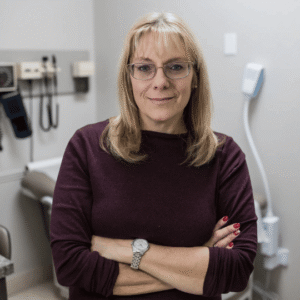
Dr. Kristin Terenzi is a family physician based in Woodbridge, Ontario, providing care to patients across the lifespan.
She is involved in guideline development with Hypertension Canada and is recognized as a community resource in obesity treatment in primary care.
Dr. Terenzi also serves on the Board of Directors for Villa Colombo Vaughan Long Term Care and is an active staff member at Humber River Hospital, where she works as a surgical assist physician and in COVID assessment.
Support Scale Up Your Practice by:
Email us at scaleuppod@obesitycanada.ca
This episode script was developed using NotebookLM to synthesize complex source materials into a structured educational format. The tool was used to analyze the Canadian Obesity Education Competencies (COECs), the Obesity Canada Strategic Plan, and guest-specific research. Specific prompts were utilized to extract relevant learning objectives, map them to CanMEDS roles, and generate competency-based interview questions.
While NotebookLM assisted in drafting the narrative arc and educational framework, all content has been reviewed, fact-checked, and refined by the podcast hosts and Obesity Canada’s clinical experts. This ensures the script aligns with current Clinical Practice Guidelines and authentically represents the lived experience perspective.
00:00:00:01 – 00:00:13:20
Dr. Kristin Terenzi
When you know how obesity affects them in all the aspects of their life, then you can actually help them to achieve success.
00:00:13:22 – 00:00:40:00
Dr. Roshan Abraham
Hello and welcome to the Scale Up Your Practice podcast, brought to you by Obesity Canada. I’m Doctor Roshan Abraham, family physician and associate professor at the University of Alberta. Today we’re talking about what comprehensive obesity assessment really looks like in practice. That means going beyond the scale to understand the biological, psychological, mechanical and social factors that are shaping our patients’ health.
00:00:40:01 – 00:01:02:18
Dr. Roshan Abraham
Today’s episode is supported by an unrestricted educational grant from Eli Lilly Canada. We thank them again for helping us bring this podcast to clinicians across the country. It’s one of the most important parts of obesity care is the assessment. It’s more than just asking a patient about their weight, but uncovering what’s driving weight gain, what barriers a person is facing and what matters most to them.
00:01:02:19 – 00:01:19:17
Dr. Roshan Abraham
To help us unpack this. We’re joined by Doctor Kristin Terenzi. Doctor Terenzi is a family physician based in Woodbridge, Ontario, and a passionate advocate for Canadians living with obesity, shaped by both her clinical experience and her own lived experience. Doctor Terenzi, welcome to the show.
00:01:19:20 – 00:01:21:12
Dr. Kristin Terenzi
Thanks for having me.
00:01:21:14 – 00:01:28:00
Dr. Roshan Abraham
To start us off, why does this conversation about obesity assessment matter so much right now?
00:01:28:00 – 00:01:56:02
Dr. Kristin Terenzi
I’ve been a family doctor now for about, I don’t want to say it, but it’s kind of scary, 38 years. And I can tell you that, you know, family physicians I think, are by far the best at treating chronic disease. And over the years, I found that the most common chronic disease that we see is obesity. And I have had the displeasure in the early portion of my career of not really having much to- Well, A.
00:01:56:02 – 00:02:21:08
Dr. Kristin Terenzi
not knowing enough about it, and B. not really having any tools to be able to treat patients. But that’s changed. And I was one of the patients. My life changed. And I find that right now, when you look at how much obesity that we’re seeing in our practices, you know, it’s estimated that 1 in 3 Canadians is living with obesity right now.
00:02:21:08 – 00:02:45:22
Dr. Kristin Terenzi
And if we don’t get a handle on that, that chronic disease will be close to 1 in 2 by the year 2045, right? That’s a lot of chronic disease when you consider diabetes is 1 in 8 patients, right? So it matters. And obesity, I call it the mother of all chronic diseases because it is from what all other things come.
00:02:46:00 – 00:03:15:09
Dr. Kristin Terenzi
I mean, whether you’re talking about metabolic diseases like diabetes and fatty liver disease, or you’re talking about infertility with PCOS or mechanical with osteoarthritis or heart disease, CV risk, even lots of different cancers are, you know, linked to obesity. So, I mean, if you can help patients manage obesity, you can really help a lot of the other morbidity and mortality that we’re seeing.
00:03:15:09 – 00:03:23:00
Dr. Kristin Terenzi
And personally, I can tell you that nothing has given me more professional satisfaction than treating obesity.
00:03:23:04 – 00:03:43:05
Dr. Roshan Abraham
Thank you for laying the groundwork for the rest of our conversation, because I can’t say clearly enough that I agree with you that family physicians are some of the best equipped in our health care system overall to manage chronic disease. And coming from somebody who doesn’t actually have an obesity-first practice, I am a general practitioner.
00:03:43:06 – 00:04:04:18
Dr. Roshan Abraham
The reason I’m involved in this type of work is because of how much we see obesity, and because of the social accountability mandate that we have as family physicians. So I think that’s a great start, and probably took the words right out of my mouth as another family physician. So your advocacy is deeply rooted in your own lived experiences.
00:04:04:18 – 00:04:18:18
Dr. Roshan Abraham
You’ve spoken openly about your experience navigating weight changes, menopause and osteoarthritis. How did living through these challenges change the kinds of questions you ask when you’re sitting with a patient?
00:04:18:19 – 00:04:46:09
Dr. Kristin Terenzi
So you know, when you live a disease, you understand the complexities and the feelings that patients have coming in to see their family physician. I know how frustrating it is to try every diet under the planet and know that it didn’t work. I know how hard it is to lose 2 or 3 pounds and then in a weekend gain five.
00:04:46:11 – 00:05:11:20
Dr. Kristin Terenzi
It is a very frustrating illness to try to manage. Now we have wonderful tools and we know so much more, but previously it was like nobody understood. And you were trying so hard and there was that stigma of people looking at you like, “But you’re a health care provider, why can’t you get this under control?” Right? And it isn’t that easy.
00:05:11:21 – 00:05:31:05
Dr. Kristin Terenzi
In fact, it’s one of the hardest things that you can do. So I think it gives me street cred for whatever reason, because a lot of my patients have been my patients for 37, 38 years, and they’ve seen the progression of how things have worked for me and how I’ve been able to manage the obesity successfully.
00:05:31:05 – 00:05:47:05
Dr. Kristin Terenzi
And I think that it makes them feel more comfortable talking to me about it, because I do understand what they’re feeling. It’s not their fault because it wasn’t my fault either. And now knowing how to manage it, I can sort of give that to them as well.
00:05:47:08 – 00:05:57:18
Dr. Roshan Abraham
That’s a great way of thinking about it. And I definitely think empathy around chronic disease overall is something that we don’t talk about nearly enough in our medical education.
00:05:57:19 – 00:06:19:06
Dr. Kristin Terenzi
It’s funny that you should say that. I will tell you, I have my earliest memory is being, I think I was five my mother said, we were in the pediatrician’s office and the pediatrician said to my mother, “Well, don’t feed her anymore.” Like, don’t feed her. She’s fat. Oh, I remember these. I mean, these are the things that shape you.
00:06:19:10 – 00:06:41:01
Dr. Kristin Terenzi
Right, right. Yeah. Thankfully I’ve worked that out, but the issue is, you know, “She shouldn’t be eating anymore.” And, you know, that’s what we knew, right? And I don’t blame him because he didn’t know any better. Right? I’m just so grateful that we have had so much research, and we know so much more about it right now that really understands the pathophysiology of obesity.
00:06:41:02 – 00:06:43:03
Dr. Kristin Terenzi
I don’t want anyone to ever feel like that again.
00:06:43:04 – 00:06:50:11
Dr. Roshan Abraham
Does it change how you talk to a patient then through your own lived experience? What sort of things do you try to ask?
00:06:50:12 – 00:07:20:14
Dr. Kristin Terenzi
So I think it’s important. Everybody has a story, right? And everybody has a different perspective on how their obesity affects them. So you have to treat people with compassion. You have to treat them with understanding that, you know, I understand what you’re talking about. I understand how you feel. But we can do this. We have treatment for this.
00:07:20:15 – 00:07:55:18
Dr. Kristin Terenzi
And I think that we can make your life healthier and happier. So I know you may have had difficult experiences in the past. I understand all of that. But this is a marathon, not a sprint. And we absolutely have- We know more now. So, let’s give this another try and let’s work together. And I think that when patients realize that you’re trying very hard to understand where they are and live, and you understand that feeling, that trust is built.
00:07:55:18 – 00:08:01:17
Dr. Kristin Terenzi
And when you build that kind of trust, that’s when you get real therapeutic movement.
00:08:01:19 – 00:08:37:11
Dr. Roshan Abraham
Agreed. And not just with obesity. We’ve mentioned this on the podcast numerous times. Obesity is one of the chronic diseases that thankfully, as you mentioned, through research and advocacy, that we are able to have this comprehensive approach. But honestly, this lens is needed for a lot of chronic diseases. And I’m hoping that we can shift our perspective a little bit in health professions education, that obesity isn’t the only disease that we provide this lens to, even though right now we are fortunate to look through that lens.
00:08:37:17 – 00:08:42:01
Dr. Kristin Terenzi
I think it all makes us, when you start treating obesity, become a better doctor.
00:08:42:03 – 00:08:45:13
Dr. Roshan Abraham
Yes, I agree. It’s made me a better doctor.
00:08:45:13 – 00:09:00:16
Dr. Kristin Terenzi
I think so, I think it does. Because when you understand how to treat obesity, because that’s the whole person, right? You’re not just treating the metabolic, you’re treating the mechanical, you’re treating the mental. When you’re treating obesity you can treat anything.
00:09:00:18 – 00:09:35:17
Dr. Roshan Abraham
Yeah. So the guidelines, the Canadian Obesity Clinical Practice Guidelines emphasized that an obesity-centered assessment has to explore for root causes. Often the health care system fails to look past BMI, missing the bigger picture. One of the most useful tools is, as some of our listeners are aware of, the 4M’s Framework, or: Mental, Mechanical, Metabolic, and Monetary Health or Milieu. For a clinician who may still be used to focusing mostly on BMI or behaviour, how does the 4M’s Framework framework change the conversation with the patient?
00:09:35:18 – 00:10:05:01
Dr. Kristin Terenzi
As primary care, whether physicians, nurse practitioners, pharmacists, nurses; We know our patients, right? And when you know how obesity affects them in all the aspects of their life, then you can actually help them to achieve success. So when you focus on a BMI, you’re missing most of it, right? So doctors will come to me and say, “Oh my God, I have seven minutes with a patient.
00:10:05:02 – 00:10:40:10
Dr. Kristin Terenzi
How do you expect me to look at all of those things in seven minutes? It’s not- it’s insurmountable. It’s not doable.” That’s absolutely incorrect, right? Most of those 4M’s you already know. And you know them because you’ve been their doctor for 20, 30, 40 years. Okay? But when you start thinking about them, then you know how obesity affects this patient and that not only how it affects them, but how you can help them to transcend above that.
00:10:40:11 – 00:11:15:23
Dr. Kristin Terenzi
Right? So if you have a patient who… Just a patient I saw today, actually, who has two young children who’s got a BMI right now of, she’s about 34, right? And she’s got two young children. She works full time. Both kids are in rep hockey. So she’s out every single night at one arena or another. If you tell her that she’s going to have to start, you know, measuring her food, okay, and that she’s going to have to go for 117 minutes of exercise every week, you’ve lost her.
00:11:16:00 – 00:11:37:13
Dr. Kristin Terenzi
She’s not going to do it. Right. But when you understand where she is in that world of the 4M’s, you can make really reasonable suggestions that are going to improve her health long term. Things she can do long term that she doesn’t turn around and say, “This person doesn’t understand me. They don’t know what I live,” right? And you lose their trust.
00:11:37:14 – 00:12:00:17
Dr. Kristin Terenzi
So when you start to realize that the relationship with food, how their parents were, what their mental health is, when you know all of this, you can start to put the pieces together to find out who this unique individual is in front of you and how you can maybe make very small suggestions that have huge, meaningful outcomes.
00:12:00:17 – 00:12:06:10
Dr. Kristin Terenzi
And that’s what the 4M’s is supposed to do: Introduce you to your patient again.
00:12:06:12 – 00:12:34:18
Dr. Roshan Abraham
I wow, that’s a great catch phrase for it, 4M’s: Introducing yourself to your patient once again. Or sorry, introducing your patient to you once again. This is now, we had Dr. Walji, on, another family physician, and it’s the same conversation. And I kind of feel bad for our non-primary care listeners because we do have a cheat code as primary care physicians. We know our patients.
00:12:34:18 – 00:12:57:23
Dr. Roshan Abraham
So yes, the 4M’s is a nice scaffold to reintroduce ourselves, reintroduce them to us and to put it together under the umbrella of obesity. But we have it in our profile. It’s already there for like 90% of it, 90% of it is there. Maybe there’s a few things that are missing, but 90% of it is already there.
00:12:58:00 – 00:13:20:01
Dr. Kristin Terenzi
But you see, that’s the key. You maybe have 90% of it. So when you look at that 4M framework, what don’t I know? We know that patients who have BMIs that are over 35, Class 3 obesity, often have some sort of physical or sexual abuse in their past. Maybe that’s a question we need to start asking, right?
00:13:20:02 – 00:13:34:18
Dr. Kristin Terenzi
What’s your relationship with food? Maybe. I don’t know that about my patient. I know all of, I know what their A1C is, I know all of that, but I don’t know that. So let me get the rest of the story back together. It’s just a framework to make you see where your patient is.
00:13:34:20 – 00:13:54:19
Dr. Roshan Abraham
I love that, and that’s exactly what I do. Most of the 4M’s I know, and actually the two areas that I might not have covered, are more sensitive areas or just areas that we don’t train, are not trained to talk about, which is our relationship to food. And those are actually the two things that I end up, two of a few things, that I actually end up having to fill it in.
00:13:54:19 – 00:14:17:19
Dr. Roshan Abraham
But I do think that, if we do have primary care physicians who are listening, or primary care practitioners who are listening, recognize that you do always have something to start with. And even for our specialist colleagues who are listening, oftentimes with a referral, you should be able to get some of that information. And perhaps asking for that information from your referring providers can be helpful as well.
00:14:17:20 – 00:14:42:04
Dr. Roshan Abraham
So a recent study noted, and you’re probably well aware of this, that over 70% of people living with obesity believe managing their condition is entirely their own responsibility, carrying a heavy burden of internalized blame. The shame often keeps them from even discussing their concerns with a doctor. What are some signs that a patient has internalized bias and stigma?
00:14:42:05 – 00:14:59:04
Dr. Kristin Terenzi
That study just sort of told us what we already know, which is great. Okay, but at least we’re starting to think about it even more and putting it into practice. Patients will come in all the time. And I know our listeners right now, if they think about who they saw in the last week or so, they’ll say the same thing.
00:14:59:08 – 00:15:27:08
Dr. Kristin Terenzi
Patients will come in and not even want to talk to you about obesity, or not bring it up, because they think it’s their fault. They don’t think there’s anything you can do about it, and that they feel very ashamed about their weight. And that’s just so sad. I mean, I understand it, but that’s just so sad because this is a biological disease and we know that.
00:15:27:08 – 00:15:48:00
Dr. Kristin Terenzi
And for patients not to feel that they can come and talk to you about it, or try to get help about it, is very, very sad. But patients will say, oh, you know, “I gained so much weight. I have just a terrible diet. I have no willpower.” You know, “I don’t feel like going out anymore because what’s the purpose of it?
00:15:48:01 – 00:16:16:00
Dr. Kristin Terenzi
I don’t like the way I feel. I don’t like the way I look.” They’re very, very self-deprecating. And it’s amazing to watch when you sit down with a patient and say, well, “No, no, this, this isn’t your fault. Okay, this is a disease, and I absolutely can help you to feel better. Not weigh less- feel better.” Make sure that we focus on function, not weight.
00:16:16:02 – 00:16:19:00
Dr. Kristin Terenzi
It’s amazing how their whole face transforms.
00:16:19:01 – 00:16:20:04
Dr. Roshan Abraham
Yes I agree.
00:16:20:05 – 00:16:39:15
Dr. Kristin Terenzi
Yeah. And it’s like, really? Really. You can help me. They’re not so sure that you’re telling the truth, by the way. They’re not 100% sure that you’re telling the truth, but they’re going to give you a shot. They’re going to let you try. Right. And it really does transform lives. It really does.
00:16:39:17 – 00:17:04:18
Dr. Roshan Abraham
I can’t agree with you more there, about talking about how we think about this for their goals or like, from the perspective of their goals and how they want to improve their function, changes things. In your experience, you’ve had a lot of years doing this. Any practical tools or language in addition to what you’ve mentioned in the assessment process that can help patients start to move past that blame?
00:17:04:20 – 00:17:40:15
Dr. Kristin Terenzi
So in terms of assessment, I mean, you know, we have using that 4M’s criteria, right? Now you’re talking about blame, right? Yeah. So I think that when you talk about their weight history, right? Validating that. Yeah, you know, it’s hard to lose that weight after pregnancy. Right? Yeah. You pack on that extra 10 or 20 pounds that you try so hard to get rid of and you can’t.
00:17:40:16 – 00:18:06:07
Dr. Kristin Terenzi
That’s physiological. Right. And we know that a lot of the things that you’ve tried to do, like a lot of the diets that we have out there, we have so many chemicals and hormones in our body. Because, like, obesity is a neuroendocrine disease, right? I mean, our brains are wired not to make us lose weight, right? That’s an evolutionary thing that happened probably in the cavemen.
00:18:06:07 – 00:18:25:06
Dr. Kristin Terenzi
But the bottom line is our bodies are saying, “No, no, no, let’s keep this. We may need it one day.” Right? And the problem is that we can do all we want to, but we can’t fight a lot of that. So when you start to explain to patients, you see this weight gain and then can’t lose it and then the weight gain and you can’t lose it, that’s typical.
00:18:25:06 – 00:18:52:02
Dr. Kristin Terenzi
And you show them the graph. See this is what you did. That’s what everybody does. Oh my girlfriend didn’t do that. Your girlfriend doesn’t have your hormones. Right. So you have an illness that makes your hormones act differently than your girlfriend. God bless her. I wish her the best, but she’s not you. Okay, so let’s talk about you and what we can do to help you.
00:18:52:02 – 00:19:10:20
Dr. Kristin Terenzi
But when you show them there’s a physiological reason for what has happened in their life, it’s like a light goes on and they realize, okay, maybe she’s not blowing smoke up my butt. Maybe she does understand this, right? And the shame starts to go away.
00:19:10:21 – 00:19:40:20
Dr. Roshan Abraham
I think that’s beautiful. As someone who teaches a lot around communications and history-taking in medical school, I think one of the things that we miss out on that we try to do in family medicine is, as part of the shared decision making process, how do we continuously inform our patients about what the disease processes that they have. And in obesity with all the tools that we have, especially what’s been developed over the last 5 to 10 years, the Five A’s Assessment, the 4M’s.
00:19:40:21 – 00:20:09:05
Dr. Roshan Abraham
There’s so much for us to educate patients around while we’re going through the assessment, as opposed to it sort of being this unidirectional assessment, where we’re just asking questions and getting answers. This is about establishing the relationship and maintaining a relationship. This is about actually explaining the process and doing some of that work before you talk about treatment. We have this as part of our national exams, for our SOOs, for the CFPCs.
00:20:09:06 – 00:20:22:08
Dr. Roshan Abraham
And you want to be doing the shared decision making part earlier rather than later, because that’s what happens in real life. We don’t just wait till the end to explain absolutely everything. You do it during the assessment itself.
00:20:22:10 – 00:20:43:18
Dr. Kristin Terenzi
How can you have shared decision making if the patient doesn’t know the truth, doesn’t know the facts? They’re going to learn the facts from TikTok, okay, or ChatGPT, which may not even apply to them, but when you provide them with the truth. And I’ve heard the argument from other doctors saying, “I don’t have time for that,” it doesn’t take a lot of time.
00:20:43:20 – 00:20:44:14
Dr. Roshan Abraham
00:20:44:14 – 00:20:53:21
Dr. Kristin Terenzi
It takes 30 seconds to say “Your hormones aren’t working properly and your brain is telling you you’re hungry all the time. It’s not your fault.”
00:20:53:22 – 00:21:11:15
Dr. Roshan Abraham
For me, the more I know about them, the easier it actually is to fit even a small amount of counselling, of education in. And then we say, “Hey, you know what? We don’t necessarily have the full amount of time now, we’ve got some time in a few weeks to follow up and do this again.”
00:21:11:15 – 00:21:33:16
Dr. Kristin Terenzi
And you just said the most important thing, and that is, “Follow up.” Because if you have a patient that you’re starting a conversation with about obesity, and you’re helping them on their journey, the most important thing you can say to them that shows them that you’re committed is, “I want to see you in a month, or two months,
00:21:33:16 – 00:21:56:14
Dr. Kristin Terenzi
you decide.” Okay, “I want to see you. I want to revisit this and see where we are together.” Because if you don’t, they’re not going to come back. Right? But you’ve demonstrated to them that you care enough about their health, that you think it needs to be revisited. And Rome wasn’t built in a day. Diabetes wasn’t controlled in one visit, nor will obesity.
00:21:56:15 – 00:22:33:21
Dr. Kristin Terenzi
You don’t have to do everything in one visit. It’s a chronic disease. You’re going to have many visits about it. So get what you can out of that particular visit and bring them back again. There’s no reason that you have to do absolutely everything in one visit. Just, I know we don’t have a lot of time, but just as an aside. Another patient I saw who’s living with obesity, who’s got pretty poorly controlled diabetes and doesn’t like medications, but has a BMI of 38, right.
00:22:33:23 – 00:22:57:03
Dr. Kristin Terenzi
Does not want bariatric surgery because we know that with BMIs over 35 with a comorbidity they tend to do well with bariatric surgery. But she doesn’t want to do that. And that’s fine. That’s her choice. The first thing- And she doesn’t want medication. She hates medications. So I had said to her, I had said to her, I said, “I know. You don’t like medicine.”
00:22:57:06 – 00:23:17:03
Dr. Kristin Terenzi
I said, “But if I told you that you had pneumonia and you needed an antibiotic, would you take it?” And she goes, “Well, of course I’d be stupid not to.” I said, “What if I told you that your hormones aren’t working properly and that they’re not going to work properly until I start some medication for you? How is that different?”
00:23:17:03 – 00:23:21:02
Dr. Kristin Terenzi
Ah- stutters. “Thank you.”
00:23:21:02 – 00:23:43:08
Dr. Kristin Terenzi
I said, “Chew on that and we’ll have a conversation next time, okay?” And I gave her some literature. Right. But we joke and we laugh. She knows because she knows I know her. Right. But she also knows that I want her to feel better. So I wouldn’t doubt if she comes back next month when I’m bringing her back and she goes, “Okay, tell me more about the medication.”
00:23:43:08 – 00:23:46:02
Dr. Kristin Terenzi
That’s the way she is. I know her, right?
00:23:46:04 – 00:24:22:06
Dr. Roshan Abraham
And I also try to highlight how internalized weight bias and stigma have likely built up over time to condition us. And I do it in a shared way. It’s not just the patient. There’s something to be said for us, to say through our education system, through society, how we treat people in general, is is considerably influenced by bias and stigma. And that there’s a shared responsibility between the practitioner and the patient to actually dismantle that stigma that’s happening in real time.
00:24:22:07 – 00:24:47:18
Dr. Roshan Abraham
It’s not just up to the patient, and that their response is oftentimes coloured by internalized weight bias and stigma, and that we have to collaborate together to find a way to mitigate that, or to at least to recognize it. Maybe it’s hard to try to solve it, if you will, as we’ve talked about in one visit, but at the very least, recognizing that it exists and that it’s playing a role is incredibly important for patients to know.
00:24:47:20 – 00:25:05:17
Dr. Roshan Abraham
Once we’ve done that full 4M’s assessment, because we’ve talked about some of the ways in which we can utilize sort of pre-existing knowledge, the relationship that we have with patients, some of those changes. How do you turn that into a plan that maybe feels realistic for the patient?
00:25:05:18 – 00:25:52:00
Dr. Kristin Terenzi
A quick overview, just a quick thing is metabolic, right? So does your patient have signs of some sort of a fatty liver disease? Do they have some form of thyroid problem? Is there a prediabetes issue? Is there hypercholesterolemia? Those are the kinds of things you’re looking at in metabolic. If when you look at mental, we talked about anxiety, your relationship with food, the previous abuse, how you feel about your obesity. Those kinds of mental issues, very important. Mechanical osteoarthritis, back pain, sleep apnea, things that are physically affecting you in terms of discomfort. And social milieu for me is, do they have a drug plan?
00:25:52:00 – 00:26:16:12
Dr. Kristin Terenzi
Do you have access to things like a dietitian or physiotherapist or some sort of exercise? And socioeconomically, can you eat well? Right. And, you know, are you working three jobs and you know, you’re not going to make yourself a three course meal that is well balanced because you don’t have the time. So that’s basically the 4M’s.
00:26:16:12 – 00:26:44:19
Dr. Kristin Terenzi
And again, as we’ve talked about this before, you know all of this because you’re the family doctor and you understand, right? So it’s not so insurmountable. So your question is when you take someone who is living with obesity and now you’ve gone through those 4M’s in your head, how you make the plan depends on that. Okay.
00:26:44:21 – 00:27:07:15
Dr. Kristin Terenzi
So if you have a patient that is, wants to try medication, but they have no drug plan and they’re working three jobs, that’s going to be much more difficult to do because the medications are expensive. And I’m not saying it’s not impossible, but you have to start thinking about patient assistance programs and how to play with the medication to get the most out of it.
00:27:07:16 – 00:27:29:01
Dr. Kristin Terenzi
And, you know, that’s one thing that you have to think about. Okay. So that’s one thing that I have to consider. The other thing is, what about nutritionally? Are they going to be able, like can we tweak their diet so that we can get rid of high fat, high carb things? And maybe make things a little bit easier for them if they’re going and grabbing all the time?
00:27:29:05 – 00:27:58:22
Dr. Kristin Terenzi
Can we make some suggestions for better things to grab and take away useless carbohydrates and useless calories? So give them a little bit of information about diet. Exercise. Can they exercise? Do they have osteoarthritis? If they have osteoarthritis, okay, go to YouTube and do chair yoga. Do different things like that. We have to know what all of these things are because if we don’t, we’re going to suggest a plan that’s not going to work.
00:27:59:00 – 00:28:26:16
Dr. Kristin Terenzi
Right. And don’t forget about the mental. Because the mental is so important. My relationship with food, to give you an example, I have the worst FOMO on the planet, “Fear Of Missing Out.” If I see something that I love, I don’t know when I’m going to get it again, and I want it. It took forever to break that, to say, it’s okay, Kristin, you’re going to get it another day and you don’t really need that today.
00:28:26:16 – 00:28:49:12
Dr. Kristin Terenzi
But that’s something that patients have lived with their whole life. My Nona made these beautiful donuts and she never makes them. I’m going to have six of them because I’m never going to see it again. You have to understand how your patient thinks and make them recognize what those barriers are to weight loss, that you can help them with. A little at a time.
00:28:49:12 – 00:28:51:21
Dr. Kristin Terenzi
Rome wasn’t built in a day.
00:28:51:23 – 00:29:30:05
Dr. Roshan Abraham
Yeah, I again, I think that is beautiful. Drawing from the 4M’s. Again, a lot of the information that you know and really thinking about, I really can’t stress enough how important it is to understand someone’s social milieu and their socioeconomic status as a family physician. That’s some of the first things that I might not have included in the profile that I asked my residents and my learners to ask about, because if we were going to be thinking about chronic disease management medications and specifically with obesity, they’re not necessarily covered for obesity by most plans.
00:29:30:10 – 00:29:36:01
Dr. Roshan Abraham
We need to think about that before we even come up with sort of a comprehensive plan.
00:29:36:01 – 00:29:58:00
Dr. Kristin Terenzi
And you can be creative. I mean, you know, I’ve had patients that I’ve directed to YouTube. They do chair yoga now and they do stuff like that. That’s free, right? Obesity Canada’s website has beautiful nutrition advice that you can send them to. Heart Healthy Diets, Diabetes Canada, all of those things. You have to be creative right.
00:29:58:00 – 00:30:22:06
Dr. Kristin Terenzi
And you have to be understanding culturally of your patient. You tell an Italian they can’t have pasta anymore? They’re changing physicians, okay. Because they, that’s just, you can’t do that. You can’t tell a Southeast Asian that they’re going to never have rice again. If you do, then you’re not understanding your patient. But you have to work within their culture to be able to help them make better choices.
00:30:22:08 – 00:30:46:00
Dr. Roshan Abraham
We did a lot of cases at COS this year about the South Asian population, because I myself am South Asian. When you’re talking to me about what happened growing up in your relationship with food, right? There’s there’s a lot of similarities. And I heard from a lot of people afterwards talking about, “Wow, that spoke directly to me and my patients, because that’s what we encounter.”
00:30:46:00 – 00:30:58:01
Dr. Roshan Abraham
And that’s something that we don’t talk about, is how the cultural relationship with food is very different. And it’s not possible to know and to be culturally competent about everyone’s culture when it comes to food.
00:30:58:01 – 00:31:00:03
Dr. Kristin Terenzi
No, but you can try.
00:31:00:03 – 00:31:03:20
Dr. Roshan Abraham
Yes, recognize that it’s there and that you can try. Yes.
00:31:03:21 – 00:31:16:01
Dr. Kristin Terenzi
It’s funny because even with my patients, I have a predominantly Italian practice. And when Nonna makes the cookies at Christmas time, right? She gets offended, if you don’t
00:31:16:02 – 00:31:17:05
Dr. Roshan Abraham
have them. Exactly.
00:31:17:06 – 00:31:40:21
Dr. Kristin Terenzi
Right. So you have to learn how to navigate that. Okay. Have one. Okay. Have one and say, “Nona they were the best you ever made. Okay. Thank you so much. But I’m trying to get healthy now and this is better for me to do that.” It’s amazing how Nonna’s and Grandmothers and Chachis and all of the- they will understand that.
00:31:40:21 – 00:31:42:15
Dr. Kristin Terenzi
But you have to address it.
00:31:42:19 – 00:31:43:19
Dr. Roshan Abraham
You do have to address it.
00:31:43:19 – 00:31:46:20
Dr. Kristin Terenzi
And it’s that guilt. Guilt, guilt, guilt, guilt, guilt.
00:31:46:21 – 00:32:05:09
Dr. Roshan Abraham
So one of the last questions we have is when a clinician moves away from judgment and takes the time to truly assess the root causes. When they look at the whole person, their environment, their biology, and their goals. You mentioned this a little bit, but I’d love to hear if there are any other sort of tells, if you will, from your patients.
00:32:05:09 – 00:32:12:12
Dr. Roshan Abraham
What does that shift feel like for the patient sitting in the exam room? How does it change their long term health journey?
00:32:12:17 – 00:32:31:16
Dr. Kristin Terenzi
In general, they’re all in. Once you’ve gained their trust, once you’ve said to them, okay, look, we’re going to try a bunch of things and I’m not sure which one is going to work, but something is going to work. Okay. We have a lot of tools up our sleeves, and we’re going to make decisions together. And this is a journey.
00:32:31:16 – 00:32:54:16
Dr. Kristin Terenzi
And I always say, “This is not a sprint, it is a marathon. And I’m sorry to tell you, you’re going to be dealing with this disease for the rest of your life. Okay. So we’re going to be partners for a long time and nothing works forever. We’re going to have to shift and change. Okay. But until the day I die, I will be your doctor and I will do the best I can by you.
00:32:54:17 – 00:33:20:06
Dr. Kristin Terenzi
Okay? We’ll figure it out.” When they understand they have an advocate, finally, they have somebody who’s going to be with them through thick and thin, who’s not judging them, who is not going to be upset when they come in and haven’t lost any weight. Okay. All right. Because that’s so important. Right? I say, “Oh good, no gain.” And they’re like, “Okay.”
00:33:20:12 – 00:33:46:03
Dr. Kristin Terenzi
“Oh good. You know what? Most of the time people gain. You didn’t gain. Well done. Are you eating healthier? Tell me about your diet.” Right. When you are as passionate about that and there they feel, “Wow I am feeling better. Yeah I think I can manage this. Oh, that’s what I did wrong. Yes. Okay. I’m going to change it.” Because we’re constantly having conversations.
00:33:46:05 – 00:34:12:20
Dr. Kristin Terenzi
That’s when that’s when the therapy starts, right? And that’s when patients get healthier. I don’t care about the scale, I care about the health, right? And in general, I can tell you honestly, I’ve seen patients reverse type two diabetes, not have hip and knee surgery when I know that they were this close to having it. At the age of 46, we finally convinced an orthopedic surgeon to do it.
00:34:12:20 – 00:34:39:14
Dr. Kristin Terenzi
And he doesn’t have to do it after a while, right? Yeah, these are things. When girls start getting regular periods again because they’ve lost 15% of their weight, right? Their body weight. And now I’ve seen young girls get pregnant when they’ve been living with infertility. I’ve seen young girls who have BMIs of 34, 35, go down to a BMI of 29.
00:34:39:14 – 00:34:58:15
Dr. Kristin Terenzi
Not that that matters, but for their confidence it does. And they blossom as the people that they’re meant to be, instead of those people that are shamed and don’t want to get involved, don’t want to go out, don’t want to- Not that they should feel that way, but they do, right? It’s not supposed to be that way.
00:34:58:16 – 00:35:18:02
Dr. Kristin Terenzi
You know? I know that we’re all shapes and sizes. But adolescents have a very different view of the world. Right. And if you can help them to be the best version of themselves, well you’ve done something really special, I wish I had somebody to help me when I was 17, 18 years old to do that, right?
00:35:18:03 – 00:35:34:04
Dr. Kristin Terenzi
So don’t underestimate the impact that you have in primary care and changing people’s lives by putting them on a path to health, changing habits, being more self-aware and really living their best lives.
00:35:34:06 – 00:36:06:01
Dr. Roshan Abraham
Yep. I’m so glad we had this conversation, and that we had you on the show. To our listeners, again, today we talked about how to use that 4M’s framework to not only comprehensively assess obesity, but really get to know your patients. And for some of us, maybe having them be reintroduced to you. We also explored how stigma and self-blame can shape the care experience and why trust, curiosity and collaborative, individualized treatment plans matter so much.
00:36:06:01 – 00:36:11:19
Dr. Roshan Abraham
I am so grateful, Dr. Terenzi, that you were able to join us today. It was great having you on the show.
00:36:11:21 – 00:36:21:13
Dr. Kristin Terenzi
It was an absolute pleasure. You’re doing wonderful work and to everyone out there. keep going. You’re making a really, really important difference.
00:36:21:19 – 00:36:47:02
Dr. Roshan Abraham
For our listeners. You’ll find links in the show notes to the ‘Assessment of People Living with Obesity’ chapter of the Canadian Adult Obesity Clinical Practice Guidelines. If you’d like to go deeper as a reminder, new episodes of Scale Up Your Practice drop every second Thursday, so make sure you subscribe so you never miss an episode. And if you found value in today’s discussion, share it with a colleague, and take a moment to rate and review us on your favorite platform.
00:36:47:02 – 00:37:00:21
Dr. Roshan Abraham
It helps other clinicians find this podcast. Until next time, stay curious, stay kind, and keep Scaling Up Your Practice.
00:37:00:23 – 00:37:31:20
Dr. Roshan Abraham
This podcast is intended for informational and educational purposes only and does not constitute medical advice. The content shared in this podcast should never be used as a substitute for professional medical advice, diagnosis or treatment. Always seek the guidance of a qualified health care professional with any questions you may have regarding your health or a medical condition. The information and treatment discussed in this podcast are based on Canadian guidelines and approved practices as of the time of recording.
00:37:32:01 – 00:37:53:22
Dr. Roshan Abraham
If you are listening from outside of Canada, please consult your local healthcare professional to ensure compliance with your region’s medical standards, guidelines and recommendations. The creators of this podcast disclaim all liability for any decisions or actions taken based on the content discussed. Listening to this podcast does not establish a professional or patient client relationship.
Be the first to know about new education and resources for healthcare professionals from Obesity Canada.
Applications are open for clinicians, researchers and other experts from across Canada to join the author group for the Canadian Adult Obesity Clinical Practice Guideline.