Call for Authors: Contribute to the Canadian Adult Obesity Clinical Practice Guideline. Learn more

Home • Scale Up Your Practice podcast • Pharmacotherapy in Obesity Management: Dr. Sue Pedersen



Dr. Sue Pedersen returns to walk us through the just-released update to Obesity Canada’s Clinical Practice Guideline for Pharmacotherapy.
In this episode, we explore the latest evidence, recommendations, and clinical tools to help healthcare professionals use obesity medications safely, effectively, and in partnership with patients.
From a shift away from BMI to new medications and an updated decision tool, this conversation breaks down what’s new—and why it matters—for clinicians and people living with obesity alike.
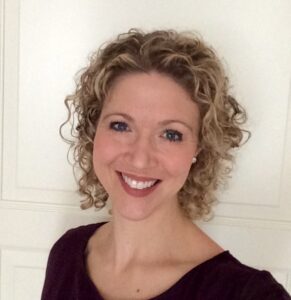
Dr. Sue is a specialist in Endocrinology & Metabolism, and a Diplomate of the American Board of Obesity Medicine . She has a busy practice at the C-ENDO Diabetes and Endocrinology Clinic in Calgary. She is involved extensively in clinical research for obesity and diabetes as principal and/or National lead investigator. She is the lead author of the pharmacotherapy chapter on the 2020 Canadian Obesity Guidelines, and a member of the Expert Committee for the 2018 Diabetes Canada Guidelines as a co-author of the weight management chapter.
Dr. Pedersen has become a leading voice on how to treat obesity and diabetes and educates health care professionals globally. She has a public information website about weight management and diabetes: www.drsue.ca
✅ Share the episode with a colleague
✅ Subscribe on your favourite podcast platform
✅ Leave a review—it helps more people find us
📩 Send us your questions or topic requests: scaleuppod@obesitycanada.ca
Thanks for listening—and stay tuned as we continue to scale up your practice.
– Welcome back to the podcast everyone. I’m Michelle McMillan.
– And I’m Dr. Roshan Abraham. And today we’re thrilled to dive into the updated Obesity Canada clinical practice guidelines for pharmacotherapy, hot off the press.
– And we’re especially excited because joining us today is global obesity expert and one of the authors of the guidelines, Dr. Sue Pedersen. Sue, welcome back to the show.
– Thanks, Michelle, thanks Roshan. How are you guys?
– Amazing, it’s good to have you back.
– Let’s just jump right in. For those who haven’t read the guidelines yet, that would be me, what is the update all about?
– Well, at the core, this update reinforces that pharmacotherapy is an effective evidence-based and safe approach to treating obesity. And really importantly, it’s not just about weight loss. So our focus is on improving health outcomes, metabolic, mechanical, mental, and quality of life always. We emphasize that the treatment goal should be personalized and that medication should be part of a long-term strategy to support behavioral change and overall health.
– Honestly, as a primary care physician, that’s music to my ears. And I’ve said this hopefully enough times, but I’ll say it again, this doesn’t just apply to obesity management. This applies to all chronic disease management. And I’m so grateful to be part of this organization that pushes forward a real change to the way that we look at chronic disease management. We need to really shift the lens and in the case of obesity management and care, from weight to health. And it’s so, so refreshing to see this. So what’s new since the 2022 guideline?
– Well, there’s quite a bit that’s new and I’m really just so excited that it’s now out in the public space. Because we’ve been working on this for so long and so hard. It’s really been a labor of love and a lot of things have changed since just 2022, which is you think, well that’s just a couple of years ago. But it’s amazing how fast the space is moving and how much is changing. So first of all, we’ve intentionally moved away from focusing on BMI as the primary determinant for pharmacotherapy. So this now means that clinicians can consider additional measures like waist circumference, waist to hip ratio, waist to height ratio. I really love that one. We can talk about why. This better assesses adiposity or excess fat tissue and health risk. We’ve also added two new medications approved in Canada since the last guideline. That’s Tirzepatide and Semilenitide. We also have guidance on treating specific obesity related health conditions like cardiovascular disease, heart failure with preserved ejection fraction and osteoarthritis. And we’ve also expanded our prior recommendations on pre-diabetes, type two diabetes, obstructive sleep apnea and metabolic disease associated steatohepatitis or MASH, the liver complication. And we also really emphasize the importance of individualizing care. So that means choosing and titrating medication as needed, as appropriate and as tolerated based on that person who’s in front of you.
– All those updates are so exciting. Like I feel like I just want to jump out of my seat. The mere fact that we’re just not relying on BMI anymore. I mean, that would be a win-win in my world. Like that’s all you needed to do and it would’ve been amazing. So I’m so thrilled about that. A little birdie told me that there is a new decision making tool in the update. Maybe you could talk a little bit about that.
– Yeah, that’s right. So we had a decision tool for the first time in 2022 because the feedback from primary care was, you know, we love the 2020 guidelines, but we need a decision tool. We need a way to see how do we approach obesity pharmacotherapy, how do we decide how to choose the right medication for our patient? And as the knowledge evolves, we had to change the algorithm up quite a bit actually. So we’ve revamped the algorithm to help healthcare professionals navigate treatment decisions more easily. And I really think, and I certainly sincerely hope that clinicians are going to love how intuitive and time saving our new algorithm or decision tool is in the clinical practice scenario.
– I really think they will for as, as a primary care provider, I’ve used the previous tool and I find that as the space is evolving and as pharmacotherapy options are becoming more available to our patients, we do need to consider all the different options for our patients. And actually having that tool makes a huge difference. So again, I think it’s absolutely amazing that this is happening. This is, in my opinion, a game changer. For you, as one of the authors, what’s something in the update that you are most excited about?
– Well, I’ve lived and breathed it for a long time in our putting all of this together. So I’m excited about everything. But to really pick a few things, I’m really excited about removing the rigid BMI cutoff. So the clinical trials are based on BMI. And so we write our recommendations with that in mind, but now we have removed that rigid criteria. So, I think that’s a really big step forward. So to give you an example, if you have someone, a patient, let’s say with a BMI of 26 who has significant central adiposity and related health issues. Under old criteria, they wouldn’t have qualified for treatment. Now, based on our guidelines, clinicians can consider other markers of excess fat tissue that metabolically active fat with those other measurements and offer treatment, then that can make a real difference to that patient. I’m also really excited by the expanded list of health conditions that we now have additional data since 2022 that benefit from treatment. So we now have, again, new recommendations for benefits to people with existing atherosclerotic cardiovascular disease, heart failure with preserved ejection fraction and osteoarthritis as brand new recommendations. And it is so amazing to see such a wide range of health gains when we use obesity pharmacotherapy.
– That is so exciting. And even though I didn’t understand a third of the words that you just said, I trust that our well-educated healthcare practitioners who are listening to the podcast do. As I said, obviously the guideline primarily written for clinicians, but as someone like me who’s living with obesity, you know, wants scientific evidence-based information about it, do you think this would be something that would be of interest to people living with obesity as well?
– Yes, absolutely. And just like in 2022, we’ve included clear and accessible key messages for people living with obesity. So they’re right near the very top of the chapter. So that’s intended for patients to read and to understand in patients’ accessible terms what the main points of our chapter is. So this can be a really powerful advocacy tool. So if your healthcare professional is hesitant to talk about pharmacotherapy, for example, or you feel like your healthcare professional isn’t getting it, and we can talk about a case of bias and stigma and the bias break that I can tell you about that, this is the sort of thing you can bring to them, to that healthcare professional, show it to them and start that conversation.
– Yeah, that’s amazing. I mean, a lot of times, you know, patients think we arrived at the office and we think, oh, the doctor or health practitioner should talk about it, but we don’t know how to start the conversation. And I agree with you. I mean, this would be a great way for me to be able to walk into a medical office and have an opener to the conversation. Thank you that this is so amazing. Thank you.
– From an advocacy standpoint, I think that’s incredibly empowering. And not just for the patient, but I think for clinicians as well, and specifically physicians, when we think about the advocate role as part of obesity care, I think this is incredible. Were there any areas where you felt the data just wasn’t there yet?
– Yeah, you know, there always will be. There’s, we always want to know more, right? We always, we get information and we say, yeah, but what about this or the field is also really changing really quickly. And I think that’s always going to be a part of a fast changing field, that there’s going to be more information that we need or that we want as we learn some things and we want to know more. So we found limited data, insufficient data on which to make recommendations in some really important patient populations, like people with obesity and polycystic ovary syndrome, chronic kidney disease, people with heartburn or GERD and people with depression. So we specifically looked in those conditions, we didn’t get, find enough information there. We also need more research and data on using more than one obesity medication like combination therapy. Yeah, we need more information on what happens to muscle quality, muscle function, muscle strength with weight loss. With these highly efficacious medications, some people lose a lot of weight and we lose some fat and we lose some muscle when we lose weight. And what happens then to the quality of the muscle and muscle function. We also need more data around how to best manage medications around surgery or fertility planning. And we need data to guide us on how to manage medication around anesthesia or conscious sedation.
– Wow.
– I think I said the last one twice, but better twice than not at all.
– Yeah, it seems like as much work as you and your colleagues do, there’s always seems to be more to learn and you know, as someone who lives with PCOS I, you know, as soon as you get that information, I’m going to be really interested in reading it too. So, as people are reaching for GLP-1 obesity medications, one of the barriers that they’re coming up against is cost concerns. You know, we deal with shortages. Is there any data on research on those kind of access issues?
– Well, there’s certainly a lot of people. I think this brings up a really important issue is that some people are reaching for compounded medication because they are not able to access the brand name medication or the brand name medication is more expensive than the compounded medication. Now the trouble with that is that compounded medications haven’t gone through the clinical trials and they’re not approved nor regulated by Health Canada. So we don’t actually know what is in these treatments. We don’t know what their quality is. We don’t know whether they work or not. And we don’t know whether there could potentially even be dangerous ingredients as has been seen in some parts of the world. So we actually have a recommendation in our chapters specifically recommending against the use of compounded medication.
– Wow, again, lots to move forward with even with that recommendation. So looking forward, you’ve already, you know, talked about some things that, you know, there wasn’t enough information, maybe in the future. Personally, what are you looking ahead at? What do you see for as the future of obesity medicine? And what do you think guideline number four might include?
– I, you know, I just got guideline number three, I guess the third iteration. So I know I can’t think of, I need to just take a little bit of a break and enjoy number three. But you know, with the current guidelines, I do see and hope that healthcare professionals will increasingly embrace obesity pharmacotherapy as a really important component of chronic disease management. And now with multiple different health conditions and different specialties, you know, we’re seeing now different subspecialists getting interested, you know, cardiologists are interested, pulmonologists are interested, so on and so forth. We really need to emphasize that we need to treat obesity, treat early and treat long term. And most importantly, treat in partnership with our patients. I think we’ll also see a further explosion of new medications and research on health benefits. So there will be a version four, and it will have more medications I believe and more indications with additional health issues being studied. There’s such, so much exciting work being done as we speak. So it’s really an incredible time to be working in obesity medicine.
– I agree. And that’s such a hopeful outlook. Before we wrap up, I have two things to ask. One, I want to call back to something you’d mentioned earlier in the podcast about being excited about waist to height ratio and how that’s one of the markers that’s potentially going to give us and clinicians specifically a little bit more information from a clinical decision making standpoint when it comes to obesity care. Can you tell us a little bit about that? Because I don’t want to leave that hanging.
– Sure.
– You seem to be pretty excited about it and I wanted to ask you about it.
– Yeah, so as I mentioned, we can look at waist circumference, waist to hip ratio and waist to height ratio. And I, I especially love the waist to height. It’s an emerging tool, so we don’t have as much data on it, but it’s growing. I really like it because it’s super easy. So there’s no difference for males versus females,
– Oh yeah.
– It’s gender independent, it’s also ethnicity independent, and the number’s really easy to remember.
– Right.
– It’s 0.5. So if you’re waist to height ratio is greater than 0.5 that’s associated with excess abdominal adiposity. So that’s why I like it. It’s simple, it’s easy and you don’t have to remember different numbers.
– Oh, I’m so glad I asked you that. I am so glad I asked you that because I think a lot of our listeners will be interested in using that and or hopefully in the future be interested in using that because I agree that’s something, something way simpler for us to use and isn’t as dependent like ethnicity wise on sort of a sort of a changing scale. But before we truly wrap up, we can’t forget about our regular bias break where we ask our guests about an instance of weight bias and or stigma that captured their attention recently that they wanted to bring to the discussion. So I wanted to open the floor up to you, if there is an instance of weight bias and stigma. We see it all the time as clinicians, but we’d love to get maybe a snippet of what that might have looked like recently for you.
– Sure. So yeah, I mean, we encounter reflections of bias and stigma every day, don’t we in in our clinical practices. And in daily life and in society. I had a patient this week who was so excited to come in to see me because her family doctor, so she had been, she was on an obesity pharmacotherapy and she’d had some really nice success, but now that she had met with that success, her family doctor was pushing her to stop the medication. She said my family doctor says now I’m there. Now I’ve learned the new habits and now I can just stop the treatment and she doesn’t want to prescribe it for me anymore. And I’m really, really afraid that I’m going to lose my health benefits, that my quality of life’s going to deteriorate, that I’m going to regain the weight. And I was really, I just have enough medication to make it until like this week. So I’m super happy. I’m really hoping please will you continue to prescribe it for me. And to me that’s a clear indicator of stigma and bias that that patient has, that family physician has and the patient has experienced that. She’s essentially been told by her healthcare professional, now you’ve learned how to eat less and move more. And so now you don’t need the treatment and you can just keep eating less and moving more without the treatment that you need to support that outcome. So we talked about that, we talked about the science, and I wrote a long letter back to the family doctor explaining what the science of obesity, what happens. And you know, you spoke to, Michelle actually asked me earlier about some of the challenges about, and if there’s any data about shortages of medication or cost and access, it is regardless of the reason why a person stops medication, whether it’s because of cost access, their family doctor tries to make them stop it. Every study we’ve ever done consistently shows us the science of obesity, the biology of obesity that it would be like stopping a cholesterol medication and expecting the cholesterol would stay nice and low. It doesn’t do that. It comes back.
– Or high blood pressure, right?
– Or yeah, sure. Diabetes control, you know, any, pick one. So I took that opportunity to write a very lengthy letter explaining the science of obesity with the family physician, inviting them to call me to talk about it. So that’s just one example, right? But we, we do see it every day and we need to always step up to continue to educate our colleagues and society in general about the nature of weight management.
– I think that’s a powerful message really, as for our listeners when we think about the advocacy role that we need to have in clinical medicine in general, and even the professional and the communicator roles that are there. I mean, I’m putting my educator hat on all it seems it’s almost impossible for me, especially in obesity medicine and obesity care. But I really thank you for sharing that, because I think that is a pretty powerful message. With that being said, is there anything else you’d like to leave our listeners with here at the end of the podcast?
– I’d like to leave everyone with the really important reminder that treating obesity isn’t about the numbers on a scale. It’s about helping people to improve their health and lead fuller lives and improve their quality of life. Pharmacotherapy for obesity when used thoughtfully can be a really powerful tool to help people achieve their own goals, whatever those goals might be.
– Oh, so beautifully said. Thank you Dr. Pedersen. Thank you for joining us for today. Thank you for being an advocate for people living with obesity. Thank you for helping write the new guidelines. There are so many thank yous, but mostly thank you for coming on today, sharing your knowledge with our listeners. Thank you.
– Well thanks Michelle. Thanks Roshan.
– And for our listeners, we’ll link to the full guideline and tools in the show notes so you can dive a little deeper.
– And as I always say, don’t forget to subscribe and leave a review and share this episode with a colleague. It’s an important one. Until next time, remember to scale up your practice.
– Scale up your practice.
– You guys were so cute.
– This podcast is intended for informational and educational purposes only and does not constitute medical advice. The content shared in this podcast should never be used as a substitute for professional medical advice, diagnosis, or treatments. Always seek the guidance of a qualified healthcare professional with any questions you may have regarding your health or a medical condition. The information and treatments discussed in this podcast are based on Canadian guidelines and approved practices as of the time of recording. If you’re listening from outside of Canada, please consult your local healthcare professional to ensure compliance with your region’s medical standards, guidelines, and recommendations. The creators of this podcast disclaim all liability for any decisions or actions taken based on the content discussed. Listening to this podcast does not establish a professional or patient client relationship.
Be the first to know about new education and resources for healthcare professionals from Obesity Canada.
Applications are open for clinicians, researchers and other experts from across Canada to join the author group for the Canadian Adult Obesity Clinical Practice Guideline.