New report: Five gaps are holding back better obesity care in Canada. Learn more

Home • Scale Up Your Practice podcast • Creating safer clinical spaces for pregnant patients with Dr. Cynthia Maxwell

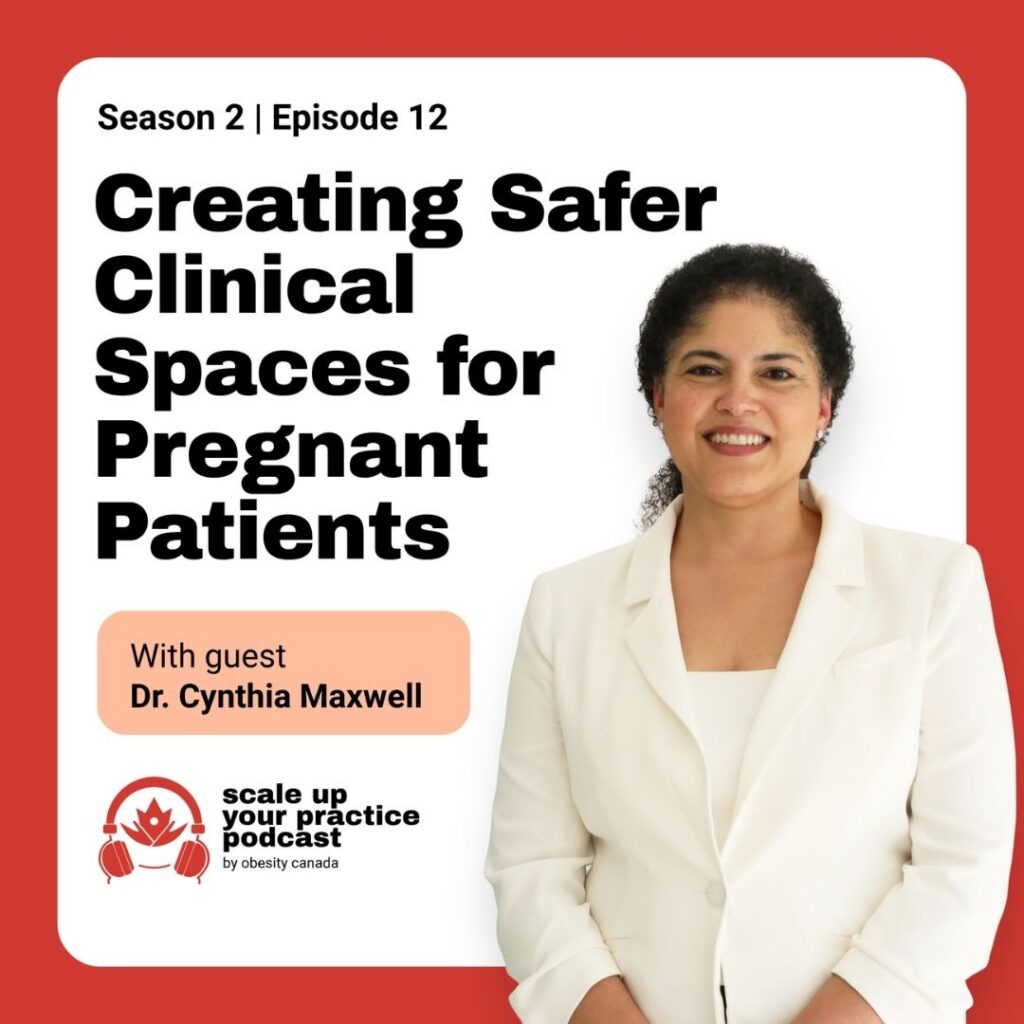


🎙️This episode is sponsored by an unrestricted education grant from Eli Lilly Canada
Pregnancy care should feel safe, respectful and supportive for every patient. But for pregnant patients living with obesity, clinical spaces can sometimes create anxiety before care even begins, from waiting room seating and equipment that do not fit, to conversations about weight, pregnancy risk and health that can feel stigmatizing.
In this episode of Scale Up Your Practice, Dr. Cynthia Maxwell joins Dr. Roshan Abraham and Michelle McMillan to discuss how healthcare professionals can create safer, more equitable pregnancy care for patients living with obesity. She shares practical strategies to reduce weight bias in maternal care, communicate pregnancy risks without blame, ask permission around weighing, and build healthcare environments where patients feel physically and psychologically safe.
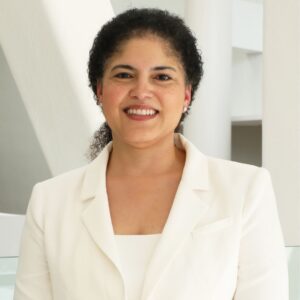
Dr. Cynthia Maxwell is a maternal-fetal medicine specialist at Mount Sinai Hospital and a professor in the Department of Obstetrics and Gynaecology at the University of Toronto. She also serves as Vice President, Medical Affairs and System Transformation, and Lead Medical Executive at Women’s College Hospital.
Her clinical and research interests include medical disorders of pregnancy, pregnancies affected by obesity, malignancy, gastrointestinal disorders and social determinants of health. Dr. Maxwell is Program Director for the Pregnancy Obesity Medicine and Surgery Fellowship at Sinai Health and the University of Toronto, and became board certified in Obesity Medicine in 2015.
Today’s conversation is a good reminder that obesity care takes knowledge, compassion and a commitment to reducing stigma. For healthcare professionals with experience in obesity care, Obesity Canada’s Certified Bariatric Educator exam is one way to have that knowledge recognized and stand out in the field.
The next CBE exam takes place on November 28, and applications must be submitted by November 2 to be eligible to write.
Support Scale Up Your Practice by:
Email us at scaleuppod@obesitycanada.ca
This episode script was developed using NotebookLM to synthesize complex source materials into a structured educational format. The tool was used to analyze the Canadian Obesity Education Competencies (COECs), the Obesity Canada Strategic Plan, and guest-specific research. Specific prompts were utilized to extract relevant learning objectives, map them to CanMEDS roles, and generate competency-based interview questions.
While NotebookLM assisted in drafting the narrative arc and educational framework, all content has been reviewed, fact-checked, and refined by the podcast hosts and Obesity Canada’s clinical experts. This ensures the script aligns with current Clinical Practice Guidelines and authentically represents the lived experience perspective.
00:00:00:01 – 00:00:14:18
Dr. Cynthia Maxwell
When people are feeling psychologically safe in a healthcare environment, they will share what is on their mind. And so creating that openness and that safety, I think, is really important.
00:00:14:20 – 00:00:26:03
Dr. Roshan Abraham
Hello and welcome to the Scale Up Your Practice podcast brought to you by Obesity Canada. I’m Dr. Roshan Abraham, family physician and associate professor at the University of Alberta.
00:00:26:03 – 00:00:30:02
Michelle McMillan
And I’m Michelle McMillan, a lived experience advocate with Obesity Canada.
00:00:30:07 – 00:00:52:00
Dr. Roshan Abraham
For expectant parents living with obesity, the clinical environment is often filled with anxiety instead of joy. That might be from waiting room chairs with rigid armrests that don’t fit, blood pressure cuffs that are too small, or language that is focused heavily on blame rather than support. Our medical spaces frequently signal to those patients that they don’t belong.
00:00:52:05 – 00:01:05:15
Dr. Roshan Abraham
But what if care teams change that? Today we are looking at how to remove these physical and psychological barriers and create truly safe, equitable, and welcoming spaces for maternal health.
00:01:05:17 – 00:01:38:19
Michelle McMillan
Today’s episode is sponsored by an unrestricted educational grant from Eli Lilly Canada. We thank them for helping bring this podcast to clinicians across the country. So today, we’re focused on equitable maternal care and how healthcare professionals can build more personalized, trusting relationships with pregnant patients living with obesity and create a culture of safety within their clinic. To do that, we are joined by Dr. Cynthia Maxwell.
00:01:38:21 – 00:02:04:09
Dr. Roshan Abraham
So Dr. Maxwell is the Vice President of Medical Affairs and Systems Transformation at Women’s College Hospital. She is a maternal fetal medicine and obesity medicine specialist at Sinai Health and a professor of obstetrics and gynecology at the University of Toronto. She is Canada’s first American Board of Obesity Medicine certified obesity specialist for pregnancy care, and we are extremely grateful that she is here to join us today on the podcast.
00:02:04:09 – 00:02:06:00
Dr. Roshan Abraham
So welcome, Cynthia.
00:02:06:02 – 00:02:08:17
Dr. Cynthia Maxwell
Thank you so much for having me.
00:02:08:19 – 00:02:17:21
Dr. Roshan Abraham
So why is it important for healthcare and Canadian healthcare professionals to rethink how we support pregnant patients living with obesity?
00:02:17:23 – 00:02:44:07
Dr. Cynthia Maxwell
That’s a great question and so important because as clinicians, whether we are physicians, midwives, doulas, and all of our colleagues from the health disciplines, we’re all going to take care of women and gender diverse people, and we’re all going to be providing care for people who may be considering pregnancy and indeed go through with pregnancy. So I think the topic is important for all areas of health care.
00:02:44:09 – 00:03:09:14
Dr. Cynthia Maxwell
I think there’s lots of work to do, particularly around birthing care and maternity care. It is a very special time in people’s lives where they are thinking about the future. And in my community it’s the ancestors, the present-day folks and the people to come. And so that places such importance on that whole gestational experience.
00:03:09:14 – 00:03:33:19
Dr. Cynthia Maxwell
And we know that there are aspects of our health that have a profound impact on fetal life and on infant and newborn life. And then our health in the future. So the building blocks of good health really start with pregnancy. And sometimes we think of it as just a little snapshot of a health encounter, perhaps in a person’s life.
00:03:33:20 – 00:03:58:01
Dr. Cynthia Maxwell
But in fact, there’s such a profound impact on what happens during pregnancy in terms of a person’s long-term health, but also in terms of the next generation. So the determinants of health that evolved during pregnancy. I think that I have sometimes a little bit of an internal struggle with the idea of obesity being called a disease.
00:03:58:01 – 00:04:20:20
Dr. Cynthia Maxwell
And I know that we do because we want to make sure we have the adequate attention drawn to it as a health condition. I think of it as one of many characteristics of any individual, a condition perhaps, and that has particular aspects which can provide some challenges during pregnancy and during birth.
00:04:20:20 – 00:04:41:20
Dr. Cynthia Maxwell
So I try not to come at it from a disease lens. I come at it from an individual person, much in the spirit, I think, of how our Canadian obesity care guidelines are phrased, that it’s very much the care is dependent on the individual, and not so much on the number or the body mass index and things of that nature.
00:04:41:22 – 00:04:57:10
Dr. Cynthia Maxwell
So again, it’s a topic, I think, important to women’s health. And we are understanding more and more about pregnancy and the impact of gestation on future women’s health. So hopefully we’ll be able to touch on that during our conversation as well.
00:04:57:12 – 00:05:19:08
Dr. Roshan Abraham
Thank you so much for that response. Dr. Maxwell, you’ve spent much of your career working at the intersection of maternal fetal medicine and obesity care, including establishing the Pregnancy and Obesity Clinic at Sinai Health. What drew you to this area and what specific gaps in patient safety were you trying to close when building that specialized clinic?
00:05:19:10 – 00:05:48:15
Dr. Cynthia Maxwell
I think there were a few key moments in my formative years that really drew me to this area. I’ve had a long interest, long-standing interest in reproduction and the physiology of pregnancy. I had a lot of interest in surgical aspects of healthcare, particularly during my medical school and residency years, and gradually was deciding, I think obstetrics and gynecology would be the area for me to focus on.
00:05:48:20 – 00:06:24:14
Dr. Cynthia Maxwell
Where I trained, I was in the midst of a community, I think, with a significant impact of obesity. So there certainly was a fair amount of obesity in the community. I trained in Boston, downtown Boston in the United States, and I had observed, particularly at the time of caesarean birth, some things that just made me pause. I noticed that there was a lot of language that was used that seemed to be demeaning and not necessarily respectful of patients.
00:06:24:14 – 00:06:51:13
Dr. Cynthia Maxwell
Never done intentionally, of course, but I feel like there was not an awareness of how some words, some terminology may impact individuals. And I also noticed that there were a lot of wound infections. So women who lived with obesity and had C-sections had almost always very poor healing results from their caesarean births. And then during the operation itself, I remember observing different ways of adjusting the pannus.
00:06:51:13 – 00:07:10:17
Dr. Cynthia Maxwell
So in our world, when we do a caesarean birth, obviously we’re trying to deliver the baby, but we’re also trying to really protect the mother’s tissues and promote good wound healing, but also have a good experience. It needs to be a good health experience as someone is going through their caesarean birth. And I observed that I don’t think it was a good birth experience.
00:07:10:17 – 00:07:40:18
Dr. Cynthia Maxwell
I think that for many people, having the pannus manipulated, offset towards the top of the chest, perhaps taped to equipment that was in the operating room, none of that felt very welcoming or good from an experience perspective. So I was taking mental notes, I think, as I was observing these things and knew that I wanted to focus on this area for my future work.
00:07:41:00 – 00:08:10:14
Dr. Cynthia Maxwell
And then I guess the other thing, and maybe this is akin to a type of lived experience. I remember my own mother having significant wound complications in the context of adiposity in the abdomen, and how difficult that was to recover. I have four siblings, so I remember that very well. So I thought we need to do better and need to rethink, certainly, the surgical and obstetric aspects of this care.
00:08:10:14 – 00:08:49:06
Dr. Cynthia Maxwell
And then it developed and evolved into a really program-wide approach to providing care to pregnant individuals living with obesity, from the moment that they would come to have this care, often referred from maybe smaller hospitals or centers where maybe the care wasn’t available, to communicating what we had to offer and how an individual shouldn’t feel singled out, but that we were here to enhance the care and provide a safer birth experience for them, to the seating in the waiting room.
00:08:49:06 – 00:09:26:04
Dr. Cynthia Maxwell
So we changed our whole waiting area in the obstetrical area to ensure that seating was comfortable for our patients, and we thought about the gowns and things that we sometimes use during examinations, and also when somebody is on the labor and delivery ward. So we have the pretty blue patterned ones with the little flowers on it, which make sure that people have modesty when they are preparing for an exam or on the labor floor, and blood pressure cuffs, scales, and all the different aspects that make the care not only safe but respectful.
00:09:26:06 – 00:09:50:07
Dr. Cynthia Maxwell
And as the obstetrician interested in providing the primary care for the pregnancy visits and then for the delivery care, I knew that I needed certain skills and knowledge to be able to do the work better and more safely, and with greater empathy for what people were experiencing. And I also recognize that the team, I don’t work in a vacuum.
00:09:50:07 – 00:10:15:14
Dr. Cynthia Maxwell
It’s not a one-person show. It’s very much the team in collaboration with the patient and their family. And so there was a whole process of working with our nurses, our assistants, the learners, everybody involved in the care to bring everyone on board. How do you use language that is not weight stigmatizing? How do you approach helping them be seated or preparing them for an obstetrical ultrasound?
00:10:15:17 – 00:10:39:04
Dr. Cynthia Maxwell
We do a lot of ultrasound in obstetrics and gynecology, and it’s an exciting time. When you come for your ultrasound, you get to see your baby on the screen, and that can become a really negative experience if the entry into the room and the treatment that you’re receiving during that time is feeling adversarial or one is feeling shamed or embarrassed about their body.
00:10:39:04 – 00:11:08:08
Dr. Cynthia Maxwell
And that’s not to say that ultrasound is easy. Sometimes it’s not easy. And ultrasound works through penetrating tissues, and the deeper the tissues, the more challenging the ultrasound is. So what were the different sorts of tricks and innovations that we could use in the ultrasound care to make that experience so much more positive, to get the views of the baby that we would need, and to provide that reassurance and make the experience from start to finish feel positive.
00:11:08:11 – 00:11:29:00
Dr. Cynthia Maxwell
I often thought when I started that maybe the goal would be that a person living with obesity, living in a larger body, would come, check in, do their ultrasound, come for their prenatal care, have their birth, and not necessarily realize that anything was different, but that everything was already set in motion to make that experience perfect for them.
00:11:29:02 – 00:11:29:12
Michelle McMillan
Wow.
00:11:29:14 – 00:11:53:03
Michelle McMillan
That’s so exciting. Just, I’m of a certain age, so I had my two children long before any of the modifications that you’ve talked about were even considered. So you talked about the modifications to the program that you work in. But I also know that you direct the Pregnancy and Obesity Medicine and Surgery, I think called POMS, right?
00:11:53:04 – 00:12:17:02
Michelle McMillan
Fellowship. So not only are you working in your own practice, but you’re also training current and future healthcare practitioners. So I’m just curious about how you work with the POMS program to shift the broader culture of maternal care to beyond your clinic.
00:12:17:04 – 00:12:46:00
Dr. Cynthia Maxwell
Yeah. So I mentioned that I wanted to pursue the obesity medicine certification to really round out my practice. I’d already been in maternal fetal medicine practice for many years, and my focus in maternal fetal medicine is really on the medical disorders of pregnancy or maternal conditions. Sometimes I call myself a chronic disease obstetrician. And so I thought that there is the potential for people who live with obesity to have a few more complications in their pregnancy.
00:12:46:00 – 00:13:10:13
Dr. Cynthia Maxwell
So things like diabetes and hypertension. And I thought, I really want to understand what that physiology is all about and understand what obesity medicine is about. And I think that that holistic view of the individual, the hormonal environment or milieu, and then the physical considerations with adiposity, that made sense. So a head-to-toe approach, thinking about all the different systems.
00:13:10:13 – 00:13:53:16
Dr. Cynthia Maxwell
What are the potential interactions of obesity with just our regular physiology, and then applying that to pregnancy. It’s nothing complicated, but a way to address whether there are any underlying conditions that we need to think about in order to keep a person safe through their pregnancy. And then over time, I think that as we became a bit of a regional referral center for patients that might need a bit more comprehensive care around their birth, I think that other clinicians were interested in coming to learn about our program, how we revised our labor and delivery rooms to have rooms that were accommodating for people living with obesity,
00:13:53:16 – 00:14:27:07
Dr. Cynthia Maxwell
even from the pedestal bathroom style commode to how the beds were configured, to the labor and delivery team work, to the instruments and innovations that we used in the surgical aspects. There, physicians locally and regionally wanted to come and learn this. So we had a few physicians that came for three or six months, and then some wanted a longer experience in that training, and I thought it might be nice if we formalize this.
00:14:27:07 – 00:14:43:05
Dr. Cynthia Maxwell
So that’s where the fellowship came about, a grassroots, organic desire to share knowledge and people desiring to learn that knowledge, and then to formalize it. And then they bring that knowledge back to the center where they’re working to share with their teams.
00:14:43:11 – 00:15:13:00
Michelle McMillan
That’s amazing. Spread the knowledge. It’s amazing. So as I mentioned, I have two children, and when I was pregnant and delivered them, I was in a significantly bigger body than I am now. And I know that when you’re pregnant, for everyone, whatever your size of body, it’s a really vulnerable time, right? Because every mother wants to do what’s best for the baby.
00:15:13:00 – 00:15:45:13
Michelle McMillan
That’s your focus. So given that, how — as a clinician talking to our listeners — would you provide advice about talking to your patients living with obesity about the risks related to pregnancy, but balancing that information with not making them feel blamed or ashamed? So in your clinic, how do you balance those two?
00:15:45:14 – 00:15:53:17
Michelle McMillan
Yes, there’s real risks, but also not making your patient feel awful about what those risks might be.
00:15:53:19 – 00:16:20:08
Dr. Cynthia Maxwell
Yeah, I think that it’s all about striking that balance. I think in particular in my clinical environment, we’re very, very sensitive about the idea of avoiding the blame and thinking about how to be working in partnership and keeping things positive as we create a management plan for the pregnancy care and for the birth. I always like to ask the patient.
00:16:20:09 – 00:16:40:13
Dr. Cynthia Maxwell
I kind of like to ask them where they are in their journey or their understanding about, first of all, why they’re referred to see me in the first place and how they’re feeling about that referral. So generally somebody will say, I’m referred to this clinic because I have obesity, and then I’ll probe that a little bit and say, how is that landing with you?
00:16:40:14 – 00:16:58:19
Dr. Cynthia Maxwell
How does that make you feel? Our goal is not to make you feel singled out because of your weight, your height or any other characteristic. We want to take good care of you, provide a safe experience for you and your baby. But tell me if there’s anything about this that’s bothering you, or if there’s language that we should or shouldn’t use.
00:16:58:19 – 00:17:30:07
Dr. Cynthia Maxwell
Some patients have said, I want you to just call it fat. I don’t want you to call it obesity. I think it’s important to meet people where they are. Even if it makes me feel a little uncomfortable, perhaps to say that. But I suppose it’s a bit like offering your pronouns as well when you meet people and making the space for them to feel comfortable to share whatever their pronouns are. So I think of it that way, in the sense that you’re opening the door to the conversation, and I find that just those are just like the opening minutes of the interaction.
00:17:30:07 – 00:17:53:04
Dr. Cynthia Maxwell
And often I have a fellow or learner with me who will be listening to the conversation. And it’s not unusual for sometimes that the patient, maybe they might actually get emotional at that moment and share that they’ve had difficult experiences in other aspects of healthcare, coming to this point, feeling weight shaming in different settings.
00:17:53:09 – 00:18:41:18
Dr. Cynthia Maxwell
And then there’s all this buildup until they get to this first prenatal visit with me, and that it was reassuring to hear their concerns were named straight away and that there was an openness to talk about that. I feel that once that relationship has been established, the openness to the communication has been established, it makes all the other parts of the care so much easier and I think much more respectful, I think, for us to both communicate what the issues are. And I often say that I’m going to tell you a few things about what we’ll be looking for in the pregnancy. We’ll make a determination about what are the actual health risks for you, and then we’ll make a birth plan together.
00:18:41:20 – 00:19:12:21
Dr. Cynthia Maxwell
And so we don’t often refer to the weight too much more, to be honest with you, after that point. It’s really more about what are the things that we need to monitor to keep you and your baby healthy. There are issues, of course, with eating disorders. And that is common in this population. I think that there are also concerns with the monitoring of weight gain in pregnancy, because we love to record the weight at each pregnancy. We talk about the baby’s weight at many of the visits.
00:19:12:22 – 00:19:30:02
Dr. Cynthia Maxwell
So just having the sensitivity around those discussions as well. After I’ve gone through the assessment and understood what the potential health risks are, if there are any, we’ll talk about those. But then I also most frequently state:
00:19:30:07 – 00:19:50:16
Dr. Cynthia Maxwell
You’re in good health. I don’t see that there are medical issues per se that we need to be concerned about. We’ll do all the normal assessments that we do for all pregnant folks. But here are the things that we have to watch for, particularly around the delivery, because people who are in great health can still sometimes have issues around the birthing itself.
00:19:50:18 – 00:20:28:17
Dr. Cynthia Maxwell
And then we focus our attention there. So working with learners and getting them to really think about their language as well, and watching for repetitive use of words like obesity, if it’s not really necessary. Everything is not obesity’s fault. It’s watching for what are the potential outcomes that are impacted by a person’s weight, their physiology, social determinants. I mean, there are many things that impact pregnancy outcome. So it is a holistic look. And so that’s how I approach it. And again, it’s just meeting people where they are.
00:20:28:19 – 00:20:55:12
Michelle McMillan
Yeah, absolutely. It’s opening that dialogue piece, right? If people feel accepted and welcomed into a clinic, they’re far more likely to be open with you and collaborate with you on their care, right? I’m curious about one aspect that you mentioned. Tracking weight gain during pregnancy. It’s important to monitor, right? You need to keep an eye on that.
00:20:55:13 – 00:21:12:09
Michelle McMillan
Many people living with obesity have had many difficult situations around being weighed in offices. I’m just, as a specific example to our listeners, how do you handle that within your clinic?
00:21:12:11 – 00:21:32:21
Dr. Cynthia Maxwell
Yeah, I think it’s such an important point and I hope this will be useful to the listeners. So we do have a specialized scale that is available for all of our patients. So it’s not a different scale, first of all, that we have in the clinic. And we do ask our patients if they’re comfortable being weighed.
00:21:32:21 – 00:22:19:15
Dr. Cynthia Maxwell
And most people are and some are not. And that’s okay. And we don’t make a big deal about it. I will sometimes explain to folks if we’re worried about things like water retention and high blood pressure, that it might be important for us to periodically measure the weight so that we can track weight gain from the perspective of water retention. There are a lot of things that cause weight gain in pregnancy, including the baby, the placenta, the amniotic fluid. Water retention is a big one as well. So it’s sometimes good for people to know those are the different components that might go into the weight, and then maybe it doesn’t bother them as much if we’re checking from visit to visit. I also tell people that because sometimes they ask me, I want to be weighed and I’m concerned.
00:22:19:16 – 00:22:40:07
Dr. Cynthia Maxwell
I feel that my weight has gone up a lot since the last visit. What are your thoughts? And then we’ll have a conversation again about what the components of the weight are, and then what is driving the question? Are you concerned about your nutrition? I often explain that we have to make sure that we have adequate nutrition in pregnancy.
00:22:40:08 – 00:23:02:23
Dr. Cynthia Maxwell
If you feel that your nutrition overall is where it should be and you’re happy overall with how your meal plans are going, and there’s some physical activity hopefully to help you with some conditioning and maintaining good health, then there’s no changes that are needed. This is how your body wants to gain weight, and we will continue to monitor it as such.
00:23:03:00 – 00:23:28:00
Michelle McMillan
Yeah, no, I love that — the fact that you explain why, explain the components involved, and then ask permission. I mean, that’s simple instructions, I think, that any clinician could follow in regards to many things. Today’s conversation is a good reminder that obesity care takes knowledge, compassion, and a commitment to reducing stigma.
00:23:28:01 – 00:23:53:22
Dr. Roshan Abraham
If you’re a healthcare professional with experience in obesity care, Obesity Canada’s Certified Bariatric Educator Exam is one way to have that knowledge recognized to stand out in your field. The next CBE exam takes place on November 28th, and applications must be submitted by November 2nd to be eligible to write. Scan the QR code on screen or visit the link in the show notes to learn more and apply.
00:23:54:00 – 00:24:17:17
Michelle McMillan
Right. I thought we’d move a little bit from the clinical setting to the hospital setting. So I appreciate as in the field you work in, these are things that slide back and forth all the time. But for the patient, I think there is some distinction to going to my obstetrician’s office and then going to the hospital.
00:24:17:18 – 00:24:44:11
Michelle McMillan
Right. And hospitals are not always the most welcoming places, right? Particularly if you’re in a larger body, it can be a very challenging and scary place to be. And of course, the birth of a child should be exciting too. Right? It’s a major life event. I know that you’re currently developing a hospital-wide plan at Women’s College Hospital in Toronto.
00:24:44:13 – 00:24:55:13
Michelle McMillan
I’d be interested to hear how you’re making that space within the hospital be welcoming to your patients who are pregnant.
00:24:55:15 – 00:25:23:02
Dr. Cynthia Maxwell
It’s a really important question. How do you influence a whole system or a larger organization around awareness for patient-centered and obesity-friendly care? So, as I mentioned, the work that we have done to really remove the weight bias in the care has already transferred into the ultrasound or imaging.
00:25:23:02 – 00:25:52:07
Dr. Cynthia Maxwell
So that’s a whole other department. We have over time worked with nutritionists who have expertise in this area. They work throughout the hospital. The clinical area where I work has quite a large obstetrical volume. So it’s a big part of the hospital plan. So we know that some of that information that we have used to revitalize that program has really spread out through the hospital.
00:25:52:09 – 00:26:18:05
Dr. Cynthia Maxwell
In my current administrative role at Women’s College Hospital, it’s a unique hospital in that it’s an ambulatory hospital. It’s designed to keep people out of the hospital. So providing ongoing care for complex health conditions, where you really want to try to help people stay in their home and come in for episodic care. We don’t have births at Women’s College.
00:26:18:05 – 00:26:45:04
Dr. Cynthia Maxwell
So it’s primarily adult care and there’s a lot of focus on women’s health issues as well as care and support for gender-affirming health care. And so remember how we were talking about taking people’s weight at prenatal visits? So when people come in for their every six-month visit for whatever their chronic condition might be, there is an opportunity for the weight to be
00:26:45:10 – 00:27:04:02
Dr. Cynthia Maxwell
hidden on the screen. So if a patient would prefer when they enter their patient portal, if they would prefer not to see their weight as part of their output, then that can be covered for them. And so it’s a similar approach. You ask a person if they’re comfortable having their weight taken and so on.
00:27:04:03 – 00:27:38:21
Dr. Cynthia Maxwell
But there are things that we can modify in the digital environment to also make people feel more comfortable. We have a unique, I guess, intersectional population, if you will, where we are providing care for members of Black communities, for Indigenous communities, and for the 2SLGBTQ communities. And we know that there are maybe particular areas of obesity that require sensitive, culturally informed approaches to managing.
00:27:38:21 – 00:28:06:03
Dr. Cynthia Maxwell
So we’re planning to develop resources and tools to help support the communities that we serve at our hospital, and to do that with the inclusion of people who have lived experience, who want to share and help support the work, and then really create a culture throughout the organization where everybody really lives and breathes these values not only for the specific populations, but for the organization overall.
00:28:06:07 – 00:28:56:07
Dr. Cynthia Maxwell
I think that there’s weight stigma that happens amongst clinicians and staff members, even, some of the untoward comments that people make offhandedly in the clinical environment. And maybe they would not make those comments in front of a patient, but might do that with a colleague, even working on those types of interactions is our plan. So in our organization, we’ve already developed something called an allyship toolkit, and it’s meant to address allyship in all its forms across the hospital. And there is a module of that that is focused on weight stigma and in obesity care. And so the plan, I think, will be to expand that, to make it even more comprehensive and to think of the moment that a person walks into the hospital or joins into a visit virtually.
00:28:56:08 – 00:29:05:10
Dr. Cynthia Maxwell
How can we make that whole experience comfortable, safe, and body-positive throughout?
00:29:05:12 – 00:29:42:03
Dr. Roshan Abraham
So that’s fantastic. And I’m thinking about my primary care clinicians who are listening, specialist colleagues who are listening, when we have that on the ground, in our clinics, in hospitals, where physical barriers like the sizing of blood pressure cuffs, speculums, or even the technical limitations of ultrasound can severely compromise patient safety. When a piece of equipment fails or an ultrasound image is limited because it isn’t properly optimized, how should the care team communicate that without the patient feeling like it’s their fault?
00:29:42:05 – 00:29:43:12
Michelle McMillan
Yeah.
00:29:43:14 – 00:30:17:09
Dr. Cynthia Maxwell
There certainly needs to be an awareness, I think, with any clinician having a patient encounter like that, where they realize that there is a limitation in the technology or equipment that they’re using, to be mindful not to express that frustration in front of the patient. And I think this is true for any person, any patient, but particularly in the setting of if you’re struggling with an ultrasound, you’d want to avoid saying something like, I can’t see the baby well because of the thickness of your abdomen or something like that. You would really, that requires training and education.
00:30:17:09 – 00:30:43:18
Dr. Cynthia Maxwell
So it’s very much important to have all the team members on board. But those things come up. And so that’s where creating infrastructure and systems to preemptively avoid those issues comes in handy. In our ultrasound, so this is maybe a good example because it’s an obstetric ultrasound example, but you could apply it anywhere. We have a scheduling template.
00:30:43:18 – 00:31:09:03
Dr. Cynthia Maxwell
So over the years we did learn that sometimes our clinicians can develop repetitive stress injuries from ultrasound that takes a long time or requires a lot of pressure to be able to penetrate through the tissues and see the baby. And so we realized that we need to adjust the schedule. We have to allow more time for scans that might take a bit of extra time to complete a fetal anatomy, for example.
00:31:09:03 – 00:31:43:15
Dr. Cynthia Maxwell
But then make sure that the clinician or the sonographer who’s doing that study has a different type of study, shorter one maybe, something more straightforward perhaps that comes afterwards so that the whole booking template is reflected. So it’s a holistic approach in all aspects of care. And so that might impact how one schedules their patients. I mean, we work in a particular kind of clinical environment where we know we will have patients living with obesity who are predominantly coming on a particular day.
00:31:43:17 – 00:31:58:03
Dr. Cynthia Maxwell
And so how to structure that in a way that everyone, all the patients are comfortable and that the clinicians have the tools and the knowledge and the structure to be able to deliver that care safely for everybody.
00:31:58:05 – 00:32:07:12
Michelle McMillan
Yeah, such a great place. I’m past having children, but if I did, I’d want to go to your clinic.
00:32:07:14 – 00:32:27:06
Dr. Cynthia Maxwell
When you develop these types of infrastructure projects for patients that really need that extra attention, it has positive effects on everybody. It’s better care, it’s just better to structure things in a way where everyone is comfortable. So you raise one group, you raise everyone.
00:32:27:07 – 00:32:49:01
Michelle McMillan
I love that because my question was going to be, you’ve done all these great things in your clinic. And I was going to ask you what changes you’ve seen in your patients. So you’ve talked about your colleagues and how it has improved their work environment. I’m sure that you’ve had lots of positive feedback from your patients about how they felt supported in this environment.
00:32:49:03 – 00:33:12:16
Dr. Cynthia Maxwell
For sure, we get lots of feedback from patients. And in fact, the negative feedback, that’s extremely important. It’s good for us to know what’s going well. But I think the patients who take the time and trouble to provide feedback that is meant to be constructive is something that we highly value, and we take to heart and then try to reshape things.
00:33:12:16 – 00:33:35:23
Dr. Cynthia Maxwell
So good intentions are great, but it’s always the impact of what those actions and intentions result in that are really important, I think, to patients. So sometimes we’ll find out that their journey through the clinics was really positive, but then the labor and delivery experience maybe wasn’t as good, or that they had a perfect experience with the birth of their child.
00:33:35:23 – 00:34:03:12
Dr. Cynthia Maxwell
But then there was something maybe in the postpartum period that wasn’t as good. So really getting all the pieces and that feedback is important. The positive feedback, of course, is heartwarming. And it certainly encourages the team to continue to do good work. But I think it’s important, very important to get that feedback where things don’t go well, because those are areas where we as healthcare, as a healthcare team, need to pay attention.
00:34:03:12 – 00:34:14:01
Dr. Cynthia Maxwell
Because again, as I mentioned, that might be an issue for a person living with obesity, very possibly could be an issue that we have to look at more broadly in the care that we provide.
00:34:14:03 – 00:34:38:01
Dr. Roshan Abraham
So thank you for that. When we’re talking about fostering that inclusive and stigma-free culture and how it applies to safety and the long-term relationship, what does that look like? How do we get towards that? And what are some of those bigger ideas that you see coming through some of the work that you’re doing?
00:34:38:03 – 00:35:09:07
Dr. Cynthia Maxwell
I think education for all the team members is really important, because the person who is checking you in when you come for your clinic visit, maybe the nurse who’s going to be taking your vital signs, the learner, resident, medical student, whomever, who has the first conversation about the healthcare experience. Each of those steps in the care needs to feel safe for the patient and for their family.
00:35:09:07 – 00:35:32:23
Dr. Cynthia Maxwell
And when we say safety, of course, we think about medical safety and avoiding medication errors or injuring people, of course. But there’s the psychological safety, right? When people are feeling psychologically safe in a healthcare environment, they will share what is on their mind. And so creating that openness and that safety, I think, is really important.
00:35:33:00 – 00:35:56:18
Dr. Cynthia Maxwell
I think that’s usually where I like to start the conversation, meeting people where they are, how they’re feeling, what they’re hoping in terms of their expectations of the encounter. And then also the sense that sometimes people feel in pregnancy care, anyway, there is a sense sometimes that there’s an over medicalization of the care. Birth is a natural, beautiful experience.
00:35:56:18 – 00:36:22:00
Dr. Cynthia Maxwell
And sometimes people really would like to preserve that. And so keeping those things in mind as well, keeping things simple where they can be simple. And when there’s a need to get into more complexity, explain why that is and be thoughtful about the reasons behind why something is more complicated. So if the birth might be more complicated, I have a responsibility to say that.
00:36:22:00 – 00:36:40:04
Dr. Cynthia Maxwell
And I will, but I will say it in such a way that the person doesn’t feel that it’s their fault, and that we’re looking at all the aspects of their health and their pregnancy to make that determination about the complexity. And they’re going to be involved in any decision that we make because we make those decisions together.
00:36:40:06 – 00:37:09:05
Michelle McMillan
Yeah, I think today we were focused on pregnancy, obviously, but I think so many things of what you’ve said today apply to clinical practice, regardless of your specialty, regardless of what area of healthcare you work in, just providing an environment that people feel comfortable in, explaining things, why you’re doing things, asking for permission to do things like weigh people.
00:37:09:06 – 00:37:34:17
Michelle McMillan
I think these are all things that would apply to most clinical practices. So I hope our listeners, whether they work in the field that you do or they work in other fields, can take these pieces and apply it to their work day. So today we talked about how to use patient-centered, people-first language to communicate pregnancy risks and health metrics without stigma.
00:37:34:19 – 00:37:49:13
Dr. Roshan Abraham
We also discussed the critical need to analyze our clinical environments to remove physical barriers like equipment sizing, and how dismantling systemic weight bias is essential for building a true culture of safety in maternal health care.
00:37:49:15 – 00:38:07:11
Michelle McMillan
You can find direct links to resources, guidelines, and educational courses, including information on the POMS Fellowship and the Pregnancy and Obesity Clinic, in our show notes. Please visit them to dig deeper into the evidence.
00:38:07:13 – 00:38:16:15
Dr. Roshan Abraham
As a reminder, new episodes of Scale Up Your Practice drop every second Thursday, so make sure you are subscribed so you never miss an episode.
00:38:16:17 – 00:38:28:13
Michelle McMillan
And if you found today’s podcast valuable, please take a moment to rate and review us on your favorite podcast platform. It helps other healthcare professionals find this podcast.
00:38:28:15 – 00:38:44:09
Dr. Roshan Abraham
Dr. Maxwell, we are grateful that you were able to join us today and share in your vision, as well as advice to our clinicians, many of whom are potentially hearing some of this for the first time. So we are extremely grateful. Thank you once again for being a guest.
00:38:44:11 – 00:38:48:02
Dr. Cynthia Maxwell
It was such a pleasure to be with you. Thank you for the opportunity.
00:38:48:04 – 00:38:59:22
Dr. Roshan Abraham
Until next time, listeners. Stay curious, stay kind, and keep scaling up your practice.
00:39:00:00 – 00:39:30:21
Dr. Roshan Abraham
This podcast is intended for informational and educational purposes only and does not constitute medical advice. The content shared in this podcast should never be used as a substitute for professional medical advice, diagnosis or treatment. Always seek the guidance of a qualified health care professional with any questions you may have regarding your health or a medical condition. The information and treatment discussed in this podcast are based on Canadian guidelines and approved practices as of the time of recording.
00:39:31:00 – 00:39:52:23
Dr. Roshan Abraham
If you are listening from outside of Canada, please consult your local health care professional to ensure compliance with your region’s medical standards, guidelines, and recommendations. The creators of this podcast disclaim all liability for any decisions or actions taken based on the content discussed. Listening to this podcast does not establish a professional or patient client relationship.
Be the first to know about new education and resources for healthcare professionals from Obesity Canada.