Call for Authors: Contribute to the Canadian Adult Obesity Clinical Practice Guideline. Learn more

Home • Scale Up Your Practice podcast • How to start the conversation about weight with Dr. Shahebina Walji

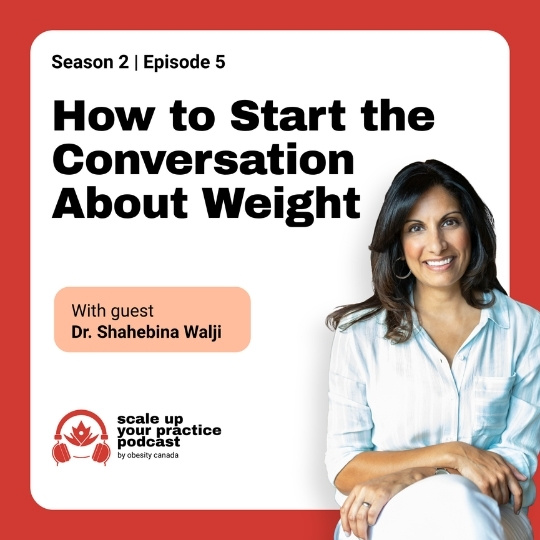


What happens in the first few moments of a conversation about weight with a patient can shape everything that follows.
Dr. Shahebina Walji joins us for a thoughtful conversation about how to start discussions about weight in a way that feels respectful, collaborative, and actually helpful. We explore the power of asking permission, the harm weight bias can cause in clinical care, and the small but meaningful language shifts that can help patients feel heard instead of judged. If you’ve ever wondered how to approach this topic with patients more thoughtfully in practice, this conversation offers practical guidance you can use right away.
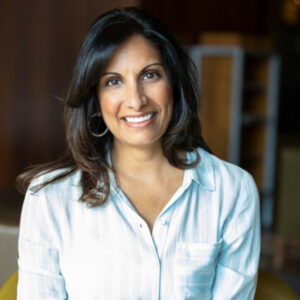
Dr. Shahebina Walji is an assistant clinical professor in the Department of Family Medicine at the University of Calgary, a Diplomate of the American Board of Obesity Medicine, and medical director of the Calgary Weight Management Centre.
She is a co-author of the Primary Care Chapter of the 2020 Canadian Adult Obesity Clinical Practice Guidelines and is actively involved in professional education for healthcare professionals in obesity care.
Obesity Canada’s Calibre program is an accredited, expert-led course designed to help healthcare professionals strengthen their skills in obesity care. Grounded in Canada’s Adult Obesity Clinical Practice Guideline, it blends self-paced learning with live, interactive sessions on communication, bias, collaborative care, and evidence-based treatment.
Learn more and register for the September 2026 cohort here.
Support Scale Up Your Practice by:
Email us at scaleuppod@obesitycanada.ca
This episode script was developed using NotebookLM to synthesize complex source materials into a structured educational format. The tool was used to analyze the Canadian Obesity Education Competencies (COECs), the Obesity Canada Strategic Plan, and guest-specific research. Specific prompts were utilized to extract relevant learning objectives, map them to CanMEDS roles, and generate competency-based interview questions.
While NotebookLM assisted in drafting the narrative arc and educational framework, all content has been reviewed, fact-checked, and refined by the podcast hosts and Obesity Canada’s clinical experts. This ensures the script aligns with current Clinical Practice Guidelines and authentically represents the lived experience perspective.
00:00:00:02 – 00:00:17:04
Dr. Shahebina Walji
When obesity is framed as a chronic disease that’s shaped by all kinds of factors like biology, environment, mental health, not just willpower, my hope is that it lifts the weight of self-blame.
00:00:17:06 – 00:00:28:20
Dr. Roshan Abraham
Hello, and welcome to the Scale Up Your Practice podcast, brought to you by Obesity Canada. I’m Dr. Roshan Abraham, family physician and associate professor at the University of Alberta.
00:00:28:20 – 00:00:32:21
Michelle McMillan
And I’m Michelle McMillan, a lived experience advocate with Obesity Canada.
00:00:33:00 – 00:00:54:17
Dr. Roshan Abraham
When it comes to weight, too many first interactions in healthcare have been shaped by judgment instead of curiosity. A patient steps on the scale, gets told to eat less and move more, and leaves feeling unheard. But science has moved forward. We understand much more now about obesity as a chronic disease, and now that we know better, we can do better.
00:00:54:18 – 00:01:16:04
Dr. Roshan Abraham
That means care that is respectful, evidence-informed, and tailored to the individual. Today, we’re talking about how to make that first conversation more compassionate and more useful for the people sitting in our exam rooms. And again, as a reminder, today’s episode is sponsored by an unrestricted education grant from Eli Lilly Canada.
00:01:16:06 – 00:01:43:18
Michelle McMillan
Today’s conversation is all about the foundation of clinical relationship. We’ll explore how to openly, compassionately have conversations with your patients and take a more tailored patient history and keep management discussions generally patient-centered. Joining us for that conversation is Dr. Shahebina Walji. Welcome.
00:01:43:20 – 00:01:45:09
Dr. Shahebina Walji
Thank you so much for having me.
00:01:45:10 – 00:02:07:14
Dr. Roshan Abraham
Dr. Walji is an assistant clinical professor in the Department of Family Medicine at the University of Calgary, a diplomat of the American Board of Obesity Medicine, and the medical director of the Calgary Weight Management Centre, one of the first obesity clinics to open in Alberta. She is also a co-author of the primary care chapter of the Canadian Adult Obesity Clinical Practice Guidelines.
00:02:07:15 – 00:02:17:11
Dr. Roshan Abraham
Welcome to the show. Why is asking permission to talk about a patient’s weight such an important starting point for clinicians?
00:02:17:13 – 00:02:52:06
Dr. Shahebina Walji
So first of all, I’m so happy to have this opportunity to be part of this program. This particular topic is so incredibly important because the tone of this first conversation can really set the stage for how open and engaged the patient is in the assessment and the treatment components of obesity care. It’s no big surprise when I say that weight is a highly sensitive and very, very personal topic for many people, if not most people.
00:02:52:08 – 00:03:20:05
Dr. Shahebina Walji
You know, it’s not comfortable talking about weight just because your provider might want to or might feel like it’s the right time. And it actually does pain me to admit this, but it is well known that weight is highly stigmatized, not just in society, but in healthcare. And so often patients have had other encounters with other providers that have left them feeling blamed or ashamed or stigmatized.
00:03:20:05 – 00:03:40:17
Dr. Shahebina Walji
And so by simply just asking permission with a neutral tone, with sensitivity, we can reduce some of the emotional barriers and anxiety that people are experiencing around this topic and kind of signal to the patient that, “Hey, I’m not here to judge you, and we will only continue this conversation if you’re comfortable.”
00:03:40:23 – 00:03:59:02
Michelle McMillan
Yeah. That is a great place to start because as I know, walking into an office, you know, a patient tends to feel really vulnerable walking into that appointment whether it’s past experiences or just nerves or, you know, even internalized weight stigma.
00:03:59:03 – 00:04:24:21
Michelle McMillan
Right? We think it’s our fault, right? So if you can imagine walking into a clinician’s office and your patient being like, “I know this is entirely my fault and I shouldn’t be here and I should fix it myself,” right? So I was wondering how should you start the conversation? And maybe, you know, does that conversation start with maybe asking permission before you launch into that kind of stuff?
00:04:25:00 – 00:04:54:03
Dr. Shahebina Walji
My practice is unique because we’re exclusively a weight management practice. So, you know, we do, of course, still initiate these conversations with sensitivity, but patients are coming in already expecting to talk about their weight. I really wanna call out the word that you used, which was vulnerable. I like this word because this is exactly how patients have described the experience to me.
00:04:54:03 – 00:05:15:23
Dr. Shahebina Walji
They use this exact word, actually, vulnerable. They say they feel vulnerable coming in for that first appointment with a total stranger to talk about their weight, which is already a very sensitive topic. And they tell me things like, you know, they don’t know what kind of treatment they’re gonna get. Some have even used the word dread, and I can’t blame them.
00:05:16:00 – 00:05:38:21
Dr. Shahebina Walji
I really can’t for feeling this way because many people carry years and years of negative experiences in healthcare and other environments too, where they’ve been made to feel bad about their weight. Like you said, they feel like their weight is their fault. They’ve been blamed for their weight like it’s some sort of character flaw, you know, or they’ve been judged or criticized in different ways because of their weight.
00:05:38:22 – 00:06:11:10
Dr. Shahebina Walji
So really, there’s tremendous power in simply just asking for permission to talk about weight. It can make a profound difference in how the entire visit unfolds, and the words are simple. They don’t have to be complicated. We can just say, “Would it be okay if we talk about weight today?” It, it immediately shifts the tone towards respect and safety, and it signals to the patient that they’re in control and that they are in an environment where they can be open and honest about their experiences and their barriers and their challenges.
00:06:11:10 – 00:06:26:20
Dr. Shahebina Walji
And I think this really sets the stage for authentic and meaningful conversations that engage the patient in the whole management process. The patient should feel that it is safe to be vulnerable.
00:06:26:22 – 00:06:50:01
Dr. Roshan Abraham
I actually couldn’t agree more. So working in a primary care practice myself but with learners, primarily learners in an academic practice, this comes up frequently, and there’s trepidation on the part of learners, and I can probably assume a lot of listeners as well, on how to open up that conversation. We haven’t been taught in our medical training how to approach this.
00:06:50:02 – 00:07:17:12
Dr. Roshan Abraham
There’s weight bias and stigma that exists throughout our system. We have our own trepidation about sensitive topics in medicine outside of weight bias and stigma as well. So automatically, the clinicians often come into it not knowing how to approach things. And definitely from the limited experience that I have over, I mean, just under a decade of doing primary care work, again, with learners, that simple question makes so much of a difference.
00:07:17:12 – 00:07:43:09
Dr. Roshan Abraham
It allows patients to make a choice as to whether or not they feel comfortable about being vulnerable right now. And in a family doctor’s office where you’ve established a relationship, oftentimes you’ve already created a lot of that atmosphere to make them feel safe, but you do have to take that one step more. One of the things that I’ve cautioned myself and my learners against doing is trying to over-explain things.
00:07:43:11 – 00:08:08:16
Dr. Roshan Abraham
You know, we are thinking about how this connects with this and this and this. If it naturally flows from what their initial visit is, potentially about pain or about a joint issue, that explanation can come oftentimes afterwards. But you still need to ask that question first and assess whether or not they’re in that state to even have the conversation.
00:08:08:16 – 00:08:18:20
Dr. Roshan Abraham
So I do think it is as simple as asking permission about weight, and then depending on how things go- You sort of take it from there.
00:08:18:22 – 00:08:20:11
Michelle McMillan
Yeah. I have to
00:08:20:13 – 00:08:40:15
Michelle McMillan
reiterate that it’s just asking permission is, like, the key piece for someone living with it because, listen, I might have had a terrible day, I had an argument with my partner, my kids misbehaved, they were late for school, you know, traffic was terrible getting to your office, I couldn’t find any parking, my work just called and said I need a meeting.
00:08:40:15 – 00:08:58:12
Michelle McMillan
Like, I have a lot of things going on, and the answer might be, “You know, not today.” This is a big topic, a complex topic. I’ve been living with this for 20, 30, 40, 50, 60 years, right? And today’s maybe not the day to do it. Which doesn’t mean I don’t wanna talk about it in the future.
00:08:58:13 – 00:09:22:22
Michelle McMillan
But I love asking permission, because today might not be the day and if you rush forward with a big explanation, I’m less likely to listen, because my mind is somewhere else, and I’m also less likely to probably come back, ‘because I was like, “Yeah, but I came for this reason, and then we talked about this, and…” Yeah. So I love that, it’s so simple.
00:09:22:22 – 00:09:28:02
Michelle McMillan
And sometimes the simplest things are the most impactful. Amazing.
00:09:28:03 – 00:09:50:16
Dr. Shahebina Walji
Absolutely. If I can just say here, and you highlighted a really important point, Roshan, there that, you know, it is not something that we’re taught. I wasn’t. Of course, now I was in medical school and then, like, in the last century, so, you know, you’d hope that things would get a little bit better. And I think they are.
00:09:50:18 – 00:10:15:21
Dr. Shahebina Walji
But all of us who are currently in practice who do have learners that are coming through, this is a really kind of small communication strategy that I think we can share with our learners when they’re with us. Asking permission is very powerful. And like Michelle, you say today might not be the day, that’s totally okay. You know? If a patient isn’t ready, then you don’t go there that day,
00:10:15:21 – 00:10:30:00
Dr. Shahebina Walji
but at least the patient leaves knowing that you care and that you’re open to talking about it. And, you know, they may bring it up at another time when they’re ready, or be open to the question to kind of moving forward with that conversation another day.
00:10:30:01 – 00:10:43:15
Michelle McMillan
Yeah, just because you ask it once doesn’t mean you can’t ask it again the next… If I say no the first time, it doesn’t mean that the next time that I’m in the office when I’ve had a better day and you ask the question it probably will be yes. But yeah, I love that.
00:10:43:18 – 00:11:12:13
Dr. Roshan Abraham
I think this segues perfectly into the next discussion point, which is that we know obesity is a disease shaped by biology, environment, and mental health, and yet the healthcare system often restricts us to 15-minute visits. It can be easy to default to quick, generic advice. How can clinicians work against the systemic barrier and still gather an accurate, tailored history that reflects the patient’s unique realities?
00:11:12:15 – 00:11:45:16
Dr. Shahebina Walji
Yeah, and this is a real, real challenge in clinical practice because on one hand, you know, we’re talking about how complex obesity is as a chronic disease. And on the other hand, we’re working within a very kind of tight time timeframe. Right? So I think the first thing that I think is really important to acknowledge is that I believe most healthcare providers are genuinely well-intentioned.
00:11:45:16 – 00:12:07:08
Dr. Shahebina Walji
I think we want to help our patients, and that’s sometimes why we kind of, the knee-jerk reaction is to just jump quickly to advice. But of course, when we do that, we end up skipping over probably, well, I mean, what I think is probably the most important part after asking for permission, and that’s doing a thorough assessment.
00:12:07:08 – 00:12:34:08
Dr. Shahebina Walji
So we have to remember that just as we do with any other presenting complaint– knee pain, shortness of breath– we need to pull the reins and make sure we do a proper assessment of obesity because this is what’s going to help further build that provider-patient rapport. And it will really inform the management plan. So how do we do this in the primary care setting where we only have 10 or 15 minutes?
00:12:34:10 – 00:13:06:12
Dr. Shahebina Walji
Well, I think the good news is that in this setting, we’re not starting from scratch. You kind of alluded to this already, Roshan. In primary care, there’s a lot of foundational information that’s already there. You know, medical history, mental health history, medications, lab work, maybe even some life context. That’s already there in primary care. Right? So it provides a pretty strong base from which point we can then focus on understanding the patient’s unique context.
00:13:06:13 – 00:13:37:10
Dr. Shahebina Walji
Right? So what is their weight history? When did it start? What contributed to weight gain? What have they tried? What does their current health behavior look like? We don’t wanna make assumptions. What are their barriers? And you know, more about their life context and their lived experiences. And then, you know, it helps when you kind of break it up this way, thinking about how much you already have, you know, to remind yourself that we don’t have to do all of this in just a single visit, right?
00:13:37:11 – 00:14:04:06
Dr. Shahebina Walji
This is a chronic disease. It’s a multifactorial disease. So it kind of makes sense that the assessment phase of this is longitudinal. And you know, this helps to build a really accurate and a really personalized picture of that patient, adding one layer over another of understanding each time. And I think, I feel, at least from a clinician perspective, that it takes the pressure off.
00:14:04:07 – 00:14:32:14
Dr. Shahebina Walji
Right? And I can only assume that maybe it takes the pressure off the patient as well. Right now, there’s other tools we can also use like questionnaires. You know, this actually allows people to reflect on, you know, their challenges, their history, their behaviors, their goals, and then provide the clinician with a richer and more organized set of information to work with during their appointments.
00:14:32:14 – 00:15:00:13
Dr. Shahebina Walji
And it can really focus those in-person appointments and make them super meaningful. I think also, if I can add this little bit here that there’s also real value in setting intentional time aside, whether it’s during a single visit or across a few visits, to educate patients on the science of weight regulation and obesity as a chronic disease.
00:15:00:13 – 00:15:33:06
Dr. Shahebina Walji
And the reason I say this is because in my experience, when patients understand the role of biology and hormones and environment and mental health and all the other factors, it really helps to reduce some of that self-blame that they’re coming in with and some of that internalized weight bias that, you know, we know is there. And it can reframe their whole experience from being a personal failure, which of course it isn’t, to a real medical condition that deserves support and that deserves treatment.
00:15:33:06 – 00:16:06:09
Dr. Shahebina Walji
And this shift alone, I think, is empowering and it improves engagement. It improves the conversation because patients aren’t being told what to do. They understand now that this is challenging, and they understand what their options are. And if I can just add this one other little piece here is that some of the words that I like to use with patients with patients are I’ll say something like, “I don’t feel that it’s my job to sit here and tell you what to do.
00:16:06:09 – 00:16:37:14
Dr. Shahebina Walji
That’s not my job. You know, we’re in this together, so my job is to listen to you and hear you and then to share with you what I know, and then we can make these decisions together. But you’re in charge.” At the end of the day, I think investing some, like, deliberate time into the assessment and into education upfront, even if it’s spread out over a few days, this leads to better and really tailored care.
00:16:37:14 – 00:16:52:12
Dr. Shahebina Walji
Because when we understand the patient’s perspective, when we understand their situation, the recommendations are not generic, right? They’re personalized, and they’re realistic, and they’re relevant to the patient, and I think more likely to stick.
00:16:52:14 – 00:17:21:05
Michelle McMillan
Yeah. It’s just, it, yeah it’s so powerful when you work together. And of course, that working together also means telling your patient that, you know, it’s not their fault. Like, this is a chronic disease. It’s incredibly complex disease. So yeah, that’s really important. And again a little, a simple little bit, right? But so important for engaging that conversation with patients.
00:17:21:09 – 00:18:01:16
Michelle McMillan
So for people living with obesity like myself, unfortunately we are really familiar with two things happening. Either our health concerns being brushed aside, right, as not important. We need to talk about the obesity part. We’ll talk about that other part some other time. And also the other, you know, the other gut punch is always the everything that possibly could go wrong with you, with your health and your body is entirely related to your weight regardless of whether you eat healthy, whether you exercise, whether you have good mental health, whether you sleep well, you know, all of those things.
00:18:01:17 – 00:18:29:14
Michelle McMillan
Everything is about weight. And so how, you know, how would you suggest that clinicians, you know, put their patients a little bit at ease because they’ve probably had some really bad experiences? No offense, there are a million amazing healthcare practitioners, but I know from people, myself and other people, that probably had a couple of bad interactions. So what would be your advice around that?
00:18:29:19 – 00:18:30:11
Dr. Shahebina Walji
Yeah.
00:18:30:16 – 00:18:52:05
Dr. Shahebina Walji
That’s– I’m sorry you had those experiences. They shouldn’t happen, you know? And I think this is another really important, and it’s a related question because for a lot of people who are living with obesity, you know, this experience of having their concerns dismissed or having everything attributed to their weight, this is not just a one-off.
00:18:52:06 – 00:19:22:21
Dr. Shahebina Walji
This is a repeated experience, and over time, that can absolutely affect how safe a person feels in a healthcare setting. So this particular question actually reminds me of a patient that I saw several years ago who had come in for kind of looking for support with weight management. And her story was that in, I think, the couple years prior, before, before I met her,
00:19:22:23 – 00:19:59:19
Dr. Shahebina Walji
she was walking about 45 minutes to work and 45 minutes home. This was her every day she was doing this. And then she developed plantar fasciitis very, very, very severe plantar fasciitis, and she could not walk to and from work anymore. It was just way too painful. So she started driving to and from work. So this is 90 minutes a day of walking now that she’s not able to do anymore because of the pain in her feet.
00:19:59:21 – 00:20:19:12
Dr. Shahebina Walji
Anyway, I saw her maybe a year or two after she developed this plantar fasciitis, and she was in our office looking for support with weight management. And her weight had changed over the couple of years. Who knows why. You know, there’s so many different reasons that, that could have, that her weight could have changed.
00:20:19:14 – 00:21:00:08
Dr. Shahebina Walji
And she told me that she had gone into her primary care provider for help with her plantar fasciitis, and her primary care provider said, “You need to lose weight. That’s gonna solve your problem.” And so, you know, where she was probably stuck in this vicious cycle, right? Where one thing is affecting the other, you know? And so, you know, I think that kind of highlights, I think what you’re saying here about how you go in for one thing and, you know, it’s automatically attributed to weight.
00:21:00:10 – 00:21:30:00
Dr. Shahebina Walji
This plantar fasciitis that this patient developed happened before there was any weight concerns. So when we skip that first question of asking permission and jump straight into talking about weight, even if it’s well-intentioned, it can kind of reinforce that experience, right? It sends the message, often unintentionally, that the clinician has already decided what the problem is, right? Without even listening, without hearing what the patient’s perspective is.
00:21:30:00 – 00:22:00:15
Dr. Shahebina Walji
And that can feel dismissive, and that can feel stigmatizing, especially if the patient has come in for something unrelated, right? It also reinforces this bias that weight is always the primary issue, which we know isn’t true. And, you know, this can often lead to missed or delayed diagnosis or, you know, not being able to access appropriate treatment. So small communication shifts can make a really big difference.
00:22:00:16 – 00:22:27:20
Dr. Shahebina Walji
Asking permission to talk about weight is one of those small steps, right? It’s about leading with curiosity rather than assumption. So we take the time first to understand exactly why the patient came in and exploring those concerns first. We don’t immediately anchor on weight. This helps to build trust, and it shows that you see them as a whole person, that you hear them, and that they’re not just this number on the scale, right?
00:22:27:22 – 00:23:03:07
Dr. Shahebina Walji
And language matters a lot, too. We wanna use neutral language, first-person language, like a person living with obesity rather than labeling someone, you know. We absolutely, and I can’t really underscore this enough, we absolutely have to be mindful not to over-attribute symptoms to weight without doing an appropriate assessment. You know, that’s key, and this can be as simple as saying something like Hey, let’s explore a few possible causes of your knee pain, of your plantar fasciitis, right?
00:23:03:09 – 00:23:24:20
Dr. Shahebina Walji
Instead of just jumping to one conclusion. I think another really important piece here is validating the patient’s experience, right? Acknowledging that, you know, look, I know, you know, weight can be a really sensitive topic, and a lot of people have had, you know, not so nice experiences talking about it in a healthcare setting.
00:23:24:20 – 00:23:36:12
Dr. Shahebina Walji
I think that can go a long way. It builds rapport. It builds trust. Again, it makes it a little bit easier for that patient to be vulnerable in that setting. Ultimately,
00:23:36:13 – 00:24:01:02
Dr. Shahebina Walji
it’s about respect, right? We want to have respectful conversations. We want to deliver person-centered care, and the only way you can do that is by feeling like you’re a partner with your patient, right? Patients need to feel heard. They absolutely– they have the right to be respected. They have the right to not feel like they’re judged,
00:24:01:04 – 00:24:15:01
Dr. Shahebina Walji
and they then will be more likely to engage in harder conversations, including about weight. And that’s when those conversations get really authentic and really meaningful, and they lead to better care.
00:24:15:03 – 00:24:44:05
Dr. Roshan Abraham
I wish we could unpack everything that you just said. As an educator, there is so much that I wish we could unpack. The one thing in the interest of time and for our listeners as well just that concept of bringing to the forefront that the presenting complaint could be due to a variety of things. As an educator I relate that back to the differential diagnosis, right?
00:24:44:06 – 00:25:16:08
Dr. Roshan Abraham
You’re actually priming yourself to consider something more. You’re actively working against the institutionalized weight bias and stigma, and you’re forcing yourself to actually consider another differential. And I think it’s important to communicate that and then internalize that yourself. So there’s actually a process of working against some internalized weight bias and stigma. And I see that when we talk to our learners about how they approach these conversations. It doesn’t matter if it’s about weight bias or where they sort of narrow in on one diagnosis.
00:25:16:13 – 00:25:31:23
Dr. Roshan Abraham
When you say that it could actually be related to a variety of things, it opens up the conversation to the patient. They might actually think, “Oh, well, you know, I remember this thing at this point in time that might actually be related to something else that’s not weight-related or not the one that we’re trying to focus on.”
00:25:31:23 – 00:26:01:07
Dr. Roshan Abraham
So just that idea of expanding the differential diagnosis while also combating weight bias and stigma is something that can be done so easily, as long as you do it and then reflect on it as well. So I know there’s so much more that we could actually get into, but I love all of the things that you’re talking about, and I love that it’s all relatively time efficient in a way that as long as you’re reflecting on it afterwards. I think a lot of impact can be had on patients
00:26:01:09 – 00:26:04:06
Dr. Roshan Abraham
if clinicians actually do these simple things.
00:26:04:06 – 00:26:26:07
Dr. Shahebina Walji
And if I can add, I agree with you wholeheartedly. And it’s very consistent, I think, with how we learn in medicine. We learn to be open-minded. We learn to consider all things. So those same basic principles that are, you know, kind of driven in us when we’re in school, you apply them here.
00:26:26:09 – 00:26:58:00
Dr. Roshan Abraham
Correct. I really wanna translate this because I think you’ve got some great tidbits for our listeners in-into the daily reality of a busy clinic. We need to approach management discussions in a way that establishes a personalized, collaborative relationship. So what do some of these compassionate patient-centered openings actually sound like? What types of words or phrasings do you recommend clinicians use to initiate or continue the conversation safely?
00:26:58:01 – 00:27:21:00
Dr. Shahebina Walji
So another great question because, again, the way we open the conversation sets the tone for everything that follows, right? So the good thing I think about primary care is that there’s already a relationship with the patient, right? So the words don’t have to be complicated. They don’t have to be long. They just have to be respectful and intentional,
00:27:21:01 – 00:27:45:18
Dr. Shahebina Walji
right? So a truly patient-centered approach would be anchored in the patient’s agenda first, which I think primary care does well, you know, with words like, you know, what brought you in today? Or you know, is there something specific that you want to focus on today? So this kind of approach helps to make sure that the patient feels heard before anything else,
00:27:45:18 – 00:28:14:00
Dr. Shahebina Walji
and I think that can go a really long way in building that trust, right? Now from there, if the healthcare provider feels that weight might be clinically relevant, then you’re moving into that asking for permission to talk about weight before just introducing it, right? And so that could be as simple as, “Hey, would it be okay if we talk about your weight today and how it might be impacting your health?”
00:28:14:04 – 00:28:36:10
Dr. Shahebina Walji
I think this gives the patient control, and it signals that this is a shared conversation. It’s not something that’s being imposed on them. I also think that it can help to normalize and soften the topic by saying something like, “I know this is a sensitive topic. I know that people have had very different experiences discussing it in healthcare, some not so good.
00:28:36:11 – 00:29:03:06
Dr. Shahebina Walji
So I just wanna make sure that we’re approaching this in a way that feels comfortable.” And I think that statement alone really acknowledges the vulnerability of the topic, right? And it reduces the risk of the patient feeling like they’re being judged or blamed or criticized, right? Another approach I think could be to connect the topic of weight directly to the patient’s goals or concerns.
00:29:03:06 – 00:29:27:10
Dr. Shahebina Walji
So for example, you could say something like, “Hey, you mentioned your joint pain or your, or knee pain. Sometimes weight can play a role there, not always, but sometimes. Would you be okay if we explore this together?” And this keeps the conversation relevant and collaborative and open rather than, you know, this is all because of your weight.
00:29:27:12 – 00:30:00:03
Dr. Shahebina Walji
And again, our language choices matter. I think using phrases like, “Hey, we can work on this together,” or, “What feels realistic for you right now?” It reinforces that the patient is in charge, that this is a partnership, and it kind of steps away from that, you know, I’m telling you what to do type of tone. At the end of the day, a safe and compassionate opening is about creating a moment where the patient feels like they’re respected, like they’re in control, and like they’re being understood.
00:30:00:04 – 00:30:14:16
Dr. Shahebina Walji
So even in a 10-minute visit, a few intentional sentences can completely change how the rest of the conversation and how the management of that patient goes.
00:30:14:18 – 00:30:54:00
Michelle McMillan
Absolutely. So we’ve kind of talked about, you know, asking permission, how important it is, listening to the patient’s story before you launch into a diagnosis, right? Validating obesity as a chronic disease, and all of this kind of leads into what you were saying about there’s really this facilitates a power dynamic shift, right? So maybe you could talk a little bit about Just based on your experience, how this change in power shift affects your relationship with the patient, how it affects their trust in you, their willingness to stay engaged,
00:30:54:00 – 00:31:09:22
Michelle McMillan
like come back for a next appointment, how their willingness to participate in whatever treatment plans you discuss and agree to, because I think it’s important for our listeners to kind of hear how this is gonna benefit their relationship with their patients.
00:31:10:00 – 00:31:46:20
Dr. Shahebina Walji
I love this question, Michelle, and actually I wish, and I may even do this now, but I wish I could ask my patients this question. You know, because then I’ll really know what their perspective is. From my perspective, this shift, it doesn’t just feel clinical. It feels deeper, you know? For a lot of patients, walking into a healthcare setting can feel like they’re walking to a space where they’re gonna be judged or dismissed or blamed, especially if we’re gonna be talking about weight.
00:31:46:20 – 00:32:17:07
Dr. Shahebina Walji
So when a clinician takes a totally different approach, asking permission, you know, being sensitive, genuinely listening, acknowledging that obesity is a chronic disease, I would imagine that it feels surprisingly disarming. So I’ll tell you a story here. I just had a new patient just two days ago who initially in the visit I could tell he was skeptical, and it was very clear that he was quite guarded.
00:32:17:09 – 00:32:41:10
Dr. Shahebina Walji
By the end of the visit, his guard had come down, and he was very open, and he actually said to me, “Thank you. I enjoyed this.” And you know, it’s so nice when you hear that as a clinician, right? But he explained that he was dreading the initial appointment. That’s the word he used. He used the word dread.
00:32:41:11 – 00:33:10:00
Dr. Shahebina Walji
He said, “I was dreading this appointment, and I was being– I was expecting that I was gonna be told to do this or do that.” He said he was surprised by the encounter and that he actually enjoyed it and that he felt like he was heard. So generally what I hear from patients is that you know, this sort of sensitive approach, it, it creates almost a sense of relief, almost like, “Oh, I don’t actually have to defend myself here.”
00:33:10:00 – 00:33:33:00
Dr. Shahebina Walji
And this shift kind of moves the interaction from something that feels, you know, confrontational or hierarchical to something that feels collaborative and safe. And so instead of feeling like they’re being evaluated, people feel like they’re being understood. I’ve had other patients say to me, “I don’t think anyone has ever taken the time to ask me these questions.” Right?
00:33:33:01 – 00:34:03:00
Dr. Shahebina Walji
So I think it’s appreciated. You know, my, my hope really is that these encounters change the internal narrative. That’s my hope, right? Because when obesity is framed as a chronic disease that’s shaped by all kinds of factors like biology, environment, mental health, not just willpower, my hope is that it lifts the weight of self-blame. You know, this is one of my biggest goals with my patients.
00:34:03:02 – 00:34:28:12
Dr. Shahebina Walji
I want for them to go from, “This is my fault,” to, “This is complex biology and it’s something that I can actually get support and treatment for.” That’s, I think, a really important psychological turning point really that keeps patients engaged. Now, in terms of power dynamics, you know, taking a step back, asking permission, taking the time to assess and educate.
00:34:28:13 – 00:34:53:23
Dr. Shahebina Walji
Here we’re taking steps away from being the expert who tells the patient what to do, and become a partner who actually works alongside the patient. And I think patients feel this immediately. I think, you know, they’re more likely to speak openly to share things that maybe they’ve never shared with anyone before, and to actually engage in, in problem-solving. Over time,
00:34:54:00 – 00:35:14:13
Dr. Shahebina Walji
of course, this only builds trust. Strengthen that relationship. But it’s not just like surface levels, surface level trust. It’s the kind of trust that, as you say, brings people back even if things aren’t going well, right? Patients who are feeling respected, who are feeling like they’re not gonna be judged, are most likely to return for follow-up.
00:35:14:13 – 00:35:34:23
Dr. Shahebina Walji
And when things aren’t going well, that is when we wanna see them. You know, that’s when we don’t want them to disengage. We want them to stay engaged when things are hard and challenging. We want them to feel like they can be honest about not just what is working, but what isn’t. That’s key really. So I don’t know.
00:35:35:00 – 00:35:59:16
Dr. Shahebina Walji
I would like to think that one of the most meaningful impacts here is that it changes healthcare from something that a patient should avoid to something that they should access because they feel safe and they know that they’re gonna get sensitive support. And in a chronic condition like obesity, where long-term engagement is really quite essential, I think that shift can make all the difference.
00:35:59:18 – 00:36:03:09
Dr. Shahebina Walji
But again, I would have to ask my patients.
00:36:03:11 – 00:36:31:18
Michelle McMillan
Well, I can speak as a patient. I’m not one of your patients, but I am a patient. And I can honestly tell you, I still remember the first time I had an appointment and we were discussing weight, and we talked about how it’s a chronic disease. And it isn’t just about my lack of willpower, it isn’t just about eating less and moving more. Like, this is really complex stuff.
00:36:31:18 – 00:37:02:22
Michelle McMillan
And the fact that I heard that and it brought my stress level down from, as you said to your other patient, from dread level, like way up here, to, “Oh. Oh.” Right? And then, you know, it made me wanna come back for the next appointment. You know, the next appointment there was more discussions about, okay, what … I also remember the next appointment the practitioner saying, “Okay, here’s the list of the things that we’ve discussed that we could implement.
00:37:02:23 – 00:37:24:11
Michelle McMillan
Which one or two of these things do you think you can do between now and our next visit?” Not like, “Do all 10 things,” and then when I can’t do all 10 things, I’m like, “Well, there’s no sense going back because I’m just a loser who couldn’t do all the 10 things,” right? So yeah, those two things that you’ve mentioned are just so important.
00:37:24:11 – 00:37:48:14
Michelle McMillan
And from a patient, I can tell you it will build relationships with your patients. They will come back. They will do the treatment plan things that you discuss because they agreed to do things that weren’t impossible that they could do. So yeah, to our listeners, this is so important, and you will get so much back, and your relationship with your patients will be so much more collaborative, so much more easier.
00:37:48:14 – 00:37:55:14
Michelle McMillan
They won’t miss their appointments. All of these things that we’ve talked about will definitely improve that relationship.
00:37:55:15 – 00:38:20:05
Dr. Roshan Abraham
I have to add one more thing. There’s so much that we could unpack here that, again, I come back to the education side of things when I think about who’s listening to this podcast, and I think about even clinicians in practice.The power differential that we see in obesity, but in a lot of chronic disease, is something that we’ve actually potentially experienced ourselves through the medical education system.
00:38:20:07 – 00:38:47:01
Dr. Roshan Abraham
We’ve all experienced power differentials, especially at the start of our careers, and I’ve thought about posing this to my learners about OSCEs. So those are organized structured clinical examinations where we have prompts on the doors. The sense of dread that comes to us before we open the OSCE door is something that we should think about as being mirrored in some of our patients with chronic disease.
00:38:47:01 – 00:39:06:21
Dr. Roshan Abraham
But just flip the door, right? They’re sitting on the other side. They’re in dread of what’s going to walk in through the door in terms of bias and stigma. And so just trying to put yourself in their shoes. It’s hard for us when we don’t actually experience that chronic disease, but we have actually experienced power differential challenges within the medical education system.
00:39:06:21 – 00:39:25:21
Dr. Roshan Abraham
And so we should harness that experience at the very least to know that we have experienced it through our system, and now we have to do our best to try to collaborate. Because when we go into an OSCE station, which is again the way that we test residents and students on how they do in a clinical environment, there’s no collaboration.
00:39:25:22 – 00:39:37:21
Dr. Roshan Abraham
You’re just trying to hit off checkpoints and hopefully try to score as much points so that the person marking you gives you the best mark possible, right? So that you are aligning with what they want.
00:39:37:21 – 00:39:38:16
Dr. Shahebina Walji
I love this analogy.
00:39:38:18 – 00:39:47:17
Dr. Roshan Abraham
There’s no collaboration, there’s no back and forth, there’s no relationship. Right? And it speaks to the broader system that we’re under.
00:39:47:18 – 00:40:10:04
Dr. Roshan Abraham
But, and again, many people have heard me talk about this at length, and I won’t necessarily now, but at the very least to think about this as an empathy opportunity to really empathize. We do have these opportunities in medical education because it’s hierarchical. In health professionals education, it is naturally hierarchical. We can empathize with our patients at least to some degree because it’s built into our system.
00:40:10:05 – 00:40:32:20
Dr. Roshan Abraham
So think about when next time you see a patient for a chronic disease, especially obesity, where there’s bias and stigma that’s attached to it, but there are a lot of other chronic diseases as well. Think about yourself on the other side of that door in an OSCE station, how you felt like, how your palms were sweaty, how you’re worried about not saying the right thing, how you are maybe trying to just live up to what the person on the other side is marking you as.
00:40:32:21 – 00:40:45:20
Dr. Roshan Abraham
I think it’s important to think about the fact that we’ve actually had a fraction of the experiences that people have with chronic diseases, but that we can actually still dig deep and think about those experiences and empathize with our patients.
00:40:45:22 – 00:40:57:18
Dr. Shahebina Walji
Roshan, that was an outstanding analogy, and it’s been like 25, maybe more years since I’ve done an OSCE, like as a student.
00:40:57:19 – 00:40:58:15
Dr. Roshan Abraham
But you still remember it.
00:40:58:15 – 00:41:10:05
Dr. Shahebina Walji
And I still feel it. As you’re talking about it and describing it, I was like, “Oh, my gosh,” like that feeling all came back. I think that’s an outstanding analogy, and I think that’s powerful.
00:41:10:07 – 00:41:17:15
Michelle McMillan
Today we covered how to initiate compassionate, stigma-free conversations by simply asking for permission.
00:41:17:15 – 00:41:27:15
Dr. Roshan Abraham
We also discussed the critical importance of setting aside personal bias to gather a truly tailored patient history, ensuring our care plans are rooted in the patient’s lived reality.
00:41:27:19 – 00:41:48:15
Michelle McMillan
You can find direct links to the primary care chapter of the Canadian Adult Obesity Clinical Practice Guidelines co-authored by our lovely guest, Dr. Walji, in our show notes. Please visit them to dig deeper into the evidence-based “Five As” approach.
00:41:48:17 – 00:41:56:18
Dr. Roshan Abraham
New episodes of Scale Up Your Practice drop every second Thursday, so make sure you are subscribed so you never miss an episode.
00:41:56:23 – 00:42:15:14
Michelle McMillan
If you found value in today’s discussion, and I have no idea how you couldn’t have found value because it’s amazing, please take a moment to rate and review us on your favorite podcast platform or/and share it with a colleague. It helps other clinicians find this valuable podcast.
00:42:15:16 – 00:42:28:10
Dr. Roshan Abraham
And until next time, stay curious, stay kind, and keep Scaling Up Your Practice.
00:42:28:12 – 00:42:51:12
Dr. Roshan Abraham
This podcast is intended for informational and educational purposes only and does not constitute medical advice. The content shared in this podcast should never be used as a substitute for professional medical advice, diagnosis, or treatment. Always seek the guidance of a qualified healthcare professional with any questions you may have regarding your health or a medical condition.
00:42:51:14 – 00:43:21:14
Dr. Roshan Abraham
The information and treatment discussed in this podcast are based on Canadian guidelines and approved practices as of the time of recording. If you are listening from outside of Canada, please consult your local healthcare professional to ensure compliance with your region’s medical standards, guidelines, and recommendations. The creators of this podcast disclaim all liability for any decisions or actions taken based on the content discussed. Listening to this podcast does not establish a professional or patient-client relationship.
Be the first to know about new education and resources for healthcare professionals from Obesity Canada.
Applications are open for clinicians, researchers and other experts from across Canada to join the author group for the Canadian Adult Obesity Clinical Practice Guideline.