New report: Five gaps are holding back better obesity care in Canada. Learn more

Home • Scale Up Your Practice podcast • Starting with the basics: Common obesity cases in clinical practice with Dr. Rishi Handa & Dr. Taniya Nagpal

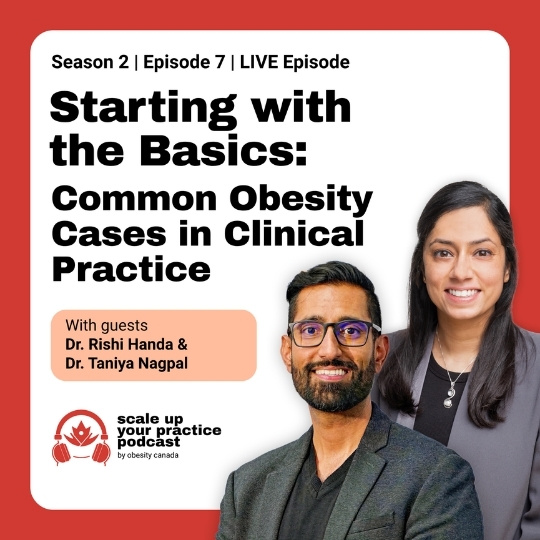


This special live episode of Scale Up Your Practice was recorded at the 2026 Canadian Obesity Summit in Montreal this past March.
Dr. Roshan Abraham is joined by guest host Dr. Taniya Nagpal and special guest Dr. Rishi Handa for a case-based conversation about what obesity care can look like when healthcare professionals move beyond standardized answers and build care around the person in front of them.
Through three common clinical cases, the episode explores how culture, patient goals, medication side effects, language used in referrals, weight bias, and clinical humility can shape the care experience. The conversation also asks a deeper question: what happens when standard practice stops being helpful and starts becoming a barrier?
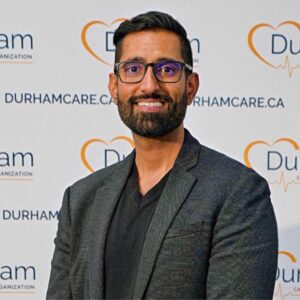
Dr. Rishi Handa is an internal medicine specialist and Medical Director at Durham Care Clinic + Pharmacy. He also leads the Durham Care Diabetes Education Program and Handa Medicine Research, focusing on diabetes care, weight management, and cardiology.
Dr. Handa trained in New Jersey, where he served as Chief Resident and Cardiac Rehab Supervisor, before bringing his expertise to Oshawa, Ontario. He is a Collaborating Physician at multiple diabetes education centers and a Principal Investigator at Centricity Research, leading studies on cardio-metabolic disorders.

Dr. Taniya Nagpal is an Assistant Professor in the Faculty of Kinesiology, Sport, and Recreation at the University of Alberta, and Director of the LEA(p)P(p)S research program. Her work focuses on understanding weight stigma and its impact on health behaviours and healthcare access during the reproductive years, including pregnancy and postpartum. With a background in exercise science and health psychology, Dr. Nagpal works closely with both patients and maternal care providers to develop tools that reduce stigma and promote compassionate, person-centred care.
If this episode leaves you thinking about how to strengthen your own approach to obesity care, Obesity Canada’s Calibre course is designed to help.
Calibre is an accredited course for healthcare professionals who want practical, evidence-based tools they can apply in real clinical settings. The course combines self-paced learning with live, interactive sessions, helping learners build confidence in obesity assessment, treatment, communication, and patient-centred care.
The next cohort runs September 3 through October 7.
Support Scale Up Your Practice by:
Email us at scaleuppod@obesitycanada.ca
This episode script was developed using NotebookLM to synthesize complex source materials into a structured educational format. The tool was used to analyze the Canadian Obesity Education Competencies (COECs), the Obesity Canada Strategic Plan, and guest-specific research. Specific prompts were utilized to extract relevant learning objectives, map them to CanMEDS roles, and generate competency-based interview questions.
While NotebookLM assisted in drafting the narrative arc and educational framework, all content has been reviewed, fact-checked, and refined by the podcast hosts and Obesity Canada’s clinical experts. This ensures the script aligns with current Clinical Practice Guidelines and authentically represents the lived experience perspective.
00:00:00:07 – 00:00:16:13
Dr. Taniya Nagpal
Today we are looking at real-world cases to see how acknowledging our own clinical limitations may be the first step to providing evidence-based collaborative care.
00:00:16:15 – 00:00:37:01
Dr. Roshan Abraham
Hello and welcome to Scale Up Your Practice. I’m Doctor Roshan Abraham, family physician and associate professor at the University of Alberta. Today’s episode is a special one. What you’re about to hear was recorded live at the 2026 Canadian Obesity Summit in Montreal this past March, where we brought the podcast on stage for a case-based conversation in front of a live audience.
00:00:37:05 – 00:01:04:18
Dr. Roshan Abraham
I’m joined by guest host Doctor Tanya Nagpal, and Doctor Rishi Handa, for a discussion about obesity care, clinical decision making, and what it takes to meet patients with curiosity, respect and better questions. We explore something that doesn’t get enough attention in clinical training: What happens when standard practice stops being helpful and starts becoming a barrier? One of the things I appreciate most about this conversation is the honest questions at its core.
00:01:05:00 – 00:01:18:07
Dr. Roshan Abraham
Are we listening well enough, continuing to learn, and building care around the person in front of us? We’re excited to share this live episode with you. Let’s get into it.
00:01:18:09 – 00:01:41:18
Dr. Taniya Nagpal
All right. Hello everybody, and welcome to a special live episode of the Scale Up Your Practice podcast. So for those of us who are listening to us, just to give you a picture of what’s going on in the room, we have a full room here in Montreal. We’re here with the Obesity Canada Summit, and so this special episode is brought to you by Obesity Canada,
00:01:41:19 – 00:02:00:18
Dr. Taniya Nagpal
and we get to be here live with an awesome audience as well as our guests. And I get to be your guest host. My name is Tanya Nagpal. and I am an assistant professor with the University of Alberta, and my area of research is in weight bias and stigma as it pertains to women’s health. Today, as I said, we are here with two guests,
00:02:00:18 – 00:02:35:22
Dr. Taniya Nagpal
and first I want to tell you a little bit about what we’re hoping to accomplish in today’s session. So in clinical training, we are taught to look for standardized answers, but what happens when standard practice becomes a barrier? Our clinics are diverse today, our patients’ lives are complex, and the science of obesity is continuously evolving. Yet, we often rely on frameworks that overlook cultural realities or place the burden of health entirely on the patient, especially during vulnerable times like pregnancy.
00:02:36:00 – 00:03:07:18
Dr. Taniya Nagpal
Today we are looking at real-world cases to see how acknowledging our own clinical limitations may be the first step to providing evidence-based collaborative care. To help us navigate these scenarios, I’m joined by your usual host of this podcast, so if you are an ongoing listener, you’ll recognize their voice. We have Dr. Roshan Abraham, and we’re also joined by our special guest, Dr. Rishi Handa, an internal medicine specialist and the medical director of the multidisciplinary Durham Care Clinic in Ontario.
00:03:07:19 – 00:03:09:00
Dr. Taniya Nagpal
Welcome to both of you.
00:03:09:00 – 00:03:10:12
Dr. Roshan Abraham
Thank you for having. Us, Tanya.
00:03:10:13 – 00:03:11:07
Dr. Rishi Handa
Thank you.
00:03:11:08 – 00:03:39:00
Dr. Taniya Nagpal
We’re gonna dive right into it. We’ve got about 42 minutes with everybody here, and we’ve got some excellent cases that we want to get both of your insights on, as well as potentially get some feedback from our audience. So let’s start with a look at how we apply evidence-based assessment principles in practice. Our first case that we have here is Priya, a 32-year-old South Asian woman in her first trimester of pregnancy, presenting with a BMI of 25.
00:03:39:00 – 00:04:06:02
Dr. Taniya Nagpal
So in the research that I do, as I mentioned, with women’s health, a lot of the work that I’ve done is around weight bias before, during, and after pregnancy. Women who have an elevated BMI, or a larger body, during pregnancy face a lot of assumptions coming into prenatal care, whether that be assumptions around what risks they are potentially going to face, but also assumptions around what are they eating or what are they doing in terms of physical activity.
00:04:06:02 – 00:04:33:20
Dr. Taniya Nagpal
So Priya’s likely coming into her prenatal care potentially anticipating these types of stigmatizing, notions and remarks. Now, when we take a look at her BMI of 25, standard assessments might often miss the mark entirely. Roshan, as clinicians, we need to recognize that our own professional training sometimes has limitations. So before we turn it over to you, we’re actually going to have a little prompt for our audience.
00:04:33:20 – 00:04:51:02
Dr. Taniya Nagpal
So you’ve got a QR code there that I would like you to please screen- or scan, and it’s asking you, in five words or less, describe how a standard Western-centric assessment fails to meet the needs of a patient like Priya.
00:04:51:04 – 00:05:21:10
Dr. Taniya Nagpal
So for our listeners, some of the words that are coming up on the screen are things like high threshold to treat, missing risks, this is taking too long, cultural differences, higher risk at a lower BMI, assumptions instead of questions, cultural food differences, could underestimate risk, not validated, underrepresented, short consultations, not adaptable to her culture, dismissive, judgmental, cultural issues,
00:05:21:10 – 00:05:38:04
Dr. Taniya Nagpal
ethnicity considerations, short consultations, body composition. Amazing. Thank you, everybody. So Roshan, I’m gonna turn it over to you with this exact question: How would a standard Western-centric assessment potentially fail to meet the needs of a patient like Priya?
00:05:38:06 – 00:05:46:23
Dr. Roshan Abraham
And this is what I love about the interactive component. It looks like we’re already hitting the mark. Different BMI cutoffs, cultural differences, and we’ll get into this
00:05:47:00 – 00:06:05:16
Dr. Roshan Abraham
in a little bit more detail. But Priya’s case really perfectly illustrates where standardized medicine misses our mark. And I think it’s incredibly important for us to recognize this not only in our clinical settings, but in our education settings as well and teaching our learners. I just had an opportunity to teach some of my learners about this this last week.
00:06:05:18 – 00:06:27:10
Dr. Roshan Abraham
As many of you already know, our standard Western-centric clinical training relies on a single BMI cutoff. The problem is that these numbers fail to capture the metabolic reality for diverse groups. And biologically, South Asians usually exhibit a different phenotype, possessing higher percentages of body fat, particular visceral fat, and lower levels of lean muscle fat compared to individuals of European descent at the same BMI.
00:06:27:14 – 00:06:53:02
Dr. Roshan Abraham
And so with all of this in mind, this is often linked to fetal programming, a response to intrauterine undernutrition, that predisposes them to insulin resistance in an environment of caloric abundance. And what’s really important when we think about getting back to guidelines latest in 2024 and 2025, is that this does represent a paradigm shift. And I think that’s important for us to see that in our clinical practice.
00:06:53:02 – 00:07:20:00
Dr. Roshan Abraham
And so for our South Asian populations, an overweight BMI actually begins at 23, and obesity begins at 25. We just had a review in JAMA that states that anti-obesity medication should be considered for this demographic at a BMI of 27 or 25 with weight-related comorbidities, and even through our Step 11 trial, which specifically evaluated semaglutide 2.4 milligrams, resulting in a significant weight loss and significant cardiometabolic improvements.
00:07:20:00 – 00:07:46:19
Dr. Roshan Abraham
So if we just look at Priya’s BMI of 25 through a Western lens, we might label her as mildly overweight and overlook her. But through an ethnicity-specific lens and really through a lot of the comments here around, that ultimately are getting to a little bit of bias as well as cultural safety and cultural competency, we do have a high-risk chronic disease that requires proactive, compassionate management, and this could very well fall under the radar.
00:07:46:21 – 00:08:15:16
Dr. Taniya Nagpal
And maybe, Rishi, if you could speak to specifically the diabetes aspect of it; With Priya being of South Asian descent, we do see higher risk of gestational diabetes and type 2 diabetes in general. How would a healthcare provider potentially convey this information, and how- and potentially if we just rely on Western medicine, what messaging would we convey to docs so that they could be more culturally competent in diabetes assessments?
00:08:15:19 – 00:08:47:00
Dr. Rishi Handa
Yeah. I mean, one of the things that we definitely practice in our setting is, you know, talking to different cultures. We wanna really focus on cultural specific recommendations. So one of the examples I like to give is, you know, I can’t really talk to our South Asian patient population and tell them, “Stop eating rice.” They might nod their head and agree at that moment, but they’re gonna sort of think to themselves and say, “Well, what else can we replace that with?” Right?
00:08:47:00 – 00:09:10:15
Dr. Rishi Handa
So rather than giving them recommendations that will be very difficult to act on, I’ve started giving them recommendations like, “Well, you know, you can eat rice. Try to limit it, but when you do eat rice, you wanna either refrigerate it or do things to it that can make it into more of a resistant starch so it has less of an impact on your glycemic control.”
00:09:10:17 – 00:09:40:10
Dr. Rishi Handa
The other thing that, you know, we do like to talk to our patients about is, seeing is believing. So, of course, it’s gonna be limited depending on what your, you know, patient population is. But if you do have patients that are open to this, we often have an exercise where we introduce them to CGM technology early on. We find that this is more of a behavioral, more of an effective behavioral change.
00:09:40:12 – 00:10:14:09
Dr. Rishi Handa
An example that I also like to give is, I had put- A little bit of personal information: My father is obviously, South Asian, Indian descent. He has prediabetes and I, from years and years of talking to him, haven’t been able to convince him to exercise and eat “healthy,” very generic recommendations. But, I put on a sensor for him, and a couple days later he picked up the phone and called me and said, “You know what?
00:10:14:12 – 00:10:41:12
Dr. Rishi Handa
I went for a five, 10-minute walk, and I saw my sugars went down.” And I’m like, “This is amazing. Yeah. Great. This is what I’ve been telling you from the get-go.” But, again, seeing is believing and when, you know, you pair all these learnings that some of our patients might have for the last 10, 15, 20 years, when you pair it with, something like a CGM sensor, it all starts to make sense.
00:10:41:14 – 00:10:45:07
Dr. Taniya Nagpal
Our dads should hang out. My dad is the exact same.
00:10:45:09 – 00:10:49:17
Dr. Rishi Handa
I need to put another sensor on my dad, though. He’s forgotten already.
00:10:49:19 – 00:11:06:07
Dr. Taniya Nagpal
And Roshan, could you maybe speak to, I guess we kind of… It’s not just specific to BMI and obesity, but as our population becomes more diverse; What is, I guess, the responsibility of docs in being culturally competent?
00:11:06:12 – 00:11:26:00
Dr. Roshan Abraham
That’s a really good question. Being at the– So I’m for those of you that aren’t aware, I’m at the University of Alberta, part of the Faculty of Medicine and Dentistry, and most of my work is actually in education and, with Obesity Canada, education advocacy. Cultural competency, cultural safety, are areas that I think we continue to work on.
00:11:26:00 – 00:11:50:01
Dr. Roshan Abraham
And really it’s actually about exposure as much as possible within our clinical settings and our education settings. We don’t have that nearly enough. We have very targeted approaches in our training settings, but that varied approach isn’t there. And then, then there’s some really key concepts around cultural safety and cultural competency that we need to embed within our educational systems from the start.
00:11:50:01 – 00:12:12:12
Dr. Roshan Abraham
And I think, opportunities with standardized patients, for instance. We published a paper on the importance of using standardized patients for teaching of obesity, for- or sorry, recognizing that that’s an important way that students learn. But also the flip side of it, recognizing that way bias and stigma and cultural competency needs to be, and cultural safety needs to be, integrated into that.
00:12:12:12 – 00:12:24:09
Dr. Roshan Abraham
So I think exposure is probably one of the most important things, and then once we move from there, we can sort of build out how we can teach this. But it starts from the very beginning of our training. Very, very beginning. Yeah. Yeah.
00:12:24:09 – 00:12:27:11
Dr. Taniya Nagpal
And I don’t know if you wanna also comment on the cultural competency.
00:12:27:17 – 00:12:55:01
Dr. Rishi Handa
Yeah. I was just gonna mention that, you know, as a few slides ago you saw that I’m involved in clinical trials, and I’m so disheartened to share this, that even, you know, clinical trials that we’re putting together for the next, you know, 3, 4, 10 years, don’t look at the cultural differences. So BMI cutoffs are still being used that, you know, traditionally have been used for years.
00:12:55:03 – 00:13:21:15
Dr. Rishi Handa
And, it’s very disheartening when we have patients that are coming to us hopeful that they might be able to participate in new breakthrough research and, we basically tell them that, “Well, you don’t meet the clinical criteria.” And, you know, we have great work that has been done by Obesity Canada, the clinical practice guidelines, but, you know, things aren’t moving as quickly as they should unfortunately.
00:13:21:17 – 00:13:40:12
Dr. Taniya Nagpal
Mm-hmm. And, I think, when, when all the word-cloud came up, there was a few that were very sort of culturally, I guess, contextualized. Where it said things like family pressure and- You know, Roshan, at the beginning you said we would end up bringing our sort of South Asian background into it. It’s sometimes hard, like you come from that background
00:13:40:12 – 00:13:56:06
Dr. Taniya Nagpal
so you kind of have that knowledge going into it, but then to teach it, and then there’ll be cultures that you wouldn’t know about. So, you know, how does a doc kind of learn it all and present themselves in a way that continuously grows in terms of cultural competence?
00:13:56:07 – 00:14:18:01
Dr. Roshan Abraham
And again, as I said, being part of it, there are frameworks that we use. There are trauma-informed frameworks that are important. I think of SAMHSA’s trauma-informed framework that we use and that we incorporate into our clinical skills across the board. That’s one area that’s really important to keep in mind about relationship and trust, collaboration, some of those key pillars of trauma-informed care.
00:14:18:03 – 00:14:42:20
Dr. Roshan Abraham
But then it is about exposure. I think it is really about being in– because you, you cannot generalize about a particular culture. You’re gonna have to work with that culture. You’re gonna have to see some of that culture. And so giving our students especially, no matter which profession they go into, an opportunity to see that and how to contextualize it from maybe some of those broader frameworks is something incredibly important.
00:14:43:00 – 00:15:05:09
Dr. Taniya Nagpal
And you briefly mentioned it earlier too, Roshan, that it also applies to weight bias and stigma, which can also be culturally contextualized. Weight stigma appears differently coming from different backgrounds, whether we look at it by culture or value systems. And yeah, and it’s all about exposure and continuous learning. Yes. And so on that note, maybe we’ll move to our next case.
00:15:05:11 – 00:15:39:20
Dr. Taniya Nagpal
So we’re gonna shift our focus to developing an individualized management plan. So our next case here is Sarah, who is starting a GLP-1 treatment. And we know no single provider can do everything. So Rishi, coming from your clinical work, you have built a model that brings together pharmacists, dieticians, and physicians all under one roof. And knowing, essentially, when a clinical situation requires expertise beyond your own, but then you also have the facility to pass on the expertise.
00:15:39:21 – 00:16:01:02
Dr. Taniya Nagpal
So before we get to the question for you, we’re gonna first give a chance to the audience to answer it. So now the question for you is, in five words or less, describe what key features of Sarah’s case you’d want to include in your referral to help build a better care plan for her. So we’ll give our live audience a chance to fill that out first,
00:16:01:02 – 00:16:38:19
Dr. Taniya Nagpal
and for our listeners, think it through. So some of the words coming in is: Mobility issues, emotional eating, goals, daily routine, goals, composition, body, what is important to her, psychosocial factors, patient-defined goals, value-based goals, diet and weight history, family issues, sarcopenia, psychosocial factors. Very much focused on her goals, her priorities. History, trauma, individual goals.
00:16:38:21 – 00:16:48:17
Dr. Taniya Nagpal
Clear expectations, and expectations in general. All right, so turning it over to you, Rishi. How would– What key features of Sarah’s case would you include in your referral?
00:16:48:19 – 00:17:10:22
Dr. Rishi Handa
Yeah. So, those of you that are tuning into the podcast, you don’t know how interactive this group is. We’re fortunate enough to have all these folks here live right now. So one of the things that are coming up here is expectations, history, expectations come up, goals. I think before,
00:17:11:00 – 00:17:34:05
Dr. Rishi Handa
you know, we get started in any way, shape, or form, is gonna be: Have a clear discussion with the patient. Because oftentimes, in our practice, half the job I like to say is already done. We have a very specific referral that gets sent to our specialty clinic and, you know, oftentimes it just says weight management or something along the lines of that.
00:17:34:05 – 00:18:02:11
Dr. Rishi Handa
And when the patients arrive, things are a little bit different. Rarely do patients wonder why they’re here or why they’re in the appointment, but, we don’t like to assume it’s strictly about weight. A lot of the times patients might have goals like, “Well, I’m on 10 drugs. I want to get off of these medications.” “My doctor told me that, three years ago I had to get started on insulin.
00:18:02:13 – 00:18:26:06
Dr. Rishi Handa
I want to get off of it. I want to see how I can start improving my health, not from a strictly speaking weight, getting on a scale perspective, but overall mobility.” So, you know, there’s different things that patients might have in mind. The other thing is, we’re fortunate enough that we have a very comprehensive team that’s available to us.
00:18:26:06 – 00:18:51:17
Dr. Rishi Handa
So, like Tanya said that we obviously have physicians, we have pharmacists, we have dieticians, we also have exercise coaches. So we try to target all these aspects of the patient’s care as much as possible. One of the reasons why we have a model like this is because honestly speaking, and I know, Roshan’s gonna mention something about this as well,
00:18:51:17 – 00:19:25:08
Dr. Rishi Handa
in medical school, we didn’t really get taught much about diet, exercise, and lifestyle. So I mean, I’ve done my due diligence. I’ve done my own training, research, certifications, but even now, I don’t think that this is a topic that a lot of new, you know, physicians that are up and coming, have very much education on. So that’s why I think it’s very important that we specialize and focus on the things that we’re really good at.
00:19:25:08 – 00:19:56:01
Dr. Rishi Handa
Sometimes we do a disservice talking to patients about things and then not getting them any further information. And what I mean by that is, if I in my consultation with the patient talk to them about diet and I give them a very generic recipe that I give to all of my patients, and there might– it might not be culturally appropriate for that particular patient, well, then the patient might feel, “I know everything I really need to know. The doctor told me this, right?” and, that’s not true.
00:19:56:03 – 00:20:18:05
Dr. Taniya Nagpal
Well on the flip side too, some of the work that we’ve done trying to understand weight stigma in clinical settings, when the doctor gives that sort of generic advice, it’s perceived as an example of weight stigma as well, that you’re, you’re just kind of brushing me off and saying, you know, “Go do this.” And, whether that’s implicit bias or, you know, it actually was explicit, it could be perceived that way,
00:20:18:07 – 00:20:40:05
Dr. Taniya Nagpal
but it actually also could be the doc doesn’t know any further. Yeah. But to ask, and maybe, either one of you can take this though– You know, you have that, I guess, for lack of better words, the privilege of all of these individuals in your clinic, which unfortunately is not kind of the case across the board. So can you speak to that with referral barriers?
00:20:40:06 – 00:21:04:08
Dr. Rishi Handa
Absolutely. So, for example, those of us that practice alone and may not have these resources available to us, when we are sending out a referral, for example, to someone that we would like to talk to our patient from a diet perspective, we really need to be pretty specific, right? We can’t just give a referral that, “Please talk to this patient about losing weight,” right?
00:21:04:09 – 00:21:38:09
Dr. Rishi Handa
That means a lot of different things. So if we, rather than saying, you know, for weight loss, we can talk to them and send a referral more along the lines of, “Look, this patient will likely be going on X therapy with this medication. We really wanna be focusing on improving this patient’s physical health as well and preserving muscle, you know, maybe focusing on, preventing, sarcopenia or muscle loss.” Giving some specific recommendations to the provider you’re referring to.
00:21:38:10 – 00:21:58:14
Dr. Rishi Handa
Then, you know, in a way, everyone’s gonna be speaking the same language to the patient. One of the worst things that we can do is, you know, I talk to the patient about something, and then they go on an extreme calorie deficit with the dietician, and then the exercise coach or the personal trainer at the gym is like, “We’re just gonna do this.
00:21:58:15 – 00:22:13:04
Dr. Rishi Handa
You’re gonna be going on this extreme, sort of, exercise-fitness journey,” and none of it works together. So, giving specific targeted referrals to individuals will make a lot more sense.
00:22:13:05 – 00:22:32:04
Dr. Taniya Nagpal
Yeah. And, so, question for you, Roshan, then. What came up in the word-cloud is all around Sarah’s goals, Sarah’s expectations. So as a physician, and we have heard it throughout this conference: It’s really important to practice patient-centered care. What does that mean?
00:22:32:05 – 00:22:34:18
Dr. Roshan Abraham
Oh.
00:22:34:20 – 00:23:02:02
Dr. Roshan Abraham
I’m a nerd when it comes to this type of stuff. So patient-centered care and patient-centered communication actually has its roots all the way back, I believe, from the 1970s. It came out of the family medicine department at Western. Here’s the unfortunate thing: We actually haven’t moved past that. Usually, what patient-centered communication and patient-centered care is the idea that you have sort of the diagnosis or the disease process and then the illness process, right?
00:23:02:03 – 00:23:26:22
Dr. Roshan Abraham
You have that dichotomous approach where the disease process, which is most of what we learn in medical school and the health professions education programs. But the illness process, which is the patient’s context and their experience with that disease, is so much more than even how it’s minimally taught in our programs. And I teach the communications curriculum at the University of Alberta, and we very minimally teach the illness component.
00:23:26:23 – 00:23:49:23
Dr. Roshan Abraham
That illness component needs so much more, whether it’s goal-directed, whether it’s cultural competency, whether it’s trauma-based, approaches. In fact, in the States, they’ve already moved past patient-centered communication, and they’ve moved towards relationship-focused and trauma-informed communication and trauma-informed care at many of their leading medical schools, while we are still somewhat lagging behind.
00:23:49:23 – 00:24:11:06
Dr. Roshan Abraham
And it’s because of this idea, honestly, that we still don’t necessarily deliver on patient-centered care, and patient-centered communication. So it’s hard enough for us to do that. How are we supposed to move past that with relationship and trauma-informed care? And the way I look at it is as a generalist- So I’m not a specialist. I actually don’t do obesity medicine as my main job.
00:24:11:06 – 00:24:35:15
Dr. Roshan Abraham
I’m a family doctor. This doesn’t just apply to obesity. This applies to everything. This applies to all chronic disease. We should have in a patient’s profile their goals. Because everyone’s goals for health matter. And so if we do that across the board, if we teach our students that a patient’s goals matter, and that’s what you want to try to attain, it’s not just for obesity,
00:24:35:15 – 00:24:53:17
Dr. Roshan Abraham
it’s for all chronic diseases. It’s for all diseases. When somebody comes in, you’re not just treating the symptoms, you are treating them, you are collaborating with them on their goals. And I think that is incredibly important for us to take away from this when we, and again this is the generalist in me talking, this doesn’t just apply to obesity,
00:24:53:17 – 00:25:10:14
Dr. Roshan Abraham
This applies to all diseases. And I think that’s how you get more buy-in from education programs. If you just say “This is isolated to obesity,” well, then you’re isolating that and you’re anyways cordoning that off. This applies to everyone, and I think that’s also a way to limit bias and stigma as well.
00:25:10:15 – 00:25:33:21
Dr. Taniya Nagpal
Yeah. And I think that takes us nicely into our next case, where we also need to actively identify and address clinical barriers to support true collaborative care. So now our next case here, we have Sapna, a South Asian woman starting pharmacotherapy who is experiencing nausea and struggling with her vegetarian diet. And often standard dietary advice pathologizes cultural foods.
00:25:33:21 – 00:25:53:18
Dr. Taniya Nagpal
It was brought up earlier with our first example. So in this context, cultural foods in South Asia like rice or roti. So before we get to the question for our docs, here’s the question for the audience: In five words or less, describe how this cultural bias can act as a barrier to care for Sapna. So some words coming in:
00:25:53:18 – 00:26:32:02
Dr. Taniya Nagpal
Missing the mark, lack of understanding, avoidance of doctors, alienation, lack of confidence, lack of understanding, may feel hopeless, lack of trust in relationship, recommendations not culturally appropriate, lack of cultural specific recommendations, lack of alternatives, frustration and feeling failure, feeling ignored or misunderstood, inappropriate recommendations, unrealistic goals. “Lack” is probably the word that keeps coming up on the screen. “Lack of.” “Lack of understanding.”
00:26:32:04 – 00:26:45:21
Dr. Taniya Nagpal
As if they’re not important. Thank you everyone. So turning it to our docs, when we offer or we rely on that standard Western-centric advice, really, what’s happening in our interaction with our patient?
00:26:45:22 – 00:27:20:18
Dr. Roshan Abraham
And again, I think this doesn’t just apply to obesity, this applies to all chronic diseases. Lack of understanding and lack of cultural specific recommendations- I do wanna preface this with the fact that I don’t want people to feel like they’re somehow bad clinicians for not knowing these things. We just don’t have as, and I think you were setting this up perfectly before, what more we need to do in our training programs, not just around cultural safety and cultural competency, which are two different things, but also just understanding the cultures of your patients.
00:27:20:18 – 00:27:41:02
Dr. Roshan Abraham
And honestly, what it comes down to is relationship building. And as a generalist family physician, that’s what I do each and every day. Part of my superpower as a family doctor is not actually being a medical expert, it’s actually knowing my people, knowing the patients as if I know them really well. They’re not just a number to me,
00:27:41:02 – 00:28:09:11
Dr. Roshan Abraham
they’re not just a last name. They’re people who I know their backgrounds, I know their life goals. I know what they want to accomplish for their kids, for their family, what their fears are. Getting to know somebody as a family doctor is one of the most rewarding things I’ll ever do in my life. And having that lack of cultural sort of understanding is not necessarily a slight against you as a provider, but it does open up opportunities to learn more.
00:28:09:13 – 00:28:32:20
Dr. Roshan Abraham
So, Rishi and I were talking about this before. So anyone here from Edmonton? Edmonton? A few, yeah, at the back. So I practice in Mill Woods at the Grandin Family Medicine Center, right? And so– But I’m in an academic family medicine practice where we’ve curtailed our practice largely due to academic requirements, and these are a lot of older, I would say, legacy patients over the years.
00:28:32:20 – 00:29:01:14
Dr. Roshan Abraham
We don’t actually have a population that is representative of the South Asian population that’s there in Mill Woods. But, we do actually have some supports through our primary care network, which I’ll be talking about a little bit more at one of the other talks that I’m doing about how family docs can sort of network within their systems for that collaborative multidisciplinary care, to actually find dieticians and nutritional support that are culturally competent.
00:29:01:15 – 00:29:28:01
Dr. Roshan Abraham
You don’t necessarily have to be that person who knows all these things. What it just had to be for me to do was advocate and find for a dietician within our primary care network who could actually speak with our South Asian populations around chronic disease management, not just obesity, about diabetes, as well as hypertension as well. So I do wanna preface that, that this is really important, but that it can act as a barrier to care.
00:29:28:01 – 00:29:56:12
Dr. Roshan Abraham
We have a lot of our patients, even for me, that are only coming in after the third or fourth visit to finally sort of say, “You know, this just isn’t working for me,” right? So I’m more than willing to recognize my own part to play in this, and the work that I still have to do coming from a South Asian community myself, that there’s still more work in developing your own cultural competence and making patients feel culturally safe.
00:29:56:14 – 00:30:15:09
Dr. Taniya Nagpal
And Rishi, can I ask, you both sort of touched on this earlier that there’s this– there’s cultural competency, but you also have to be mindful of not grouping every single person into one umbrella. So you’re also practicing personalized care in combination with cultural competency, if I can frame it that way. So how do you balance that with…
00:30:15:10 – 00:30:24:13
Dr. Taniya Nagpal
And also, how do you actively, in the moment, with your patient present, avoid your biases coming into play when you’re interacting with your patient?
00:30:24:15 – 00:30:51:21
Dr. Rishi Handa
Yeah. So, I mean, my patient population varies. I have, you know, individuals that are 18 and go all the way up to 80 and 90-year-olds that I’m seeing in practice. So, I mean, just specifically talking to my patients from an exercise perspective, let’s just say. You know, what an 18-year-old will do for exercise is quite different from what an 80 or 70-year-old would do.
00:30:51:22 – 00:31:23:20
Dr. Rishi Handa
So specifically where we practice, we have a very, very nice mall and, you know, it’s actually very nice. It’s called the Oshawa Center. And, so it’s an indoor mall and, so I mean, of course, with my younger patients that are physically active, you wanna get down and sit down with them and really understand what they enjoy and come up with a routine that they could find themselves doing.
00:31:23:22 – 00:31:56:01
Dr. Rishi Handa
Specifically with my older patient population, it’s a little bit more challenging, especially when there’s ice and the snow isn’t going away. They still need to be active. So something as simple as, you know, going to the mall for a set number of times and just doing laps. Just making something that’s enjoyable for them, they get to see people, go with friends, have conversation. And, I know that’s a lot more doable for my patient population, especially because, A, it’s free.
00:31:56:03 – 00:32:19:16
Dr. Rishi Handa
I could equally tell people to go to the gym, but there’s a membership for that. And, oftentimes, you know, just going to a gym and just doing gym things isn’t in someone’s day-to-day routine. When they go to the mall, they can do groceries as well. So, you know, something as simple as that, but the bottom line is to understand who’s in front of you.
00:32:19:17 – 00:32:35:07
Dr. Rishi Handa
Have a conversation. I know in this day and age, we don’t have time, but like you said earlier, you don’t wanna just give blanket recommendations either, generalized recommendations either, because that does more harm than good to patients.
00:32:35:09 – 00:33:05:14
Dr. Taniya Nagpal
Yeah. When I was in London, and I don’t know if this is across the board, but they would open the mall an hour earlier just for people to do mall walking, like not necessarily with the shopping traffic. So. And, so I guess now we’ve talked about cultural competence, I wanna bring it back to weight bias. So oftentimes patients who have larger bodies or obesity, healthcare systems is the most common source of where they have experienced weight bias in the past, whether it be as a child, or in adulthood.
00:33:05:15 – 00:33:31:23
Dr. Taniya Nagpal
So when coming to any new physician, they might be coming into the appointment with anticipating weight bias and stigma. They might be bringing their previous experiences to the appointment. Potentially that has an impact on how they communicate even with a new provider. So I’m curious, how do you sort of navigate that anticipatory stigma? What is your approach to a patient coming in who may or may not have that experience?
00:33:31:23 – 00:33:56:21
Dr. Roshan Abraham
For our healthcare providers- Who’s ever heard of an OSCE before? An oral structured clinical… Can anyone describe what that feels like? Terrible, right? So those are our oral exams in clinical medicine, right? So you, you’re at the front door, like there’s these nondescript doors, usually beige, in some random like hospital hallway or clinical skills room.
00:33:56:21 – 00:34:24:02
Dr. Roshan Abraham
And you’re expected to knock on the door, enter the room, and there’s a random standardized patient there with a very menacing examiner seated right next to the standardized patient with a large clipboard with all the millions of things that you are going to get wrong, right? So what I’ve started to tell my residents and my students is, think about you being on the flip side of that, or think about the patient actually entering the room.
00:34:24:02 – 00:34:45:03
Dr. Roshan Abraham
You felt that before. You feel your hands become sweaty, like your, your, your heart rate go up when you’re entering the room because you are expecting to be interrogated by the other person on the other side. And that there’s a whole bunch of hidden curriculum and hidden culture that I won’t get into right now. But if we wanna try to empathize with our patients, think about yourself in that OSCE setting.
00:34:45:03 – 00:35:16:13
Dr. Roshan Abraham
All of us have to go through that as healthcare providers. Think about yourself in that setting, and then that maybe is a fraction of what patients have to go through when they actually see you, because they’re anticipating an interrogation. And if we bring in the cultural side of things too, they’re expecting an interrogation too. Even my patients who know that I am South Asian recognize that I come from a Western education system, and they know inherently that there’s going to be an interrogation about who they are, their own diet.
00:35:16:14 – 00:35:36:03
Dr. Roshan Abraham
They already come in like that. So I think it’s really important for us to recognize, to try to empathize with that, even though it’s really hard to do it. Especially as healthcare providers, to empathize, in order to at least start the process of recognizing that weight bias and stigma before you open the door. Yeah.
00:35:36:09 – 00:36:07:03
Dr. Rishi Handa
Yeah, I think as the relationship progresses, things get even a little bit more scary for the patient, and I’ll explain how. You know, sort of when you have that first appointment or the second appointment, there’s still things that they are expected to do, and things are- They start here, and they could only get better, right? So, on follow-up appointments, when they feel that the things that they can check at home haven’t been changing much, they’re really dreading that appointment.
00:36:07:03 – 00:36:28:00
Dr. Rishi Handa
So oftentimes, I try to flip the situation when they come in and they’re trying to bring up, “Well, my weight,” or, “I checked. You know, I try not to, but I checked it and it’s not changing.” There are other things that we could check that the patients are unable to check, which should be looked at,
00:36:28:01 – 00:36:52:18
Dr. Rishi Handa
right? So what I mean is there’s blood work, there’s blood pressure, there’s you know, waist circumference. All these things oftentimes do change quite a bit, even if their weight on the scale isn’t changing. And that could sort of flip the appointment from a, “Oh my God, I’ve done so bad,” to, “Oh, wait, hold on. I, yeah, you know, I did do pretty good, right?
00:36:52:20 – 00:37:14:23
Dr. Rishi Handa
Like, you know, my blood pressure’s coming down, and although the weight’s not changing, my clothes are fitting differently and my waist circumference has changed.” So you kind of– the patient can get motivated from that appointment, even if it started off kind of scary for them. So, you know, just finding ways to tweak the appointment in their favor.
00:37:15:01 – 00:37:38:11
Dr. Taniya Nagpal
And I think also, and to that point, it’s really emphasizing it’s not about the number on the scale and, it’s about, you know, as you mentioned, the blood work changing, which you cannot measure on your own. But oftentimes when we talk about some of the behaviors you mentioned earlier, like exercise, in a social context, they get promoted as, you know, this is the greatest thing to lose weight.
00:37:38:11 – 00:37:58:10
Dr. Taniya Nagpal
And that in itself is a problem, but our patients are hearing that messaging. But, what if we could actually talk about exercise being just a healthy behavior for everybody? It makes everyone feel good. It’s not about the number on the scale. But I think it’s important to recognize that HTML formatting often they need their healthcare provider to also convey that information.
00:37:58:10 – 00:38:18:04
Dr. Taniya Nagpal
So I guess thank you for what you do. And I wanna, just kinda ask a few more closing remarks in terms of providing that individualized care and actively trying to prevent weight bias. So in our medical curricula, weight bias and stigma is not a part of what is actively taught. Maybe you might have a special guest lecture,
00:38:18:04 – 00:38:31:13
Dr. Taniya Nagpal
Maybe you have a professor who’s got that interest. So how do healthcare providers engage in that type of continuous learning? Not just learning in terms of the new medication, but that patient-level care that they should be providing?
00:38:31:14 – 00:38:35:21
Dr. Roshan Abraham
I feel like this is directed at me.
00:38:35:23 – 00:38:59:13
Dr. Roshan Abraham
It’s, as some of you have already heard, with some of the presentations that have already been done, it’s a lot of work to change a system. And we are in the process of doing it, especially here in Canada, so that’s going along swimmingly based on, off of, a few developments that have happened even, even just recently. The two areas I wanna highlight, is the unlearning part.
00:38:59:14 – 00:39:21:19
Dr. Roshan Abraham
So a lot of students will have to recognize, and again, our faculty will have to recognize too, that there’s a lot of unlearning that has to do with chronic disease management and obesity. How we’ve been taught doesn’t actually match up with the latest evidence and the latest science, which is also evolving, which is also changing, and those are two separate things.
00:39:21:19 – 00:39:48:19
Dr. Roshan Abraham
But ultimately, the unlearning that has to be done requires a humility that isn’t always easy to take in as a healthcare provider. So that unlearning is really important at sort of addressing weight bias and stigma. We obviously need that systematic approach. We do. This isn’t just gonna happen all on its own. And lastly, we need those opportunities to be seen face-to-face with a patient.
00:39:48:20 – 00:40:12:00
Dr. Roshan Abraham
We can’t just have this in a lecture. We can’t just have this with standardized patients. Those are great options for sure, but what we really take from our learning experiences is the experience with another human being, because that’s what you’re going to be doing for the rest of your career, is interacting and taking care of other people. So you need to do that with other people.
00:40:12:00 – 00:40:30:20
Dr. Roshan Abraham
You need to practice that skill, and the best way to do that is to be involved with clinics doing electives, but then actually having it integrated into our curriculum. We can’t shy away from these things, right? We have to confront them head-on. We can’t say, “Oh, this is just something that applies to obesity,” either. This applies to everything, right?
00:40:30:21 – 00:40:49:03
Dr. Roshan Abraham
So getting into a clinical setting where you can recognize your own biases, recognize the unlearning that needs to happen, and then putting a face and a person and their goals to your learning? Can only make it improve over the long run for lifelong learning.
00:40:49:03 – 00:41:08:16
Dr. Taniya Nagpal
So do you think, Roshan, one of the things then maybe that we might not necessarily be tapping into is, there’s so much in the medical curriculum already. And so oftentimes when you’re suggesting something new, the pushback is: “Okay, well, where do I put this? Where do we have the time for this?” But what you just said was not just obesity specific.
00:41:08:16 – 00:41:17:21
Dr. Taniya Nagpal
So is it potentially that we’re going about it in our silos when we’re talking about weight bias and weight stigma, but really it’s supposed to be something bigger than that?
00:41:17:22 – 00:41:39:12
Dr. Roshan Abraham
And this is the generalist in me talking. The problem with specialization, sorry to anyone who has a specialist mind view or is a specialist, is that this is what happens with technology and with improvement, is that we just keep adding on more specialized content. We need to understand that a lot of the things that we teach about around obesity applies to all sorts of disease.
00:41:39:12 – 00:41:59:23
Dr. Roshan Abraham
And one of the things that, bringing it back to this case. is actually cultural safety. The idea that there’s a power imbalance between the hierarchies that exist in healthcare and our patients, and recognizing that that can have an impact on care. We need to be able to teach that so that it can be applied universally across all populations, not just our populations with obesity.
00:42:00:00 – 00:42:00:20
Dr. Roshan Abraham
Yeah. Yeah.
00:42:00:21 – 00:42:07:06
Dr. Taniya Nagpal
Did you wanna comment on that, cause you also do work in diabetes, so you are seeing patients with and without obesity.
00:42:07:08 – 00:42:11:00
Dr. Rishi Handa
I have a specialist practice, so I’ll give my perspective.
00:42:11:00 – 00:42:12:01
Dr. Roshan Abraham
I won’t hold it against you
00:42:12:02 – 00:42:32:23
Dr. Rishi Handa
When I was first developing my clinics, I had a very– and I think I shared this with Roshan once before, you know, it’s simple. You open a clinic, you buy some chairs, you know, a scale, a blood pressure cuff. And then as weeks go on, you’re like, “Why, why are my patients so uncomfortable in these chairs that I purchased?
00:42:33:02 – 00:42:56:22
Dr. Rishi Handa
Why are they not able to sit properly in them? Why are the cuffs not big enough for half of the patients I’m seeing? Why does my scale only go up to X pounds?” These are– You know, imagine going to someone that’s specializing in a certain field, and you’re not being accommodated properly, right? So this is something that was quickly, quickly changed.
00:42:56:22 – 00:43:19:08
Dr. Rishi Handa
But I wouldn’t have known about this unless I spoke to my staff. We have somewhere in our office where patients can actually write little notes and put them in the little box. They’re not all bad things. These are gonna help others, right? So what we quickly did was we got chairs that didn’t have any armrests, so people could sit properly.
00:43:19:12 – 00:43:32:05
Dr. Rishi Handa
We got a scale that was more accommodating. We got cuffs that were available in different sizes. These are all biases that we all bring to our practice, and they’re simple changes, but they’re more accommodating to everyone.
00:43:32:07 – 00:43:58:01
Dr. Taniya Nagpal
And I think it was mentioned in our session yesterday that we all have biases, and the only way you can address them is to continuously learn and like you said, adapt, and learning from your patients is a part of that process. So we are coming to the end of our podcast, so I’m gonna shift it over to our docs to bring it all together, tying in the patient perspective here.
00:43:58:03 – 00:44:00:01
Dr. Taniya Nagpal
So I’m gonna turn it over to you, Roshan.
00:44:00:03 – 00:44:19:15
Dr. Roshan Abraham
A lot of this has been said, and I do wanna leave time for questions, because we did wanna do an open Q&A, although there’s a lot of people here. I was not expecting this. We wanna shift again from an isolating lecture to shared collaboration, focusing on patient values, function, and heritage. Again, just recognizing patients come with their own story.
00:44:19:15 – 00:44:42:19
Dr. Roshan Abraham
They are not just a first name, a last name, and a list of comorbidities or diseases. They are people. We are all people, and recognizing that we have values, function, heritage, and goals is incredibly important in reducing the anxiety and blame associated with clinical encounters, which we definitely talked about. And then here are some of our summary and takeaways.
00:44:42:20 – 00:45:09:21
Dr. Taniya Nagpal
So today, we applied evidence-based assessment principles looking beyond standard BMI to understand true metabolic health. We explored how modifying our approach to honor a patient’s heritage addresses major clinical barriers, and that was captured by our word cloud. So thank you to our live audience for participating in that. We also discussed the power of effective teamwork using targeted referrals to ensure our patients are supported by a comprehensive team.
00:45:09:21 – 00:45:30:11
Dr. Taniya Nagpal
And you will find direct links to the 2025 Canadian Adult Obesity Clinical Practice Guidelines, as well as resources on weight stigma, maternal health in the show notes. So please, if you wanna listen to this again as our live audience, you can also capture those resources in the show notes. So please visit them to dig a little deeper into the evidence.
00:45:30:13 – 00:45:50:11
Dr. Taniya Nagpal
And so now we are gonna open it up for some audience questions. On the screen that we have there, if you haven’t listened to the podcast yet, there’s the QR code for you. You can catch all the previous episodes, and there’s many more coming your way, and they’re awesome. So any questions from the audience? And if you could please share your name and where you’re from as well.
00:45:50:13 – 00:46:23:04
Michael Vallis
First, thank you so much for this awesome opportunity to listen, and I think when you’re talking about trauma-informed care and you’re talking about obesity stigma, I think these are super, super important issues. So thank you so much for bringing these issues to the surface for us. My name is Michael Vallis. I’m a psychologist from Dalhousie University, and I really just wanted to offer an opportunity for us to reflect because, I believe there’s an inconsistency between trauma-informed care and obesity stigma because we are the source of the trauma.
00:46:23:06 – 00:46:41:13
Michael Vallis
So a patient comes into our office and we are reminder cues. We re-evoke the experiences that they’ve had with all of their other providers before they come in. I sometimes refer to the fact that you can pretty much count on the fact that, before you’ve walked in and the patient’s met you, they already know that you hate them.
00:46:41:15 – 00:47:05:21
Michael Vallis
Keep that in your mind, because every other provider that they’ve had experience with. So as you think about trauma-informed care and we think about safety, we think about transparency, and we think about humility, then I think we also need to think about: People have memories. So you may be different from past providers who endorsed obesity stigma perspectives, but your patient doesn’t know that. And the patient can’t just trust you.
00:47:05:22 – 00:47:24:07
Michael Vallis
You’re a doctor, right? You know, you come in, you meet a patient, and you say, “Oh, I have a different perspective, so let’s start over again.” That’s not how people work. If you’ve been- If trust has been violated, if you have been betrayed, you will not trust that person. They have to address that sort of, traumatic experience.
00:47:24:07 – 00:47:46:11
Michael Vallis
So, you might think about what might be called the grand apology, where we actually recognize that we have contributed to the experience that the person who’s sitting in front of us has. We are the same professions that have been part of this, so we have to acknowledge that, take some responsibility for it, so that we can say, you know, like, I call it the grand apology.
00:47:46:16 – 00:48:07:18
Michael Vallis
You know, I’m really sorry, right? We’ve done a bad job of managing your health because the evidence says we’ve done a really bad job of managing your health. Would you be willing to start over again? So I think it’s, what I really love about this podcast is that we’ve got these issues that are right up at the surface, stigma and trauma-informed care. But we have to recognize that we just, we just don’t act on those principles.
00:48:07:18 – 00:48:14:18
Michael Vallis
We have to actually establish the relationship, recognizing that, and then try to move beyond. So thank you so much.
00:48:14:19 – 00:48:35:03
Dr. Taniya Nagpal
What I love about what was just said, if I could just comment, is when I’m doing sort of weight stigma education with, whether it be, medical trainees or people who are practicing, sometimes when we give examples of weight stigmatizing experiences in a healthcare setting, the audience who, the fact that they’re there, they’re probably trying to make sure they don’t have a weight stigmatizing practice.
00:48:35:03 – 00:49:01:05
Dr. Taniya Nagpal
So they’re listening, going, “I would never do that.” Right? Like these examples, I would never be the healthcare provider that does that. But what you just shared, Michael, where you said apologizing for the profession or we, it’s not, it may not be you, but it’s so powerful that you acknowledge that patient’s previous experience with other healthcare providers and- almost take that leadership role to say, “Hey, I know others in my same profession may have done this, but can we start over?
00:49:01:05 – 00:49:10:01
Dr. Taniya Nagpal
And I’m sorry.” And I think that’s really powerful to- and maybe also humility that, I don’t know if that would be the right word, but if you wanna comment on that.
00:49:10:02 – 00:49:31:22
Dr. Roshan Abraham
That will feature heavily with your approval in the educational delivery that we provide to medical schools, is the grand apology. I, um, I think that for all clinicians to recognize that trauma, sort of that longitudinal trauma that’s been developed as a result of exposure to the healthcare system is incredibly important. So thank you, Michael.
00:49:31:23 – 00:49:36:15
Dr. Taniya Nagpal
Any other questions or comments in the audience?
00:49:36:17 – 00:49:47:06
Ana Paula
Hi, I’m from Bolivia. My name is Ana Paula, and I live in Mexico. I just wanted… Oh, excuse my English is not that good.
00:49:47:07 – 00:49:49:07
Dr. Taniya Nagpal
No, don’t. Don’t even say that.
00:49:49:13 – 00:50:28:05
Ana Paula
But, I would like to emphasize the word equity. I think that is a great word to– that we are talking about, but we are not mentioning. We have to adapt, our science and everything to, to all the people. And as I live in Mexico, I’ve been living there, like, four years. I realized that,
00:50:28:07 – 00:51:21:21
Ana Paula
everything that I talk about Bolivia was just a bubble. A bubble because I even… Right now, I don’t know a lot of things about Bolivia. And I just realized that living in Mexico. So, I invite you, to share all your experience, to talk in all of these spaces that you can talk, because that will break that bubble, or it would, maybe, make it bigger. So that, I think that we all can share a lot of things about each other, about our culture, about a lot of things, and right now, about science.
00:51:21:21 – 00:51:30:22
Ana Paula
So thank you very much. I really appreciate this, this space, and I really liked this talk.
00:51:31:00 – 00:51:46:01
Dr. Taniya Nagpal
Thank you. That was amazing. Thank you. I feel like that’s like a really nice note to end on. Yeah. But I mean, we technically– Oh, Talia’s giving me the thumbs up. We do have a question. We do have time for more.
00:51:46:05 – 00:52:17:20
Gracia
Thank you. It’s Gracia. I’m a family physician practicing in Halifax. It’s more of a reflection rather than a question to the panelists. We advocate for patients, we advocate for research, but I’d like to also voice some support to us as physicians. We’re in a system, regardless where we practice, I’ve practiced in several countries. All of this talk boils down to a patient-physician encounter of 10 minutes in a heavy clinic.
00:52:18:00 – 00:52:51:23
Gracia
I’m talking to 35 patients and above per day. I think patients with obesity or living with obesity pay the price of physician burnout, of lack of incentivization to physicians, be it financial, be it struggle with insurance. Roshan can speak to that. So I had to take off from my own, you know, balance of vacation days to come here to Montreal and hear you out.
00:52:51:23 – 00:53:15:23
Gracia
But at the end of the day, you want physicians, you want medical students to be more immersed in obesity medicine, the system of practice has to change. Ten minutes, asking a patient 10 minutes to summarize their years of trauma and their years of… It’s not enough. You do phone call follow-ups, it’s not enough. You ask your biller at the end of the day,
00:53:15:23 – 00:53:43:13
Gracia
“So, hey, I spent an hour and a half with a patient.” Yeah, you don, you only get a code, which is, you know, the medical consult code. So I hope these talks, which are very important, insightful, and they speak the truth, get materialized into policies. Insurance people need to hear us out. The government has to hear us out. And I speak from care to my patients.
00:53:43:13 – 00:54:01:22
Gracia
When you see a patient getting on a scale, being afraid to get on a scale. And they tell me, “Doctor, please, you measure my weight. I don’t want to be a nurse practitioner. I don’t want the receptionist. I want you because I know you would respect that number, and that number means a lot to me.” I have patients crying over the scale, which is heartbreaking,
00:54:01:23 – 00:54:19:11
Gracia
I mean. But then we as physicians, we’re taught to toughen up. We’re taught to just brush it under the carpet, move on to the next patient. So I really hope these talks get more materialized into real practice. Thank you.
00:54:19:13 – 00:54:23:04
Dr. Taniya Nagpal
Thank you so much for that. And yes, I-
00:54:23:06 – 00:54:24:15
Dr. Roshan Abraham
I have no comments.
00:54:24:16 – 00:54:26:19
Dr. Taniya Nagpal
Like, these are- That was just so beautifully summed up. This is,
00:54:26:21 – 00:54:47:00
Dr. Roshan Abraham
from everyone, really. Equity, the system changes. And again, it’s not as a generalist, it’s not just obesity. I mean, we’re talking about obesity right now because there’s a confluence of factors here that make it a rich conversation for us to have. And again, yes, the system level changes that we need to have. You should be a podcast.
00:54:47:00 – 00:54:48:08
Dr. Taniya Nagpal
I was just gonna say that.
00:54:48:09 – 00:54:49:02
Dr. Roshan Abraham
Yeah, right?
00:54:49:03 – 00:55:06:03
Dr. Taniya Nagpal
Guest on the podcast, please. Yeah. Yeah. And on that note, to our live audience, thank you so much for being here, for participating, for your energy, for your feedback and insights. For all of our listeners, as a reminder, new episodes of Scale Up Your Practice drop every second Thursday, so make sure you are subscribed so you never miss a credit.
00:55:06:03 – 00:55:17:22
Dr. Taniya Nagpal
If you found value in today’s episode, please take a moment to rate and review us on your favorite podcast platform. And until next time, for everybody, stay curious, stay kind, and keep Scaling Up Your Practice. Thank you.
00:55:17:23 – 00:55:18:12
Dr. Roshan Abraham
Thanks, everyone.
00:55:18:13 – 00:55:21:18
Dr. Rishi Handa
Thank you.
00:55:21:20 – 00:55:45:11
Dr. Roshan Abraham
As we wrap up this special live episode, there’s one question worth carrying forward. Are we building care around the person in front of us? That means listening better, working more collaboratively, and pushing for change not only in our practice, but across the systems that shape care. You’ll find links in the show notes to the Canadian Adult Obesity Clinical Practice Guidelines, and related resources on weight stigma and maternal health.
00:55:45:13 – 00:56:10:19
Dr. Roshan Abraham
Thanks for listening to this special live episode of Scale Up Your Practice. New episodes drop every second Thursday, so make sure you’re subscribed wherever you get your podcasts. If you enjoyed this episode, please rate and review the show and share it with someone in your network. Until next time, stay curious, stay kind, and keep Scaling Up Your Practice.
00:56:10:21 – 00:56:41:19
Dr. Roshan Abraham
This podcast is intended for informational and educational purposes only and does not constitute medical advice. The content shared in this podcast should never be used as a substitute for professional medical advice, diagnosis or treatment. Always seek the guidance of a qualified health care professional with any questions you may have regarding your health or a medical condition. The information and treatment discussed in this podcast are based on Canadian guidelines and approved practices as of the time of recording.
00:56:41:21 – 00:57:03:21
Dr. Roshan Abraham
If you are listening from outside of Canada, please consult your local healthcare professional to ensure compliance with your region’s medical standards, guidelines and recommendations. The creators of this podcast disclaim all liability for any decisions or actions taken based on the content discussed. Listening to this podcast does not establish a professional or patient client relationship.
Be the first to know about new education and resources for healthcare professionals from Obesity Canada.