New report: Five gaps are holding back better obesity care in Canada. Learn more

Home • Scale Up Your Practice podcast • How weight bias shapes patient experiences with Ximena Ramos-Salas, PhD

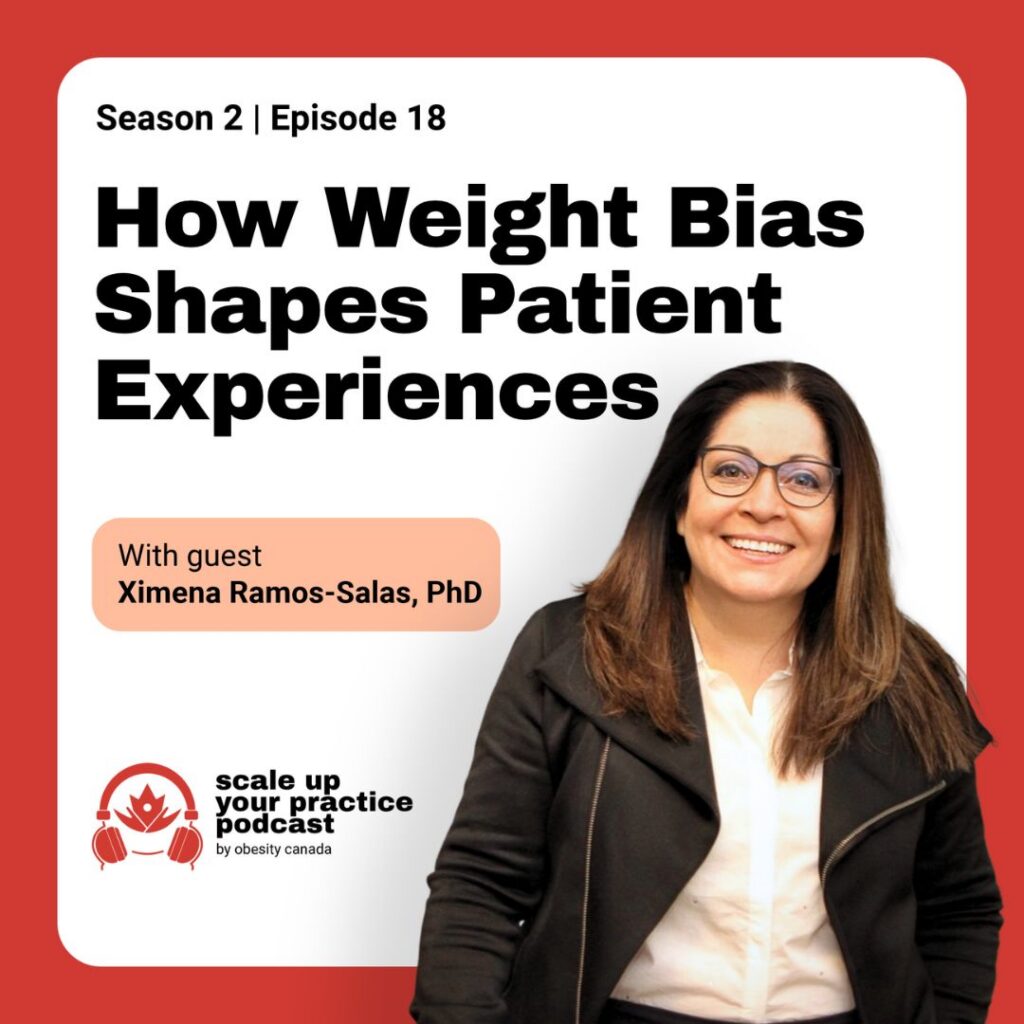


Weight bias in healthcare can change more than how a patient feels during an appointment. It can influence trust, clinical decisions, diagnostic accuracy and whether someone feels safe returning for care.
Dr. Ximena Ramos-Salas joins Dr. Roshan Abraham and Michelle McMillan to unpack how weight bias, weight stigma and discrimination show up across the healthcare system, from individual assumptions to clinic environments and institutional policies.
They explore why education alone is not enough, how diagnostic overshadowing can put patient safety at risk, and what healthcare professionals and organizations can do to create care that is more respectful, equitable and grounded in the realities of obesity as a chronic disease.
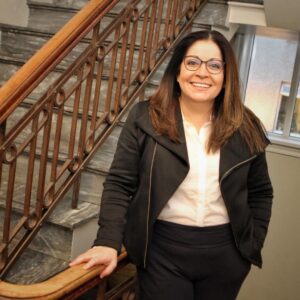
Ximena Ramos-Salas is an affiliated researcher at the Institute of Psychology at the Lund University in Sweden. She has a PhD in Public Health with a specialisation in Health Promotion & Socio-Behavioural Sciences from the University of Alberta, Edmonton, Canada.
She is an independent consultant working for several international organisations. As a public health researcher, her goal is to prevent the perpetuation of weight bias and obesity stigma through public health policies and strategies.
Dr. Ramos-Salas also challenges healthcare professionals to look beyond individual intentions and consider the systems surrounding every clinical interaction, because creating safer obesity care requires change at more than one level.
Support Scale Up Your Practice by:
Email us at scaleuppod@obesitycanada.ca
This episode script was developed using NotebookLM to synthesize complex source materials into a structured educational format. The tool was used to analyze the Canadian Obesity Education Competencies (COECs), the Obesity Canada Strategic Plan, and guest-specific research. Specific prompts were utilized to extract relevant learning objectives, map them to CanMEDS roles, and generate competency-based interview questions.
While NotebookLM assisted in drafting the narrative arc and educational framework, all content has been reviewed, fact-checked, and refined by the podcast hosts and Obesity Canada’s clinical experts. This ensures the script aligns with current Clinical Practice Guidelines and authentically represents the lived experience perspective.
i00:00:00:01 – 00:00:22:15
Dr. Ximena Ramos-Salas
It’s not enough to do the educational interventions to change attitudes at the individual level. We need to have the policies in place in the healthcare system to ensure that people who have those negative attitudes about weight and about people with a higher weight do not enact them and do not treat people differently or unfairly.
00:00:22:17 – 00:00:31:26
Dr. Roshan Abraham
Hello, and welcome back to Scale Up Your Practice, brought to you by Obesity Canada. I’m Dr. Roshan Abraham, family physician and associate professor at the University of Alberta.
00:00:31:27 – 00:00:55:21
Michelle McMillan
And I’m Michelle McMillan, a lived experience advocate with Obesity Canada. Roshan, when many people think about places where they should feel safe, respected and supported, a clinic or a hospital is usually at the top of that list. For many people living in larger bodies, walking into a clinic or a hospital or a healthcare setting can come with very, very different expectations.
00:00:55:28 – 00:01:05:01
Dr. Roshan Abraham
And what worries me as a clinician is that weight bias doesn’t only affect how someone feels during that interaction. It can affect the quality of the care that they receive.
00:01:05:03 – 00:01:36:20
Michelle McMillan
We have studies that show that over 64% of people living with obesity report experiencing weight bias directly from a healthcare professional. And from talking to my friends and family who live in larger bodies, this is sad, but I think 64% is probably a low number. Unfortunately, that can show up in obvious ways, but more commonly it shows up in assumptions about someone’s health, their behaviours, or even why they’re there in clinic.
00:01:36:21 – 00:01:52:04
Dr. Roshan Abraham
And importantly, clinically, that can compromise patient safety by not only changing the questions we ask, but also what we investigate and, most importantly, what we miss. Weight bias can shape clinical reasoning in ways we may not even recognize.
00:01:52:06 – 00:02:18:22
Michelle McMillan
And when someone has had a stigmatizing experience in healthcare, it can change how safe they feel coming back. So that experience may not have happened with the healthcare provider that they’re going to see today, but that experience is going to impact how they interact with the healthcare provider today and what they’re willing to share, how much they trust, and even overall how much they trust the entire healthcare system.
00:02:18:24 – 00:02:32:16
Dr. Roshan Abraham
And so today we’re taking a look at weight bias and stigma in health professions from both sides of the interaction: what patients experience, how bias can influence care decisions and impact patient safety, and how care teams can help transform clinical culture.
00:02:32:19 – 00:02:56:06
Michelle McMillan
To help us break down this important topic, we are thrilled to welcome Dr. Ximena Ramos-Salas. Ximena is an affiliated researcher in the Department of Psychology at Lund University in Sweden, chair of Bias 180, consultant for the World Health Organization, and a global public health expert on obesity and weight stigma.
00:02:56:08 – 00:03:19:23
Dr. Roshan Abraham
We are so excited to have Ximena here. She brings a unique perspective as someone who has lived in, worked in and studied in Alberta. She was the managing director of the Canadian Obesity Network, or CON, which today is known as Obesity Canada. She played a significant role in the development of the 2020 Canadian Adult Obesity Clinical Practice Guidelines and has supported guideline adaptation around the world.
00:03:19:28 – 00:03:22:22
Dr. Roshan Abraham
Ximena, thanks so much for joining us today.
00:03:22:29 – 00:03:26:11
Dr. Ximena Ramos-Salas
Well, thank you for having me. It’s a pleasure to be here.
00:03:26:13 – 00:03:48:05
Michelle McMillan
Ximena, people living with obesity have been experiencing weight bias, stigma and discrimination in healthcare for a long time. We all know it’s an issue. Healthcare providers know it’s an issue. The patients know it’s an issue. So that brings me to the question: why is it still something that has been so difficult to change within the healthcare systems?
00:03:48:08 – 00:04:13:11
Dr. Ximena Ramos-Salas
That’s a very good question, Michelle. I get asked that question quite a lot all around the world. Wherever I go, I hear this question: “Why is this taking so long? Why are we not able to change this?” And you have to think about how the healthcare system is part of an overall system, an overall society, an overall national system, whatever you want to call it.
00:04:13:17 – 00:04:46:25
Dr. Ximena Ramos-Salas
Weight bias is so deeply ingrained in different societies, and in Western society especially, that, you know, I think to be able to change it in one system, we need to address the broader system, the broader societal attitudes and bias against weight and against people living with a higher weight. So if you look at it from a cultural norm perspective, it is still very socially acceptable to make fun and make jokes of people who have a higher weight,
00:04:46:27 – 00:05:15:26
Dr. Ximena Ramos-Salas
and this is distributed throughout messages in the media, in social media, entertainment, literature, you name it. It’s everywhere. And because it’s so ingrained in our society and in our culture, it’s difficult to change healthcare practice when we’re in that system and in that normative, you know, narrative where it’s okay to judge people because of their weight.
00:05:15:26 – 00:05:55:09
Dr. Ximena Ramos-Salas
And so I think from my perspective, it’s not that healthcare professionals are unique in a way, uniquely biased against people with obesity or people living with a higher weight. It’s just that everybody is biased against people living with a higher weight. And based on my research and other people’s research, people living with a higher weight experience bias throughout their lives, like from childhood to adulthood, and in every setting, like in their own families, in their own schools, in their workplaces, in healthcare settings, in the media, in public spaces.
00:05:55:09 – 00:06:12:15
Dr. Ximena Ramos-Salas
It’s everywhere. So healthcare is a unique place for us that we care about, but I don’t think it’s a unique situation that we haven’t been able to change because somehow healthcare professionals are uniquely resistant to our interventions. I think society as a whole is very biased.
00:06:12:21 – 00:06:25:16
Dr. Roshan Abraham
That is so well put. We bring our bias baggage with us, whether it’s patients or healthcare providers, into the clinic room or into our environments, and I think that’s a really powerful message to start with.
00:06:25:19 – 00:06:52:21
Dr. Ximena Ramos-Salas
Yeah. I think, you know, oftentimes when I work with people living with obesity who are advocating for obesity, and you have to understand that once you become an advocate to advocate for people living with obesity, you’ve done a lot of work to be able to stand up against this bias. You know, done a lot of work on yourself and a lot of work with your community to be able to stand up and advocate for obesity.
00:06:52:24 – 00:07:18:05
Dr. Ximena Ramos-Salas
And so many of them tell me, you know, it’s not an easy thing to do for advocates to stand up and fight against weight bias because it’s something that is so deeply ingrained, and people are very resistant to critically think about what they’re saying. You know, it’s often made into thinking, “Well, it’s an endearing thing.” You know, like, “We’re not making fun of you.”
00:07:18:06 – 00:07:38:17
Dr. Ximena Ramos-Salas
“We’re just, like, joking with you.” And you know, like, “I’m your grandmother. I’m not trying to be mean to you. I’m just trying to help you.” And you know, so a lot of times it’s very difficult for people to question where the weight bias started and how it started and how often they’ve been able to live with it and not stand up against it.
00:07:38:17 – 00:08:05:03
Dr. Ximena Ramos-Salas
And so in healthcare settings, I think we’ve done quite a bit of work. Obesity Canada has done a little bit of work in this area where we have empowered people living with obesity to stand up against healthcare professionals who are judging them or who are not treating them fairly. But it’s still very difficult. I can imagine that it’s just as difficult as standing up against racist attitudes and gender bias,
00:08:05:04 – 00:08:24:14
Dr. Ximena Ramos-Salas
right? And then if you put it all together, if you’re a woman with a racialized identity and you have a higher body weight, you know, all those biases interact, and it’s very difficult to overcome yourself and to really be able to stand up against that in the healthcare system.
00:08:24:17 – 00:08:39:04
Dr. Roshan Abraham
Ximena, your research has shaped global policy, from the World Health Organization to clinical guidance across Europe, Latin America and North America. What drew you to a career in public health and health promotion, and then to studying weight bias and stigma?
00:08:39:07 – 00:09:13:10
Dr. Ximena Ramos-Salas
It’s a very good question. So I feel like I’ve been doing this for quite a long time. And if I go back in time, I started working in the Canadian Institutes of Health Research right after my undergraduate degree, and I was working with researchers across the country to generate research priorities for Canada. And I started working with two institutes, the Institute of Circulatory and Respiratory Health first, and then the Institute of Nutrition, Metabolism and Diabetes.
00:09:13:12 – 00:09:35:27
Dr. Ximena Ramos-Salas
And when I started working more with the Institute of Nutrition, Metabolism and Diabetes, we went around the country having workshops with researchers, with Dr. Diane Finegood, our scientific director back then. And the topic that kept coming from all of the communities, from the people who do research in metabolism, people who do research in diabetes, endocrinology, you name it,
00:09:35:27 – 00:09:53:29
Dr. Ximena Ramos-Salas
everybody was mentioning obesity. And this was, like, way back in the early 2000s. People were saying, “You know, we need to fund more research in obesity.” And so we started doing that at CIHR, at INMD, and that’s how I met a lot of researchers working in the field of obesity who back then were all working in little silos.
00:09:53:29 – 00:10:20:09
Dr. Ximena Ramos-Salas
You know, nutrition researchers were working in one field. Exercise physiologists were working in their own field. No one was really talking about obesity as a complex chronic disease. And then I started meeting patients living with obesity who were telling me the reality of living with obesity and how it really did not reflect the care and the treatment that they get in the healthcare system.
00:10:20:10 – 00:10:42:25
Dr. Ximena Ramos-Salas
You know, they were just getting those messages of, “Eat less, move more. This is your own willpower we need to work on. This is not a disease.” And the science was saying the opposite. So the scientists were telling me, “No, this is a very complex, heterogeneous chronic disease. Everybody’s obesity is different. All the causes are very complex,”
00:10:43:02 – 00:11:07:26
Dr. Ximena Ramos-Salas
“and this is a long-term condition that we need long-term care for.” And the clinicians were also saying the same thing. But the experts and the patients were like, “Well, why are we all saying different things?” And that’s when I started doing my PhD, and I did a narrative inquiry, which meant that I lived alongside patients living with obesity for about 3 years.
00:11:08:00 – 00:11:45:17
Dr. Ximena Ramos-Salas
So I followed them everywhere, wherever they went. Like, so whether it was to work, to school, to their family dinners, restaurants, wherever, and I observed what was happening in their lives. And we wrote stories about their lived experiences with weight bias, and that was transformative to me, to be able to experience what was happening in front of my own eyes, to see it, to perceive it, to experience it from their perspective, and to feel so powerless about doing something about this.
00:11:45:17 – 00:12:06:29
Dr. Ximena Ramos-Salas
And I’m like, “Okay, this is, like, a major, major issue.” And I wrote my papers. It was very difficult to write the papers. I needed a lot of therapy after that because it was very, very emotional to experience the bullying, the disrespectful treatment, the jokes, you know, all of that. I saw it happening in front of my eyes.
00:12:06:29 – 00:12:35:04
Dr. Ximena Ramos-Salas
And that made me think that, you know, we need to share more stories of people living with obesity. Their voices need to become louder. They need to be a stronger voice in science and in policy. And that’s why I’ve been advocating for having public engagement in science and public policy. And it’s become kind of something that, you know, I do research, but I see it more as a means to an end.
00:12:35:08 – 00:13:14:18
Dr. Ximena Ramos-Salas
To me, everything that I do is about advocacy and about making change and creating change. Because after living through those doctoral studies, it was a little bit transformative and traumatic to experience that. And of course, I have a personal connection like we all do. I have many family members who have obesity in my family, and one of them is my nephew, my beloved nephew here in Sweden, who’s had bariatric surgery and who’s had many, many issues in the healthcare system, including bullying when he was very young. And he attempted to kill himself multiple times.
00:13:14:21 – 00:13:41:13
Dr. Ximena Ramos-Salas
And that was just, you know, to me it was like, okay, people are so desperate and so frustrated and are suffering so much because of their disease, and on top of that, we’re stigmatizing them. It’s not okay. It’s a social injustice. We need to stop it. And period, that’s it. It should not exist anywhere in our society, especially in the healthcare system.
00:13:41:15 – 00:14:04:22
Michelle McMillan
I have so many things to say. I mean, first, you’re a very brave woman. It takes a special individual to kind of step into a space where people are discriminated against and are not treated well, and to live that experience for 3 years. I don’t know. My heart goes out to you, just that you had to experience that.
00:14:04:25 – 00:14:25:15
Michelle McMillan
And then my heart goes out to all the people I know who experience it their whole life, right? Like, it’s not just 3 years. It’s every year. Because many people living with obesity, because of the nature of obesity, have been living with it their whole entire life, right? So I have to say thanks.
00:14:25:18 – 00:14:56:21
Dr. Ximena Ramos-Salas
Thank you. No, I mean, I say thank you to all of you for doing this together, because it’s… I see weight bias as little, you know, because it’s little things that happen from, you know, the moment you start being treated differently because of your weight. It’s little mini traumas that accumulate, right? And over the lifespan, they become a big burden for people living with obesity, or people who don’t have obesity and who have a larger body.
00:14:56:26 – 00:15:29:07
Dr. Ximena Ramos-Salas
And it’s not something that people are doing sometimes on purpose or intentionally to create trauma in people. They’re just not critical, and they’re not questioning, and they’re not… Some of them are very unaware of the harm that they’re creating in other people’s lives, and so that’s what we call implicit bias, right? Like, people are not conscious of what they’re doing, and they…
00:15:29:10 – 00:15:51:00
Dr. Ximena Ramos-Salas
That’s why it’s important to raise awareness of it, right? Because if we don’t become aware of our own attitudes and our own behaviour, we can’t change it. So the first step is to become aware, and for me, my PhD was the awareness trigger. It was just like once I saw it, I never stopped seeing it. Now I see it everywhere.
00:15:51:02 – 00:16:10:27
Dr. Ximena Ramos-Salas
I cannot stop seeing it. Like, wherever I go, whatever book I read, whatever TV show I watch, it’s like, “That’s weight bias. That’s weight bias. That’s weight stigma. That’s discrimination.” It’s everywhere. I see it everywhere, and it’s very difficult to see it everywhere and to try to do something about it and see the slow progress sometimes.
00:16:10:27 – 00:16:13:23
Dr. Ximena Ramos-Salas
But I do believe we are making progress.
00:16:13:25 – 00:16:37:15
Michelle McMillan
Yes, I agree too. We are making progress, even by our little difference of this little podcast, right? This is making a difference in the world. You’ve mentioned the terms like weight bias, weight stigma, weight discrimination, and I know you’ve talked about this in some of your recent scientific papers. And I’ll be honest, I tend to throw around those terms interchangeably,
00:16:37:17 – 00:16:50:21
Michelle McMillan
as many other people do. And so I was hoping that you would help me and our listeners understand the difference and, more importantly, why the distinction is important.
00:16:50:26 – 00:17:14:02
Dr. Ximena Ramos-Salas
That’s a very good question, Michelle. I was just in Germany with the patient society for patients living with obesity in Frankfurt, and we had this same conversation about why is it important to differentiate between these concepts. And the reason why I think it’s important is because it means that we need different levels of interventions to address it.
00:17:14:06 – 00:17:44:22
Dr. Ximena Ramos-Salas
So when we’re talking about weight bias, we’re talking about our own individual attitudes, negative attitudes that we may have or beliefs about weight and about people who have a higher weight. So that means that the intervention is going to be at the individual level, at the interpersonal level, making sure that we raise awareness about our own individual attitudes and that we educate people about obesity as a complex chronic disease, so that they understand that this is not a willpower issue, and that will affect our own attitudes.
00:17:44:27 – 00:18:06:04
Dr. Ximena Ramos-Salas
So that’s one level of intervention. The second level of intervention is weight stigma, and weight stigma refers to those social stereotypes about people living with obesity. And when we started our conversation, I talked about those social norms, right? And how it’s very difficult to change the individuals that live in a society if the social norms are very biased and stigmatizing.
00:18:06:04 – 00:18:40:19
Dr. Ximena Ramos-Salas
And so those social norms about people being lazy, people with obesity lacking willpower, lacking motivation, not having sufficient intelligence to follow our healthcare recommendations, all of those are social stereotypes that are deeply ingrained in our society, and they become norms. Like, you know, like, they don’t get questioned. You see them on cartoons and TV shows about people with obesity being the funny characters or the lazy characters. Like, it’s everywhere.
00:18:40:22 – 00:19:05:10
Dr. Ximena Ramos-Salas
Interventions there are going to be focusing on changing social norms, so those are social level interventions. And then we have discrimination, which is when we act on our own individual attitudes that are biased and the social stereotypes about people living with obesity, and we treat people unfairly or unjustly. We discriminate against them. We do something against them. In the healthcare system,
00:19:05:10 – 00:19:37:13
Dr. Ximena Ramos-Salas
it could be that we don’t screen them for serious cancers, for example, or that we don’t spend enough time with them in the clinic listening to their concerns, or that we have BMI cutoffs that prevent people from having fertility treatment or knee and hip replacement surgeries, all because of their weight or BMI. Those are discriminatory practices that lead to inequities, like where people with obesity have worse health outcomes than other populations.
00:19:37:15 – 00:20:03:22
Dr. Ximena Ramos-Salas
So those require policy changes. Those are interventions that require policy change, you know, laws, legal interventions to prevent discrimination. That’s why I separate them. Weight bias is our own individual attitudes, and we need individual interventions, like education interventions. And then stigma is more about the social norms, and we need social interventions to create change in our societies.
00:20:03:24 – 00:20:11:15
Dr. Ximena Ramos-Salas
And then discrimination requires policy to create more equitable access to healthcare, for example, for people living with obesity.
00:20:11:18 – 00:20:31:00
Michelle McMillan
Thank you for explaining that, because it totally makes sense. We’re talking about kind of three different prongs of the same problem, but each prong needs to be approached differently. The solution to each of these is different. So thank you. That’s helpful. I’m gonna try to remember that. That’s a lot for my small brain to remember, but I will try.
00:20:31:03 – 00:20:53:24
Dr. Ximena Ramos-Salas
It also means we need to do all of them. You know what I mean? Like, it’s not either/or, right? Like, it’s like, yes, we need to do the education to healthcare professionals so they understand that obesity is a chronic disease, but we also need to create policies in the hospitals that prevent people who work in the hospital from enacting their bias and attitudes and beliefs, and from treating people in a discriminatory way.
00:20:54:00 – 00:21:14:07
Dr. Ximena Ramos-Salas
And then we also need to change the norms in the hospital, you know, to make sure that everybody’s treated the same way, and that we don’t allow fat jokes to happen in a clinical setting, or that we don’t… You know, and I think the training in a hospital setting, for example, would require training of everybody who works in the hospital, right?
00:21:14:08 – 00:21:57:26
Dr. Ximena Ramos-Salas
Not just doctors and nurses and clinicians, but, like, you know, the receptionist, the caretakers. Like, everybody needs to understand that we treat everybody with respect, and we don’t bully, and we don’t make fat jokes. All of that, right? Because like you said, Michelle, from the moment you walk into a clinical setting, if you don’t feel comfortable, if you feel something is biased towards you because of your body size, then it breaks down the trust, and it breaks down the ability for patients to talk to doctors and nurses in a trustful way, so that they share all their symptoms and they share all their problems, so that the clinicians can do
00:21:58:00 – 00:22:22:02
Dr. Ximena Ramos-Salas
an accurate diagnosis, right? And if they feel that, you know, somebody’s judging them, they’re not gonna share a lot of things. And that leads to missing diagnoses and missing screening opportunities and worse health outcomes down the road. So it starts from, like, the moment you walk into the door. You need to feel that this is a safe space where everybody’s treated equally, fairly,
00:22:22:03 – 00:22:26:26
Dr. Ximena Ramos-Salas
and, you know, that you feel like you belong there and that no one’s gonna judge you.
00:22:27:00 – 00:22:48:29
Michelle McMillan
Yeah, I agree. That safeness comes in the moment you walk in the door, right? Actually, it may happen before you walk in the door, when you’re having the conversation with the receptionist or the nurse or whoever you call to make the appointment, right? Like, it starts very, very early, probably long before many of our listeners actually get to meet you.
00:22:49:04 – 00:22:56:06
Michelle McMillan
We’ve already experienced things that may make us less trustworthy. So yeah, that’s a really good point.
00:22:56:08 – 00:23:17:25
Dr. Ximena Ramos-Salas
Well, even, like, even before, you may not even want to go and see a healthcare professional because you’re anticipating the stigma. You know? Maybe you’re going to see Dr. Roshan and he’s never been biased or stigmatizing towards you, but you’ve been to that clinic and somebody else did it, and now you’re anticipating that Dr. Roshan is gonna be biased towards you, even though he’s never done it.
00:23:17:27 – 00:23:37:22
Dr. Ximena Ramos-Salas
And so this is why, you know, many healthcare professionals, when I give them education training and sensitivity training, they tell me, “But I’ve never done anything. I’ve never… You know, why are you pointing fingers at me? I haven’t done anything.” And we’re like, “Well, I’m just showing you the data. This is the science we have about how much bias there is in the clinical setting.”
00:23:37:27 – 00:24:09:10
Dr. Ximena Ramos-Salas
“And that it’s not just doctors, it’s everybody: psychologists, nurses, everybody. And that’s the data. And it doesn’t mean, you know, that the data represents you as a single unique point. But you need to be aware that because there’s so much negative weight bias amongst healthcare professionals, it is very likely that patients that you see with higher weight have experienced biased attitudes from somebody else in your clinic, in your hospital, in your city, wherever.”
00:24:09:15 – 00:24:41:05
Dr. Ximena Ramos-Salas
“And so they’re not gonna come in a very trusting way towards you, and they’re going to be anticipating that you are going to act like that towards them. And I know it’s not you, but it’s a system, and you work within that system, so you need to be aware of it.” And then even when you think that you don’t have weight bias attitudes, when you do that Implicit Association Test, you soon realize that you do have those unconscious attitudes about weight, even about your own weight.
00:24:41:07 – 00:25:13:00
Dr. Ximena Ramos-Salas
And so it’s a very tricky situation, because I hear from a lot of younger healthcare professionals, Roshan, that, you know, they are much more aware and much more sensitized to weight bias nowadays than the older generation of healthcare professionals. And I was actually at a conference in September. It was in Toronto. And somebody jokingly said, “You know, Ximena, can we just admit that we’re not gonna change that older generation, and they just need to retire?”
00:25:13:02 – 00:25:21:29
Dr. Ximena Ramos-Salas
“And then we get the newer generation.” And I’m like, “No, but we still need the older generation, because we don’t have enough capacity with the younger generation.”
00:25:21:29 – 00:26:01:16
Michelle McMillan
That is so funny, because I work… I’m an engineer on a day-to-day basis, and I work in a male-dominated field. And I honestly used to say that too. Like, I just have to wait for the dinosaurs to die, and then everything will be okay. But this brings us to kind of a next topic of discussion. It’s that Obesity Canada, in collaboration, has done some recent studies that highlight that the clinicians training for the next generation, the students that Roshan deals with on a daily basis, the people training those new physicians and healthcare providers, don’t have the knowledge and skills to teach modern obesity care.
00:26:01:18 – 00:26:12:06
Michelle McMillan
Given that, how can we change the system and help provide the skills that they need to train the new generation?
00:26:12:08 – 00:26:52:17
Dr. Ximena Ramos-Salas
So I think that’s where we come into the policy interventions. And I think hospitals, universities, academia, places where we train those healthcare professionals, they need to come up with policies to prevent weight bias and stigmatization, right? And so we need updated curriculum, and I know that that’s what Roshan is working on very, very, very hard on. It’s really creating, like what I was saying before, the environment that prevents people from enacting their bias, attitudes and beliefs. Because let’s face it, this is what we did with racism, right?
00:26:52:19 – 00:27:25:28
Dr. Ximena Ramos-Salas
So we did not eliminate racist attitudes, right? People are still very racist, and they still have very racist attitudes. But we have policies in place that prevent discrimination and stigmatization because of race. So for example, there are policies in hospitals to ensure that we are, you know, treating people with equal dignity and respect, regardless of their race,
00:27:26:01 – 00:27:51:04
Dr. Ximena Ramos-Salas
right? So in those policies, we need to put weight in that policy set. So we should treat people equally, regardless of their weight. Then patients who are getting discriminated against in the healthcare system, they have something to do to, you know, hold healthcare professionals accountable for, right? And so I can go and make a complaint if my doctor treats me in a racist way,
00:27:51:06 – 00:28:16:19
Dr. Ximena Ramos-Salas
right? I can go and file a complaint. But can I do that if I’m being weight discriminated? Probably not. In many places, I cannot. And so that’s why we need those policy interventions, because it’s gonna be very difficult. Research shows that it’s very difficult to change attitudes and beliefs, individual attitudes and beliefs. Like, it’s extremely difficult.
00:28:16:22 – 00:28:51:01
Dr. Ximena Ramos-Salas
Usually the interventions, you know, we don’t have a lot of long-term interventions, but usually the interventions show that the attitudes and beliefs change for about 6 months, and then after 6 months they come back. So that’s why it’s not enough to do the educational interventions to change attitudes at the individual level. We need to have the policies in place in the healthcare system to ensure that people who have those negative attitudes about weight and about people with a higher weight do not enact them and do not treat people differently or unfairly.
00:28:51:04 – 00:29:30:02
Dr. Roshan Abraham
Speaking about that gap in education, it has real clinical consequences. And one of the things that I actually have to hold myself to account still is the concept of diagnostic overshadowing. And it’s fascinating how this actually plays out, and it’s why I wanted to bring it up in this podcast for a lot of our listeners, because a lot of people, young or old, might think, “Oh, I don’t have any overt weight bias.” But it’s either a combination, I find, of a patient’s internalized weight bias and the practitioner’s weight bias, either explicit or implicit, that actually results in this diagnostic overshadowing.
00:29:30:02 – 00:29:58:16
Dr. Roshan Abraham
And what is diagnostic overshadowing? A patient comes in with another complaint, and it doesn’t have to be obvious, like shortness of breath, joint pain, a gastrointestinal issue. It could be a chronic issue as well that they’ve been suffering with for a long period of time. The clinician quickly defaults to either recommending weight loss before other possible causes have been fully explored, or just not actually addressing the complex nature of obesity as a possible contributing factor.
00:29:58:19 – 00:30:25:26
Dr. Roshan Abraham
And I do think we are moving away, as you said, slowly, from just recommending weight loss, but I do find that diagnostic overshadowing happens in the diagnostic process, even if overt weight bias actually isn’t happening. And I actually have to catch myself and catch my residents and my learners with that every single time we see a patient, because it’s not necessarily overt, especially with a lot of the changes that are happening.
00:30:26:03 – 00:30:31:00
Dr. Roshan Abraham
So how does this directly affect diagnostic accuracy and patient safety?
00:30:31:04 – 00:30:55:13
Dr. Ximena Ramos-Salas
I think there’s a lot of research that shows, for example, that… And we had a very tragic story of that happening in British Columbia, with a woman that was trying to get help for pain that she was suffering with for many, many years. And in the end, it ended up being cancer that wasn’t properly diagnosed, because the doctors kept telling her, “You need to lose weight.”
00:30:55:15 – 00:31:21:27
Dr. Ximena Ramos-Salas
“You know, you have too much weight, and the weight loss will solve that pain.” And in the end, she tragically found out that she had cancer and it was stage 4 cancer, which meant that she only had months to live. It can have fatal consequences, Roshan, right? It can have fatal consequences, because if we miss diagnoses like this, like cancer, or we find them too late,
00:31:22:00 – 00:31:50:07
Dr. Ximena Ramos-Salas
we cannot treat those conditions, and people can die. So to me, that’s like the worst-case scenario, where, you know, diagnoses are being missed and people die. But then the other part is that people are living with undiagnosed hypertension, for example, because there are no blood pressure cuffs in the clinic that are large enough to be able to measure blood pressure in that patient.
00:31:50:08 – 00:32:15:11
Dr. Ximena Ramos-Salas
And the clinicians think, “Well, you know, it’s fine. You know, like, we can’t find it.” And they may just think, “Okay, well, maybe next time we’ll have one.” And so people are walking around for years with undiagnosed hypertension, you know, and many people with obesity have this. And then the other one, I think the consequence is that when you miss those diagnoses, that’s when the trust breaks down, right?
00:32:15:12 – 00:32:37:16
Dr. Ximena Ramos-Salas
Like, that’s when patients are just gonna be like, “What’s the point of me going? The doctor’s just gonna tell me to lose weight.” You know? So they delay. Patients will delay going to see the healthcare professionals, and maybe they will go when they’re going to the emergency room for something that could have been prevented earlier if they would have had that trust with healthcare professionals.
00:32:37:19 – 00:32:59:23
Dr. Ximena Ramos-Salas
And like you said, the internalization happens too, right? Because if healthcare professionals blame everything on the weight of that person, then the patient also starts believing that. Like, if every doctor tells you… Like, this person had gone to multiple doctors, and if every doctor tells you it’s your weight, then you start believing it, because that’s what a normal human brain would do.
00:33:00:02 – 00:33:26:02
Dr. Ximena Ramos-Salas
Like, you start believing it, and you’re like, “Of course, multiple doctors have told me that it’s my weight. I need to lose weight.” And then they don’t go and ask for help, and that causes major problems, right? So I think the diagnosis issue is very, very real. This is why it’s very important to not make assumptions, like Michelle was saying, about people’s weight and their behaviours and their health outcomes and health conditions.
00:33:26:05 – 00:33:49:00
Dr. Ximena Ramos-Salas
You know, always find out the whole history of the patient and listen to the patient. Really listen to everything that the patient’s saying, because they know better about their own health. And so I think it’s something that maybe the younger generation will be better at. I think they’re learning more of those skills of, like, listening,
00:33:49:03 – 00:34:01:23
Dr. Ximena Ramos-Salas
as opposed to just jumping to advice. You know, the Five A’s: ask, advise. You know, usually people just go straight to the advice: “This is what you need to do.” And I see this everywhere in the world. It’s not just Canada. Like, everywhere.
00:34:01:29 – 00:34:24:24
Michelle McMillan
So I think this discussion kind of leads us to… We’ve talked about what we want to happen, but now we need to talk about the practical side of how we make it happen, right? So if weight bias can influence both clinical decisions on the one side and the patient on the other side, whether they feel safe engaging in care,
00:34:24:29 – 00:34:53:08
Michelle McMillan
the question is, like, how do healthcare teams begin to audit their own implicit bias? And then it’s so complicated, because I often say from the minute I walk into the door of a clinic, if it is not a space that I feel comfortable in, like the chair is uncomfortable to sit in… We talked about taking blood pressure. Like, here in Canada,
00:34:53:10 – 00:35:14:22
Michelle McMillan
the blood pressure cuffs are coloured, so I know immediately when the nurse or the doctor picks up the wrong coloured cuff that it is not gonna fit my arm. And it feels like, why am I having this conversation every time I’m in an office or a hospital? Like, “Nope, that cuff is not gonna fit my arm.”
00:35:14:28 – 00:35:41:17
Michelle McMillan
And sometimes they don’t even believe me. They’re like, “Oh, yeah, no, it’s fine. I’ll put the cuff on.” And then of course the cuff explodes off. So you can see how this is a whole tangled ball of things, right? External, internal, the environment. This is a big ask from you, but for our listeners, what would be your recommendations on how we move to a safe space for everyone to practise in?
00:35:41:20 – 00:36:04:00
Dr. Ximena Ramos-Salas
That’s a really big question, but yes, we have to start somewhere. And I think the first thing is don’t make assumptions. So when you explain the blood pressure cuff situation, you know, don’t make assumptions. And you just ask, you know, “Is it okay?” Like, “Have you had your blood pressure measured before? Do you know which colour do you usually have?”
00:36:04:02 – 00:36:26:15
Dr. Ximena Ramos-Salas
Like, you know, like you just ask. You don’t assume. You don’t try it. You just ask the patient, because the patient might actually know which colour they usually have. So things like that. It’s not, you know… Don’t make it more uncomfortable than it should be. Like, it’s common sense to just say, “Okay, we’re gonna take your blood pressure.”
00:36:26:16 – 00:36:49:26
Dr. Ximena Ramos-Salas
“Do you know what colour usually you… which cuff you usually use?” And then the patient may say, “Yeah, I usually do have this.” And then you avoid that uncomfortable situation where it doesn’t fit, and they feel uncomfortable, the healthcare professionals, and the patient is thinking, “Well, I would have told you, like, if you asked me,” you know? So things, simple things.
00:36:49:26 – 00:37:16:14
Dr. Ximena Ramos-Salas
But the first thing, I think, is we recommend in Canadian guidelines that healthcare professionals do a self-check and ask themselves, “Do I have those implicit attitudes about weight? And, you know, do I make assumptions about people’s behaviour based on their weight? Do I make assumptions about people’s health status because of their weight? Do I make assumptions about their lives because of their weight?”
00:37:16:17 – 00:37:41:22
Dr. Ximena Ramos-Salas
And then if you say yes to any of them, the next question is, “Does that affect how I interact with my patients? Like, how is that affecting my interaction and my conversations with patients? And do I need to rethink that?” And, you know, perhaps start from a different point, and knowingly that, yes, I do make assumptions because of their weight.
00:37:41:22 – 00:38:02:10
Dr. Ximena Ramos-Salas
I do make assumptions about their behaviour, their health status or whatever, and I shouldn’t do that. And so… but I think the biggest… That’s something that we can all do individually, you know? But then environmentally, in the office, it’s making sure, you know, we don’t have those weight loss posters, weight loss magazines in the waiting room.
00:38:02:10 – 00:38:25:29
Dr. Ximena Ramos-Salas
You know, check that. Like, the chairs are comfortable for everybody. Check that. Make sure your receptionist has had weight sensitivity training, so they’re not looking somebody up and down when they walk into the room. You know, all of those things, those checklists in the clinical guidelines that you can do to make sure that your space, physical space, is safe for everybody, regardless of their weight.
00:38:26:02 – 00:38:39:20
Dr. Ximena Ramos-Salas
And then the self-check. You know, like, am I assuming things because of this person’s skin colour, weight, body size, whatever? Like, you know, and start from there.
00:38:39:22 – 00:39:01:24
Dr. Roshan Abraham
So, Ximena, we’ve talked about the harm weight bias can cause. What does the research tell us about changes when patients feel respected, listened to and free from judgment? And then on the flip side, what does it tell us about the clinical sort of implications in terms of follow-up and engagement in care, or, as we mentioned before, diagnostic accuracy?
00:39:01:26 – 00:39:34:14
Dr. Ximena Ramos-Salas
Definitely, research shows that when people with obesity feel that they’re respected, heard and engaged, and that there’s shared decision-making in the process, in the healthcare interactions, that they will stay more engaged, at least in the primary care setting. There’s a lot of research showing that patients will stay more engaged in their own health and their own care if they’re being treated with respect, if they’re being heard, listened to, and that the decisions are being made together with the clinician and the patient.
00:39:34:14 – 00:40:06:19
Dr. Ximena Ramos-Salas
So, you know, I think many times healthcare professionals want to be helpful, and they make the decisions very quickly because, “We have something to help you, and this is what you need to do.” But shared decision-making is the key to keep people engaged. And shared decision-making requires healthcare professionals to check their biases, right? And to make sure that they are listening to the patient and that they’re aware of their own weight bias attitudes and beliefs, and making sure that they are checking in every day.
00:40:06:19 – 00:40:24:15
Dr. Ximena Ramos-Salas
Every time you see a patient with a higher weight, check yourself before you open your mouth, before you start the conversation. It’s like, “Okay, checking. You know, this is a person with a higher weight. This is a person with obesity. I don’t know if they have obesity. I’m gonna do a conversation. I’m gonna find out why they’re here.”
00:40:24:19 – 00:40:36:24
Dr. Ximena Ramos-Salas
“I’m gonna go with their flow. I’m not gonna assume anything.” All of those things can happen, right? But I think the research shows that it can improve healthcare decision-making, and it can improve engagement in care.
00:40:37:01 – 00:40:58:26
Dr. Roshan Abraham
Well, I think that’s a really great place to end off. Ximena, thank you for your leadership on weight bias and stigma for all these years. This conversation gives us and our listeners a lot to reflect on, but also some very practical places to start. If we had to leave listeners with three things to carry into practice, I think the first is to, as Ximena mentioned, slow down and check our assumptions.
00:40:59:03 – 00:41:18:23
Michelle McMillan
And the second would be to pay attention to how the experience feels for the person in front of you. Think about the language you use, the questions you ask, the assumptions that you have before you even open your mouth, and then whether someone’s feelings shape how their interaction with you is going to go.
00:41:18:24 – 00:41:30:19
Dr. Roshan Abraham
And third, look at the physical environment and the social environment around the interaction too. Are the space, equipment and people actually set up to support your patients in different bodies?
00:41:30:22 – 00:41:46:21
Michelle McMillan
All of these things sound like small things, but if you start putting the pieces together, they can change whether someone feels respected, whether they come back, whether they feel safe enough to participate fully in their care.
00:41:46:23 – 00:41:58:13
Dr. Roshan Abraham
For all our listeners who want to learn more, head to the show notes, where we’ve linked the Canadian Adult Obesity Clinical Practice Guidelines, Obesity Canada’s free weight bias and stigma courses, and more.
00:41:58:15 – 00:42:07:11
Michelle McMillan
New episodes of Scale Up Your Practice drop every second Thursday, so be sure to subscribe on your favourite podcast platform so you never miss an episode.
00:42:07:12 – 00:42:20:06
Dr. Roshan Abraham
And if today’s episode gave you something actionable for your practice, which I can’t imagine it didn’t, please leave us a rating or review. It takes a few seconds and helps healthcare professionals across Canada find this podcast.
00:42:20:08 – 00:42:32:08
Michelle McMillan
And until next time, stay curious, stay kind, and keep scaling up your practice.
00:42:32:10 – 00:43:03:15
Dr. Roshan Abraham
This podcast is intended for informational and educational purposes only and does not constitute medical advice. The content shared in this podcast should never be used as a substitute for professional medical advice, diagnosis or treatment. Always seek the guidance of a qualified healthcare professional with any questions you may have regarding your health or a medical condition. The information and treatments discussed in this podcast are based on Canadian guidelines and approved practices as of the time of recording.
00:43:03:17 – 00:43:25:07
Dr. Roshan Abraham
If you are listening from outside of Canada, please consult your local healthcare professional to ensure compliance with your region’s medical standards, guidelines and recommendations. The creators of this podcast disclaim all liability for any decisions or actions taken based on the content discussed. Listening to this podcast does not establish a professional or patient-client relationship.
Be the first to know about new education and resources for healthcare professionals from Obesity Canada.