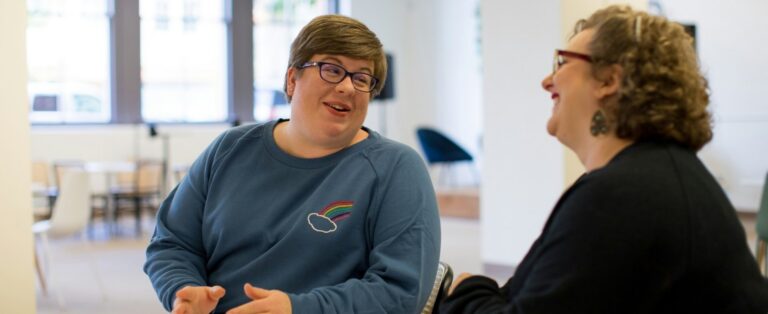
Think about the images we are used to seeing when pregnancy is portrayed as healthy, joyful or uncomplicated.
Certain body sizes and shapes tend to appear again and again. Smaller bodies are often shown as active, glowing, and celebratory, while larger bodies are more likely to be absent altogether or represented through risk, medical concern, or assumptions about behaviour.
That imbalance can shape how we understand pregnancy in a larger body, including which bodies are represented as healthy, capable or worthy of celebration.
A new Canadian study took a different approach: instead of deciding how pregnancy in a larger body should be portrayed, researchers asked people with lived experience to choose the images themselves.
The images we see can shape what we believe
Some pregnancy complications are more common among people living with obesity, which makes clear, evidence-informed conversations with healthcare professionals important.
But risk is not the whole experience of pregnancy.
Previous research has found that larger pregnant bodies are often absent from everyday and health-promoting representations of pregnancy, including images of people exercising or enjoying everyday life. When they do appear, the focus is more likely to be on complications or behaviours stereotypically associated with obesity.
This is important because images can shape perception. Research cited in the paper has found that stereotypical depictions of people in larger bodies can reinforce weight bias, while more inclusive images that challenge those stereotypes can influence attitudes differently.
For people experiencing pregnancy in a larger body, those messages can become deeply personal. Previous research described people feeling as though they were being denied the excitement and celebration commonly associated with pregnancy.
So the researchers asked a different question:
What happens when people get to choose the images that represent their own pregnancies?
Eleven photos told a very different story
The researchers recruited people who had experienced pregnancy while living in a larger body or with obesity.
Eleven participants ultimately contributed a photograph that captured a positive or meaningful moment from their pregnancy, along with the story behind it.
The method, called photovoice, gives people an opportunity to communicate their experiences through both images and their own words. Rather than researchers choosing the pictures or staging the scenes, participants decided what they wanted others to see.
Their choices ranged from casual selfies and mirror photos to maternity shoots and pictures from baby showers or other moments with family and friends.
Across those photographs and stories, two ideas stood out.
Pride was part of the picture
Several participants chose images because they felt beautiful, proud, or appreciative of what their bodies were doing.
Participants were aware of potential complications and spoke about conversations about their health, changing body size and comparisons with idealized pregnant bodies they saw elsewhere.
But those stories were not the stories they wanted the photographs to tell.
One participant described a maternity photo as a reminder that her body was doing “something beautiful.” Another reflected on initially feeling uncertain about how she looked after gaining weight during pregnancy, then seeing her maternity photographs and feeling differently about her changing body.
The distinction is important.
Acknowledging potential health risks does not require portraying someone primarily through those risks.
People can receive appropriate, evidence-informed care during pregnancy while still being represented as joyful, capable and worthy of celebration.
Pregnancy was also about connection
The other theme was not really about body size at all.
It was about other people.
Participants chose photographs with partners, family, and friends. They shared baby showers, quiet moments, and celebrations. They described feeling loved, supported, and less consumed by worries about what might go wrong.
For example, one participant’s photograph captured a moment at a social event. Another image is a formal maternity portrait. One participant shared an unstaged photo holding hands with her partner. These images look strikingly different from the isolated or clinical representations the researchers describe as common in existing media.
That may sound simple, but that simplicity is part of what makes the findings interesting.
Unsurprisingly, people in larger bodies can experience pregnancy in the same human contexts that surround pregnancy more broadly: excitement, anticipation, relationships, uncertainty, celebration, and connection.
When those experiences disappear from the images we use, our picture of pregnancy becomes incomplete.
Health information can be accurate without being stigmatizing
The study does not suggest avoiding conversations about potential complications. People need accurate health information, and previous lived-experience research shows they want healthcare professionals to communicate clearly and openly about potential risks.
What matters is how that information is communicated.
Health information does not need to be paired with images that shame, blame, or suggest that a larger pregnant body is inherently out of place. The study points toward another approach: representing a wider range of bodies in pregnancy while communicating evidence-informed health information clearly and respectfully.
That could mean showing people living in larger bodies exercising, spending time with their families, attending appointments, celebrating milestones, or simply going about everyday life.
Who gets included in the picture?
This was a small exploratory study, and the researchers are careful about what it can tell us.
Eleven participants cannot represent every pregnancy experience. The authors also note that future research needs greater diversity across factors such as gender, ability, activities, and settings.
And importantly, this study did not test whether seeing these types of images actually reduces weight bias. That is a question for future research.
What the study does show is what can happen when people with lived experience are given some control over how their stories and experiences are represented. The images emphasized connection, pride, anticipation, and everyday life. They showed experiences that are often missing when larger pregnant bodies are represented primarily through medical concern.
The researchers suggest those insights could inform public health campaigns, pregnancy websites, educational materials and image banks, including resources used by healthcare professionals, researchers, and the media.
The study did not examine the commercial stock photography or marketing image landscape directly. In practice, however, communications teams can still face a limited range of pregnancy images that reflect diversity in body size, ethnicity, gender, ability and everyday experience. That challenge was felt in selecting images for this article as well. Expanding the kinds of images available is important because representation is shaped not only by the choices people make, but also by the choices they have available.
Changing how we talk about weight stigma also means paying attention to what we show. And sometimes, a more accurate picture begins by letting people with lived experience choose the picture themselves.
Read the research
Challenging Weight Stigmatizing Perspectives in Public Health During Pregnancy by Sharing Positive Stories and Images by Those Who Have Lived Experience
MacDonald K, Patton I, Nutter S, et al. Journal of Health Communication. 2026.
Additional resources on this topic
Listen to our podcast episode: Pregnancy and weight bias with Dr. Taniya Nagpal