New report: Five gaps are holding back better obesity care in Canada. Learn more

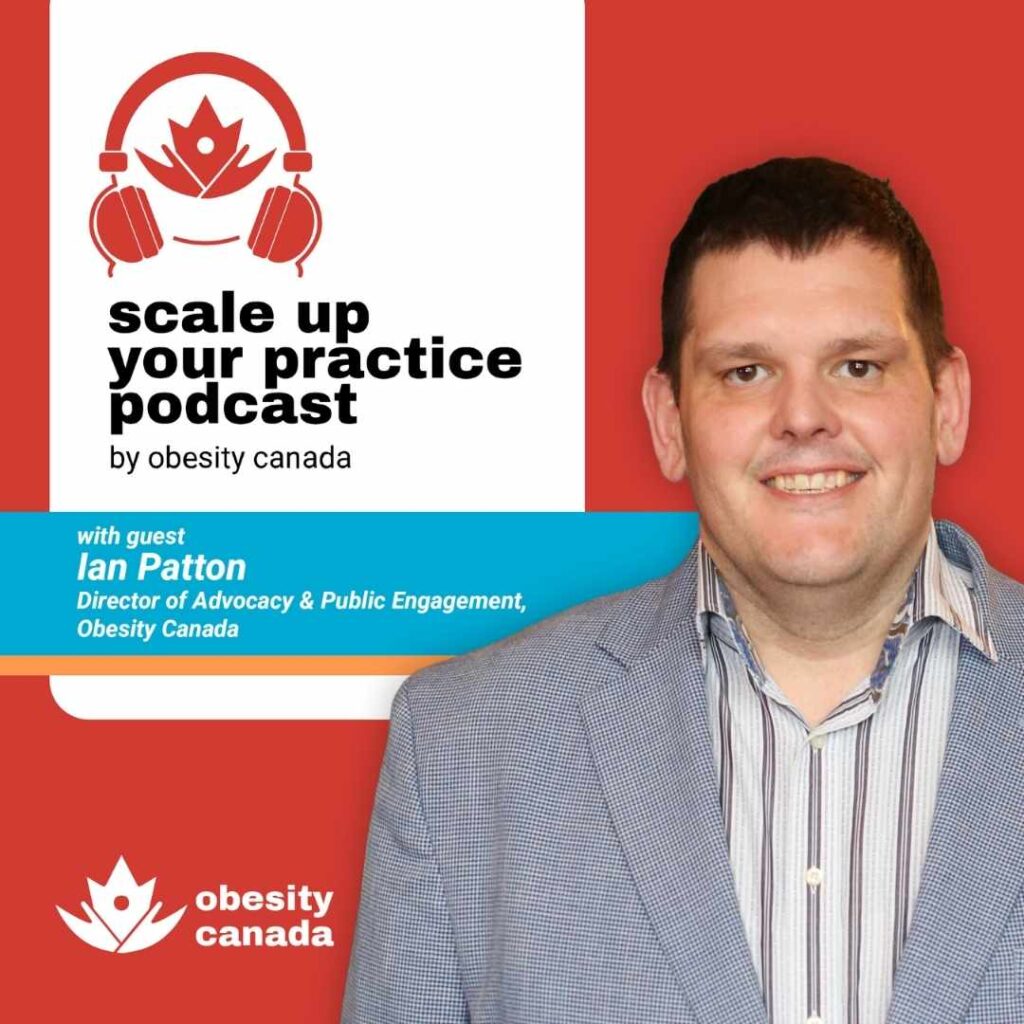
Home • Scale Up Your Practice podcast • Advocating for patients in obesity care with Ian Patton



🎙️ This episode is sponsored. Obesity Canada received an unrestricted educational grant from Eli Lilly Canada to produce this episode. 🎙️
Access to obesity treatment in Canada can feel like a maze—for both patients and healthcare professionals.
In this episode of Scale Up Your Practice, we sit down with Dr. Ian Patton, Obesity Canada’s Director of Advocacy and Public Engagement, to talk about the barriers people face in accessing obesity care—and how clinicians and patients can work together to change that.
From the everyday challenges of navigating authorizations and waitlists to the bigger system-level barriers, Ian shares practical strategies clinicians can use to support patients within the realities of our current healthcare system—while working toward a more equitable one.
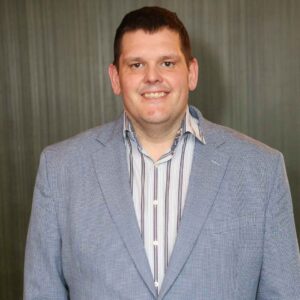
Ian Patton is the Director of Advocacy and Public Engagement at Obesity Canada, combining his academic expertise and lived experience to drive change in obesity care.
He holds a PhD in Kinesiology from Western University and completed a Postdoctoral Fellowship at the University of Toronto, with research focused on BMI, obesity, and childhood physical activity. As a bariatric surgery patient and national advocate, Ian works to eliminate weight bias and improve access to care for individuals living with obesity.
Obesity Canada’s flagship scientific congress returns March 25–29, 2026, in Montréal, Québec. It’s where Canada’s obesity community—researchers, healthcare professionals, policymakers, and lived experience advocates—comes together to share the latest science and advance care.
✨ Early bird registration is open through November 30, 2025.
We’d love to hear from you! Email us at scaleuppod@obesitycanada.ca
✅ Share this episode with a colleague or student
✅ Subscribe on your favourite podcast platform
✅ Leave a review to help more listeners find the show
Thanks for tuning in—and stay with us as we continue to scale up your practice.
- Welcome back to Scale Up Your Practice, the podcast from Obesity Canada. I'm Dr. Roshan Abraham, a family physician and associate professor at the University of Alberta.

- And I'm Michelle McMillan, a lived experience advocate, and a member of the Obesity Canada community. This podcast is where we have honest conversations about improving obesity care that's grounded in both evidence and empathy.

- Today's episode is supported by an unrestricted educational grant from Eli Lilly Canada. Access to obesity treatment in Canada can feel like a maze for patients and for healthcare professionals. Today we're talking about what clinicians can do within the system we have now to help patients get the care they need sooner and with less frustration.

- Joining a guest on the podcast today is Dr. Ian Patton, Obesity Canada's Director of Advocacy and Public engagement. Ian works with patients, researchers, clinicians, and policymakers to help improve access to evidence-based obesity care. And just as a disclosure, my involvement with Obesity Canada came through Ian, and his outreach to people living with obesity. So welcome, Ian.

- Yeah, thanks for having me. I'm excited to be here.

- Ian, it's safe to say most of our listeners are well aware that access to obesity treatment in Canada is inconsistent and often slow. From the work you've done across the country, what are the most common friction points you see patients hitting once they're in the healthcare system?

- There's definitely a number of different friction points for people living with obesity to access treatment. But my first thought is kind of on the broad scale and simply that lack of recognition of obesity as a chronic disease. So many of us can't even have a productive conversation about treatment with a clinician. A lot of us end up bumping into someone that doesn't believe in obesity treatment, or maybe they're not quite up to date on obesity management and the evidence that we have now, and is less comfortable getting into that discussion about the obesity management. A lot of times, you know, to see a specialist, we generally need a referral and that means there's that extra step and that same gatekeeper is there that could potentially hold them back or kind of be more of a barrier there. And that's assuming that you have a specialist program in your region. So there's a lot of cases where that doesn't happen or you don't have access to a healthcare professional there either. The next thing I also think about is the access to the pillars of treatment. So we've got the bariatric surgery, the psychological interventions, and the medications, and access to all three of those pillars is pretty abysmal across the board. When we look at it, you know, as far as access for people living with obesity, if you look at like bariatric surgery for example, still the gold standard, however, wait times and access are unacceptable pretty much everywhere you go. I was lucky enough for me, in my bariatric surgery, I was in Ontario, so for me the process from referral to surgery was about a year and a half.

- Wow.

- And that's pretty reasonable and I mean, not ideal, but it's reasonable compared to other areas in the country, right? Like if you go out east and you're in the Maritimes that week could be several years.

- Yeah.

- And you can imagine how much the disease can progress, how much sicker someone can get if they're having to wait that long. And in the interim, there's not a lot of other support or anything that they can do to manage that, between those periods of time. You look at psychological interventions, again, that's one of those important pillars of evidence-based treatment, but programs that are designed or relevant for obesity management are few and far between, and they're also cost prohibitive. They're generally not covered. Or if people have private coverage, it's pretty limited. So that can be a challenge. And then the one that everyone is talking about now is the obesity medications and access to obesity medications. And there's a bunch of barriers when it comes to that, you know, cost prohibitive generally, the insurance providers generally don't recognize obesity as a chronic disease. So obesity medications are not included in the standard formulary. If they are covered, it's because the employer has added on that additional benefit. So that's a barrier right there in that they're not recognizing that obesity as a chronic disease and offering the same coverage that they would for other chronic diseases and in some cases the exact same medication, but for a different disease state.

- Yeah, we definitely have some challenges within the system, you know, accessing the care that we need. So from your point of view, Ian, you know, whether it's waiting for authorizations or wait lists or trying to figure out who I talk to when, that are all delaying things into getting treatment from your experience, what do you see as the ripple effects on patients, their outcomes, their engagement with the system when these delays happen?

- Yeah, that's another really good question and I think the term that comes up in my brain is that it's really frustrating for a lot of people. And when I talk to community members, one of the common threads is that we're talking about people who are pretty desperate to do something and gain control of their health. You know, if they're coming and seeking treatment for obesity management, they probably haven't had a lot of good options up until this point. They might not have gotten a lot of good information and by the time they're actually seeking treatment, they've already waited a really long time, so they're ready to go now. And the fact that they have to hit these extra barriers, like those prior authorization issues, or denials, or excessive wait times, it seems really unnecessary and it can be really demotivating for that individual. And I've seen a lot of community members just simply say, I give up, I'm done. So they get that they find out that there's a really long wait time to see a specialist or a bariatric program, or they have to go back and forth with their insurance provider, or their employer to get coverage for medication. And it's just not worth their time and effort. They don't see a path forward, so they just move on and leave it alone.

- I honestly think we could have an entire series on this, and I know I said that about a lot of the episodes, but for me as a primary care physician, this episode and what you've been talking about, Ian probably represents one of the most important things when it comes to advocacy. because every single point that you've raised so far, I could think of at least half an hour to an hour of spending time carefully going through each of the different points and explaining sort of what those barriers are and how we can actually navigate them could make a huge difference. I think about the medications, for instance, that is the bane of my existence when it comes to filling out those authorization forms because every insurance company has a different process every, and it's not necessarily standardized. Okay, so I'm fine with that. I'm sorry. I'm not fine with that. The problem I have with it is sort of the reinforcement of weight bias and stigma that happens when we actually get back those declined authorizations. So how the barrier isn't just about the system itself, but how we navigate it, because I end up having to counsel patients on the declined notification, unlike, or the authorization, unlike what I have to do for diabetes, which is I think the only one, or maybe osteoporosis. I never have to counsel patients because I need to make sure I'm getting ahead of sort of the internalized weight bias that's going to just sort of be amplified by seeing yet another barrier being put up because of what they've told themselves in the past. And now, okay, there is an insurance company that's just sort of validating those concerns once again, right? Oh, I know my family doctor put something in, but you know, these insurance companies, they quote unquote, know what they're doing. And clearly I'm not worthy of something like this. This is something that I just need to get through myself. There's no medications or anything else that I've seen, so many patients have that response to the declined authorization that now I make it a point to talk with people about it at our next appointment saying, you know, what, how you feeling about this? What are some of the thoughts that you're having? What's sort of that internal monologue that you're having? Because we need to be able to, at every point in time in the advocacy journey, actually step in and check in with our patient to see how they're doing. And I find that it's incredibly valuable in the long run, to actually explore that as opposed to waiting, God knows how long before it actually starts to percolate for longer and longer. So I just, I think it's really important that we're talking about this because I find that these are areas that are mentioned but not discussed in nearly enough detail.

- I was just going to add Roshan, that it's an important point that you brought up that, you know, it reinforces a false stereotype, internally reinforces it, right? Because I'm going to say from my own personal experience that it requires a little bit of bravery to go into a health professional's office and advocate a little for yourself that you want some treatment and then to only have a person who, or a corporation that wasn't in the room with the discussion.

- Correct. To send a piece of paper back. Your doctor then inter tells you about the piece of paper. And then it's also unfair that my reaction goes to the doctor and I say this, because this just happened to me last week actually, around a medication piece. And as much as doctors are stepping up to do this respectfully, I say, you know, being my counselor about why the insurance company sucks is not actually what you study for to be a family physician.

- Right. Right.

- Yeah.

- So how do we actually mitigate that? How do we improve upon the ways that we advocate, because there's only so much that we can do individually as primary care doctors when we see this. So how do we sort of prevent this from happening in the first place? And so, yeah, I think these are really important issues to grapple with and to talk about more than just at a surface level. But I am glad that we're at least bringing it up.

- Before we move on. I think there's another important layer to this. I'm obviously a patient advocate myself, so I always tend to focus on the patient perspective and those sorts of things. But it also has to be incredibly frustrating and demoralizing for the clinician to want to help their patients and trying to provide them with support and something that could be effective, something that they haven't had access to before. You know, they've gone through a lifetime of trying to deal with this and it hasn't worked. There are these things that are within reach that are effective that could be very beneficial, but they don't have access to it, that's got to be just...

- And I'll provide a bit of nuance even though I know we're tight for time. Like, it's not that I've just decided to put them on this particular medication willingly. We've had a conversation beforehand by going through their past medical history saying, okay, this one's a better option than this one. Like, we've actually had a discussion at least once or maybe twice where there's a huge amount of shared decision making that happens, right? We feel confident, like, okay, this is where it's going to go. I always say, you know, I say, you know, there is a chance given sort of the insurance company that you have and that's covering you. I ask them about that and try to find out a little bit more information. But we still, the majority of the conversation is, okay, what's the best option? And then what I have to do, and again, for our American listeners, I'm sure this is just regular day to day for them, but for us right in Canada, that's not something that we see with other conditions again, and we only have to really do this for obesity. So I think there are lots of opportunities for us to work more efficiently. Do you see any particular ways or specific ways that we can actually work more efficiently within the realities in the system that we have now?

- Yeah, and I think it really does start with how you communicate about obesity with your patients. So recognizing that there is a good chance that there's some internalized bias, some past experiences that influences how they're going to be open and engaged with the healthcare system, help us better understand the condition and help us break down some of the misinformation that's out there. That sort of stuff can help keep us engaged in the face of some of these barriers, right? Like if we, we understand the condition, we feel like we deserve the treatment, we'll be more willing to see it through and kind of push back. We've kind of talked about it a little bit. It's not your role as a clinician to do all this advocacy work for us, but you can be an ally and you can empower us to do it ourselves. And that I think is really important.

- In terms of the medications themselves and sort of the getting assistance sort of from others. Is there any room for sort of the advocacy work to extend to not just sort of the primary care clinician itself, but also to the broader team? Whether it's a pharmacist, sort of nurse practitioner, dietician, and how we sort of look at advocacy not just from the individual clinician standpoint, because that is frustrating for all of us on a regular basis, especially in primary care, but how do we actually bring together sort of other elements of the team into it?

- I don't think there's one right answer to that question. I think the more people that can get involved in the advocacy and supporting the patient, the better. You know, all of these people that are in that pathway, you know, you mentioned the pharmacist and you know, the other care team members and stuff, they're all going to be part of that. And if they can be supportive in reinforcing some of that messaging and helping to empower the patient, that helps, you know, recognizing that there is all these prior authorizations. So when a patient goes to the pharmacist and they have a prescription, a pharmacist can be like, Hey, you're probably going to need a prior auth for this. Maybe you want to go back and do that before we go through this and get denied. And like just making things a little bit more efficient. Those types of things could be very helpful.

- I agree. So when we're talking about access, it's easy to focus on the big systemic issues, but there are also smaller everyday steps that can make a big difference in how quickly patients get the care they need. So we've talked about sort of broader things and we've kind of talked about some more specific ones too. What are some of the most practical things clinicians can do right, to make things easier?

- I think it's simply knowing what resources or referrals you're likely going to need when you're dealing with obesity management in your region. So knowing what you have available and having quick access to them. Being familiar with the referral process to the relevant program. So if that's a bariatric program, or a specialist program, or dietician or something like that, and having those links saved and easily accessible. So it's a couple quick clicks and it's not something that the patient has to follow up with or anything like that. Make it easy, you know, if you happen to know that in your region there are two different obesity specialists that you can refer to. You can have that information on hand, or have established relationships with, you know, whether it's a dietician, a kinesiologist, or counseling services or things that can be supplementary and just have those ready to go, and sending people on their way. And the other thing I think about is keeping track of what works and what doesn't work when supporting patients. Especially with things like the prior authorizations. You mentioned that a lot of the companies have different processes or they're looking for different things. Maybe just even keeping some simple notes about.

- Yes.

- What these ones are looking for, the type of detail they're looking for, the language that they're using. I know I have a lot of community members who say that they knew that they were going to need a prior authorization. They took the form to the doctor, the doctor filled up the prescription, and then scribbled a couple things on prior auth and then sent it off. But then that gets sent back because they didn't include the level of detail, or the types of language and things, that they were looking for. So just having those things ready to go and making things a little bit more efficient.

- Yeah, definitely.

- Yeah. So we talked a little bit, well we've talked quite a bit about on the healthcare side and healthcare practitioners, but you know, from a patient side, you know, because we talk a lot about on this podcast and of it being a collaboration between healthcare providers and the patients. Ian, what do you think the patients could do? What are the small changes that we as patients could do before we went to a health practitioner's that would make their lives easier? Do you have any suggestions?

- I always go back to the fact that they're in a lot of cases is going to be a bit of a fractured relationship between the patient and the provider. Especially when they're starting out with obesity management. There's a lot of stigma and bias there. So the patient, their role is they have to be willing to be open and honest and have that conversation. They have to be willing to get burned again, right? Like, we've been burned before. You have to be open and willing to take a risk and hope that this is going to be different. And I think that's probably the lowest hanging, maybe not lowest hanging fruit, but that's the first level for the patient. They have to be willing to have that conversation.

- Yeah. And, and maybe that feeds in previous podcasts we've talked a little bit about the grand apology, right? For healthcare providers to give, and maybe that's the opening of the two-way door so the patients feel like, okay, okay, I can see that maybe you're a little different than the past, you know, five practitioners that I've seen that I haven't felt successful with. And maybe that opens the door to the patient being, okay, going to try this again. Because most people living with obesity, it's not like you just showed up and all of a sudden you're like, oh, I just realized I was a obese. I'm laughing a little. because I did once meet a physician who said to me, have you ever considered losing weight? And at this point I was like, in my 30s, and I've lived with this my whole life, and I thought I was going to be sarcastic but I wasn't in response. So yeah, being open to, you know, doing this yet again, is an important thing to consider. It's a great idea, Ian.

- I think probably the thing that's going to have the most impact, and it's probably the most simple thing for a clinician to change, is simply just how you're communicating with the patient. And treating us like humans. So helping us understand that we deserve to be treated with dignity and respect, because that's not always been the case. If you treat me like a human, I'm going to be more willing to kick in some of those doors and make some of those changes and fight for the access to treatment and all that stuff. We have to repair that patient provider relationship. And it's just simple communication and regardless of what happens on the scale, I'm going to be healthier for having that positive relationship with my care provider

- One million percent. And not to mention pointing them in the direction of reliable evidence-based resources, groups and information that will enable both the patient and the clinician to engage in the topics beyond the appointment. And Obesity Canada is obviously a very trusted resource for that. Bariatric surgery is another area where the referral process varies from province to province. How can clinicians get familiar with the specific pathways in their area so they're not reinventing the wheel each time?

- Yeah, you know, some provinces have, like Ontario have a centralized referral process. So it all goes through the Ontario Bariatric Network. Other provinces is that you have to refer out to specific centers. So it's just knowing what your particular region, what the process is there. It's usually a couple quick clicks and figuring that out from the provincial websites. But Obesity Canada used, we did have an obesity care finder tool on our website, which would've captured all that information. We recently updated our website and that CareFinder tool is not something that's been put back just yet. It's still a work in progress as we kind of update that tool. But once it's back, that will be a really good centralized resource to find out what's available in your area, like those bariatric centers. So it would have the links to it, and other important information.

- And so keeping that in mind, since it's not quite back up on the website yet, we hope that eventually it comes back online. Do you have any recommendations about how professionals can network connect with their peers? You know, kind of keep up to date with the changes that are happening, you know, in obesity care, you know, there's new requirements. Roshan Probably knows better than anything you sent a referral to the place you sent last month and it bounces back because this isn't the right place anymore. So maybe both of you could comment on how you keep up to date with that kind of information.

- Yeah, I think those professional networks and connections are going to be really important. It's, like I said, a very rapidly evolving space right now. So there's going to be a lot of changes as far as treatment options and the shifting narratives and those sorts of things. So staying current is going to be really critical in this space. Again, Obesity Canada can be a really good resource. There's events, there's opportunities to connect through the professional education and those sorts of things, those types of groups and having those connections will allow you to learn about, what's working for others and what's not working. And, you know, hopefully we can kind of get through this a little bit more efficiently by sharing some of those experiences.

- I'm a quite fortunate living in Alberta, not from the bariatric surgery standpoint. That's still pretty long wait. But if clinicians take the time and effort, we do have the resources here to actually build out small teams. They aren't necessarily obesity specific. So thanks to our primary care network, for instance, I can have my nurse practitioner, dietician, exercise specialist, behavioral health consultant, all available so long as we're all on the same page. And they are in my primary care network area, they're all on the same page. So I give them a little bit of a heads up about a patient, specifically the dietician, the exercise specialist is always very good, and the behavioral health consultants pretty good too. And now a nurse practitioner who I've worked with for the last 10 years, eight to 10 years, is going to take over sort of a lot of the pharmacotherapy once I actually initiate it. So I think for me it is fortunate that way, the area that definitely is more challenging, is sort of the more advanced sort of bariatric care, not just surgery, but let's say I'm kind of stumped. Yes, I know where to send it to, but I feel like having more of that community of practice ends up being quite valuable. So yes, I think Obesity Canada is a great place to actually ensure that you are maintaining that network because you can find out where you want to send some of those more complex patients to.

- We've come to the point of our podcast where we call it our bias break, and it's basically a time when we kind of take a pause and we ask our guests to talk about biases. Now Ian, you have experience from all different aspects, so I think what I'm going to ask you, I'll leave it open to you, but maybe because we're kind of talking about systems today, maybe you could give an example of either you know, someone who's spoken to you or things you've seen within the system about a bias and you know, how it's impacted the patient and maybe even the practitioner.

- I can definitely come up with like very specific examples for myself, but also from community members who've talked about this. But I think it, one of the biggest things that I regularly hear about, the theme of it is usually about the tone of the conversation being cold and dismissive and whether it's intended to be or not is irrelevant. It's how it's interpreted by the patient. And often times it comes across as dealing with us is an unwanted burden. And this is often paired with the assumption that weight and obesity is the cause of all of our problems, even when it's not what we came in to talk about. It's how we communicate with each other that really matters. And when it's cold and dismissive, it feels, or it kind of feeds into that belief that we don't belong, that we're not worthy of care and it leads into that healthcare avoidance. So that can cause more problems. It allows us to get sicker.

- We've talked about power differentials and the importance of recognizing that in healthcare, especially when bias comes from another provider or someone within the system. What's a constructive way for clinicians to address it without creating conflict or shutting down collaboration?

- Yeah, that's another great question. I think really acknowledging upfront that you're aware that there might be some of that past experience and that there might be some of that internalized weight bias or something that's problematic, that's kind of influencing how they're going to interact with you. Making it known that you're going to be different or that you're creating kind of a safe space and you're opening the door for a different interaction than what they might have experienced before. And in some of the work I've done with, like Dr. Macklin for example, in some medical education, he does a really good job of like just simply listening to the patient and having them heard. Because for the longest time we haven't been heard. We feel like we go into the healthcare system and no one's listening to us and no one gets our experience. And just having someone listen and understand and hear what I have to say allows me to open up and actually address things in a deeper level.

- Access isn't always straightforward as we've talked about, even with the best care plan, patients can run into delays, denials, confusing processes. I know I've gotten referrals and thought, why have I been referred here? So for clinicians who want to set up their patients for success, where do you think, Ian, is the best place for them to start?

- I think it really does start with recognizing that as a clinician you have a very limited amount of time with that patient and you also have to know that when they leave your office, they're going to be seeking more information and resources on their own. So you can't cover everything that's relevant in that first appointment or in any, you know, in the subsequent appointments, you got a very limited period of time there. So you can be more, if you think about it, you want to act more like you're a general contractor in a major home renovation. You can't do everything. You're not going to do all the plumbing and the electrical work on your own, but you have the best plumbers and electricians in your Rolodex and you collaborate with them regularly and effectively so you can make sure that your patients are getting to those proper resources, setting them up for successes, helping them to understand where they can get the information from, where they can get those trusted resources and giving them the tools and the guidance to get the help that they need.

- Ian, do I have permission to use that analogy for all of my medical students when I'm talking about all of healthcare? Because I think that is insanely relevant and an amazing analogy.

- Yeah.

- Especially in primary care, we are general contractors and the more that patients actually advocate or learn themselves about the process, the better their house can actually be built, right? And however that comes across. But let's just talk about the trust process and being a contractor that's, I mean, there's so many parallels and conversations you could have about that, but I love that analogy, and I think it's especially relevant to obesity and obesity care when it comes to preparing a patient for an access related conversation. So important, whether that's with an insurer, a specialist office, or even another member of the care team, what kind of language or framing helps keep the discussion productive and focused on their health needs?

- Yeah, in preparing for these types of conversations, I think framing the language, and having it framed around obesity as a chronic disease is critical. It's such a changing thing right now. It's like where all of our messaging as advocates is kind of pushing towards and it's kind of that helps. So helping the patient understand that obesity is not a self-inflicted behavior, but a complex chronic disease, and that it's about more than just size and weight, reinforcing that language is going to allow them to also use that type of language when they're advocating for themselves. So you want to help connecting the dots to relevant health impacts and outcomes like those comorbid conditions and things that aren't measured on the scale. What I often use is language that obesity is in upstream condition that is related to a number of downstream conditions. And in that way, effective treatment and management of obesity is treatment and prevention of all of those downstream conditions. So that helps make the point that this is worthy, there's value added in effective obesity treatment. And that's been very helpful and important when I've done a bunch of my advocacy work with like insurance providers and policy makers, it really kind of hammers the message home. So that type of language around obesity is a chronic disease and those sorts of things can be very helpful.

- Yeah, definitely. And you know, we're working towards a better system, you know, but inevitably probably a patient at this stage, at some stage in the process is going to hit a no, you know, whether that's from an insurance provider, or a stalled referral, or referral that you know is in the system, but it's going to be a long time before you hear from that specialist, how do we coach the patients to respond without losing that momentum, you know, and how do physicians keep the conversation moving towards the solution when their patients are, "See, I told you I can't change anything. Thanks for your time, doc. I'm going to go buy the next thing off of Facebook that I see to solve my problem."

- Right? Wow, yep.

- Yeah, it's again, we're in this rapidly evolving space. So while it's incredibly frustrating and I get so angry about all those nos that I hear about and all those struggles that I hear from community members, I'm also incredibly optimistic because a no today, does not necessarily mean a no tomorrow. These companies, when it comes to insurance providers, they're trying to figure out the best approach to how they manage these new treatments that are coming in. Many are trying to convince the employers or the plan sponsors that improved access is important and that they should be including the coverage. So it's something that's changing on a regular basis, whether it's the insurance providers, you know, hopefully putting obesity treatments into that standard formulary so it's just covered like they do diabetes treatments or if it's convincing the employers to purchase that extra add-on and that there's value there. Those things are important. So there's a lot of hope I think in this space right now. So being supportive and encouraging them to try and try again while doing what you can in the face of that access issue, you know, for the time being is going to be really helpful. The other thing for me as a advocate when we get into this conversation, that I think is really important is that we need more people speaking up. Nothing changes without people speaking up and demanding better. And as patients we haven't done a really good job of demanding better. So we need more people to question these access issues, to make noise. Sometimes it feels like the insurers want the process to be intentionally confusing, slow and annoying so that we just give up and we throw our hands up and say, ah, I'm not going to bother. But most of them have an appeal process. Many of them have an exemption process if the treatment isn't covered under the plan. And if we as patients keep bugging them and bugging them and bugging them, we can be annoying too. And that can help kind of knock down some of those barriers because they're eventually going to have to deal with it. The other part is like, in most cases it's not the insurance company, but rather the employer that is in charge of this. So the patients need to be able to speak up and ask their employers to start making changes and to change their coverage policies. And these are not exactly things that the clinician can or should be doing themselves or for the patient, but they can help make the patient aware and encourage them to continue to push back. And I think that's really important, being supportive in that sense.

- Beyond what we can offer in the clinic. There's also value in connecting patients to support outside their healthcare provider's office. How can communities like obesity Canada's OC Connect help people living with obesity, find peer support, learn from others who've navigated similar challenges and feel less alone in that process?

- Yeah, peer support and obesity management is one of those really important and not often thought about pieces, or not thought about enough. I think this is something that we typically don't talk about. We don't talk about obesity openly. We keep this to ourselves, we blame ourselves. So connecting with others who get it, and being able to recognize that you're not alone and this isn't your fault, can be very empowering and beneficial again, regardless of whatever happens on the scale. I think the challenge with some of these spaces is that they can be very toxic and they can be places where there's a lot of misinformation, people trying to sell you junk stuff. Those types of things can be found on a lot of those Facebook type support groups and stuff. So making sure that you're directing people to a trusted support group or support community is really critical if you're going to be doing that. OC Connect is one of those, it's a private free online peer support community. It was created for people living with obesity, by people living with obesity. It's moderated, it's closed, safe, and like everything else, obesity Canada does. It's rooted in evidence-based information. So directing people to a resource like that, can be a simple way to giving your patients something that can be very useful.

- Yeah, I like, I like the idea of the physician can't do everything. The pharmacist can't do everything, the dietician can't do everything. Even if you work as the best team, you know, people still need to leave your offices and find a peer support group.

- Yes.

- And I can speak from experience, I don't have a lot of time on OC Connect, but I do occasionally pop in and out and I think it's a really valuable community and no trolls. So very helpful. So we've covered what can be done at the individual clinic level and I think Ian, you've provided some great suggestions. I personally love the a no, today is not a permanent no.

- I love that.

- That is so good. And I'm going to take that home with me because I'm like, okay, that that is true. But if we think about the bigger picture, which can be a little scary, but what do you think are the most important system, big system level changes that, you know, if you had a magic wand that you'd like to see changed?

- Everything.

- No...

- No, no. You know, this is another good question and there's so many different tentacles of this, right? Like, there's so many different directions you could take the advocacy angle for trying to create change for the system. It's a huge, huge topic. But if we look at it realistically, you know, most of the medical associations, expert organizations, scientific organizations, we all recognize that obesity is a chronic disease, but the provincial health authorities don't, yet. The governments don't. So who's in charge of funding those pathways and the access, those types of things don't recognize obesity as a chronic disease official yet. So we need those health systems to recognize and treat obesity the same way we do any other chronic disease. We need more specialists. We need additional training for healthcare professionals who are not up to date on the current obesity management stuff. We need to update curriculums for the next generation of health professionals that are coming into this space and who are going to be seeing obesity in their clinic when they get into practice. We need supports to create spaces in the healthcare system that are accommodating to people living with obesity. We didn't really touch on that stuff today, but like, there's things about equipment and spaces and I get questions about like long-term care and stuff like these things are not thought about. So there's a whole system change that needs to happen along those things. And then even just how we collaborate and coordinate across the healthcare system and Roshan, you talked about how you are lucky you have access to different team members and things like that. It's not necessarily the case in a lot of places. And we know that addressing obesity is ideally something that is done in a multidisciplinary way. So we need to have efficient, effective ways to communicate across those different providers. And those things are going to be definitely important. And I could go on and on, you know, like when we're talking about the clinicians and providing them with the resources to effectively do obesity management with their patients, you know, that could be everything from we can get into talking about billing codes and those sorts of things, to providing professional development and those types of elements. So there's lots of pieces to this puzzle. I don't know if there's like one overarching main thing. I think I could talk about it all day.

- And I actually would love for you to do that at some point because I do think this is incredibly relevant to both patients and clinicians. For the clinicians who want to be part of that change, where's the best place to start?

- Obviously Obesity Canada. So make sure you're connecting with us.

- Little biased, we're all a little biased here.

- A little bit biased, I'm not going to lie. But yeah, like connect with us, work with us on the solutions. If there's, you know, something that you're bumping into as a challenge, like let us know so that we know that that's an issue and maybe there's something that we already have in the pocket that you know, can be helpful or maybe we can collaborate and work on something that could be relevant. Maybe we can partner on some of those advocacy pieces and those sorts of things. You could help connect us with the right people in your professional organizations, or in your governments, or your local areas or those sorts of things. There's lots of ways we can connect and work together, but definitely connect with us.

- So we've covered a lot today and I think this could be like a 10 episode series, just what we've kind of opened up today, which, you know, we'll get there eventually bit by bit. But I think what I've taken away, you know, at our heart, what we've talked about here is, access is about giving every patient a fair shot at timely appropriate care.

- Ian, thank you so much for bringing both your insights and practical tips to this conversation. For those listening, we've included links to resources and tools in the show notes, so be sure to check that out.

- If something from this episode got you thinking about changes you can make in your own practice, share this podcast with a colleague and subscribe so you're notified when the next episode is released.

- And until next time, stay curious, stay kind, and keep scaling up your practice. This podcast is intended for informational and educational purposes only, and does not constitute medical advice. The content shared in this podcast should never be used as a substitute for professional medical advice, diagnosis, or treatment. Always seek the guidance of a qualified healthcare professional with any questions you may have regarding your health or a medical condition. The information and treatments discussed in this podcast are based on Canadian guidelines and approved practices as of the time of recording. If you're listening from outside of Canada, please consult your local healthcare professional to ensure compliance with your region's medical standards, guidelines, and recommendations. The creators of this podcast disclaim all liability for any decisions or actions taken based on the content discussed. Listening to this podcast does not establish a professional or patient client relationship.
Be the first to know about new education and resources for healthcare professionals from Obesity Canada.