Call for Authors: Contribute to the Canadian Adult Obesity Clinical Practice Guideline. Learn more

Home • Scale Up Your Practice podcast • Obesity Canada’s Roadmap for Change with Lisa Schaffer & Dr. Sanjeev Sockalingam

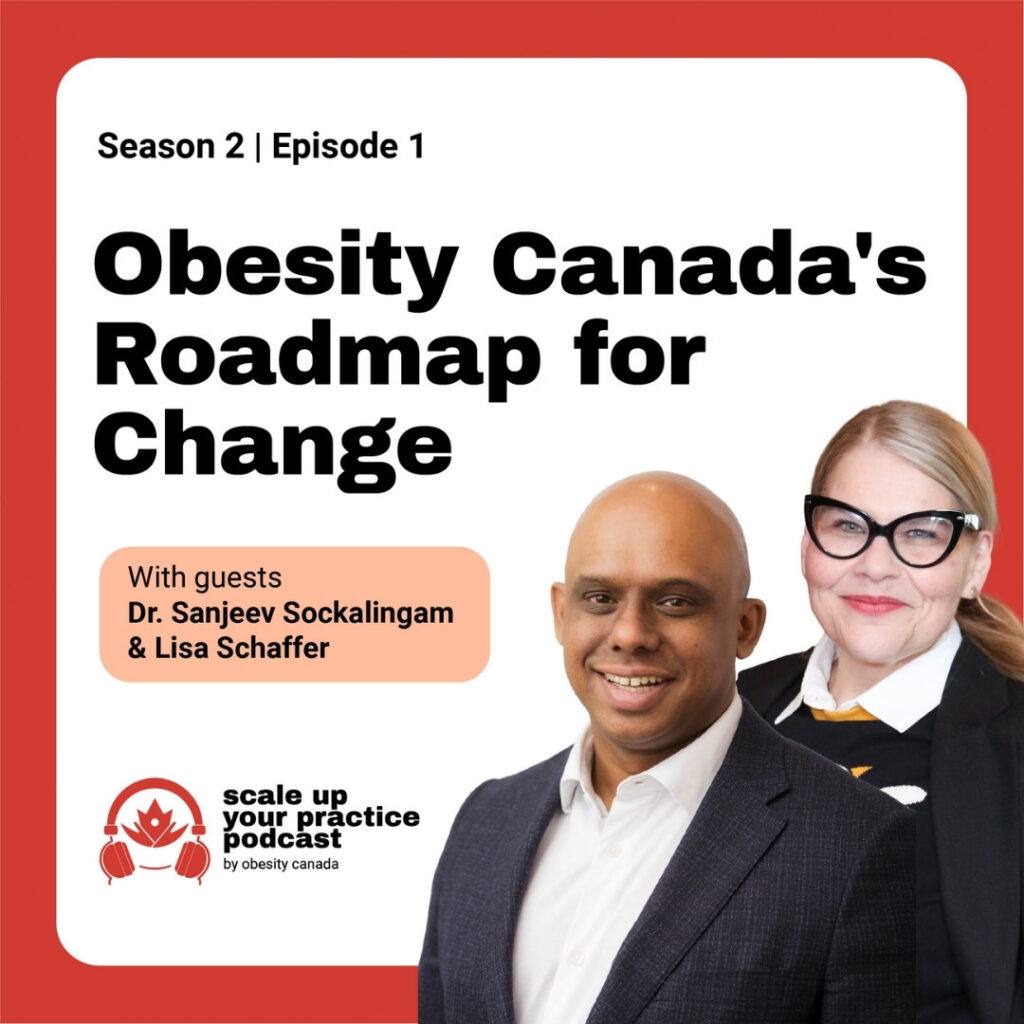


What does it take to move obesity care forward in Canada? In the season two opener of Scale Up Your Practice, Executive Director Lisa Schaffer and Scientific Director Dr. Sanjeev Sockalingam return to the podcast to unpack Obesity Canada’s 2026-2029 Strategic Plan. They explore what shifting systems, advancing care, and reshaping narratives can look like in practice, and how those changes can create more respectful, evidence-based experiences for people living with obesity.
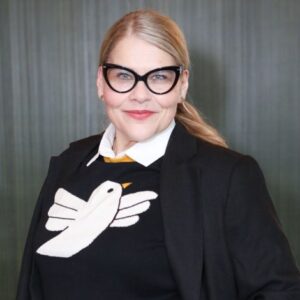
Lisa Schaffer is the Executive Director of Obesity Canada and a dedicated advocate for improving obesity care and reducing weight bias.
As a leader with lived experience, she works to amplify patient voices, drive policy change, and improve access to evidence-based care across Canada. Lisa is passionate about breaking down stigma and ensuring obesity is treated as a chronic disease with the same urgency and compassion as any other health condition.

Dr. Sanjeev Sockalingam is the Scientific Director of Obesity Canada and a psychiatrist, researcher, and educator specializing in the mental health aspects of obesity care. He is Senior Vice President, Education and Chief Medical Officer at the Centre for Addiction and Mental Health, and a Professor of Psychiatry at the University of Toronto.
Dr. Sockalingam’s work focuses on psychosocial outcomes in obesity treatment and advancing evidence-based mental health care within multidisciplinary obesity management.
If your organization wants to help us advance obesity care in Canada by shifting systems, advancing care, and reshaping narratives, we’d love to talk.
Email scaleuppod@obesitycanada.ca to inquire about sponsorship opportunities.
Support Scale Up Your Practice by:
This episode script was developed using NotebookLM to synthesize complex source materials into a structured educational format. The tool was used to analyze the Canadian Obesity Education Competencies (COECs), the Obesity Canada Strategic Plan, and guest-specific research. Specific prompts were utilized to extract relevant learning objectives, map them to CanMEDS roles, and generate competency-based interview questions.
While NotebookLM assisted in drafting the narrative arc and educational framework, all content has been reviewed, fact-checked, and refined by the podcast hosts and Obesity Canada’s clinical experts. This ensures the script aligns with current Clinical Practice Guidelines and authentically represents the lived experience perspective.
00:00:00
Lisa Schaffer
This is half the population today. How can we shift the systems so they match society and the science?
00:00:10
Dr. Roshan Abraham
Hello and welcome to the Scale Up Your Practice podcast, brought to you by Obesity Canada. I’m Dr. Roshan Abraham, Family Physician and Associate Professor at the University of Alberta.
00:00:21
Michelle McMillan
And I’m Michelle McMillan, a Lived Experience Advocate with Obesity Canada. We are back for our 2026 season. Welcome to season two, Roshan. It’s good to see you again.
00:00:36
Dr. Roshan Abraham
It’s good to see you again, too, Michelle. As many of our listeners know, the Canadian Adult Obesity Clinical Practice Guidelines changed the game back in 2020. But in 2025, Obesity Canada’s strategy changed. Launching a bold new plan to move beyond educating doctors and into changing the systems we work in that shape what care looks like day to day. If you missed the launch, don’t worry. Today we are breaking down exactly what that shift means for you and your patients right now.
Before we get started, today’s episode is supported by an unrestricted education grant from Eli Lilly Canada.
00:01:11
Michelle McMillan
Last year, Obesity Canada announced its 2026 to 2029 strategic plan with a new mission grounded in three drivers: 1) Shifting Systems, 2) Advancing Care and 3) Reshaping Narratives. In this episode, we want to slow down and unpack these themes because this season won’t just be a series of interviews, it’s a curriculum shaped by that plan.
00:01:39
Dr. Roshan Abraham
Joining us to revisit this strategy and help us translate it into practice are two of the architects of this plan. Lisa Schaffer, Executive Director of Obesity Canada and Dr. Sanjeev Sockalingam, Scientific Director. Welcome back to the show.
00:01:54
Lisa Schaffer
Thank you! So excited to be back.
00:01:57
Dr. Sanjeev Sockalingam
Glad to be back.
00:01:59
Michelle McMillan
And we’re thrilled to have both of you here. Before we get into the how, I think our listeners and me too would love to understand the Why.
Lisa, this is a big shift in Obesity Canada’s messaging, and also, I think it reflects a broader goal shift in how we see obesity care. So how has Obesity Canada’s mission evolved to better meet people’s needs, like me, and reflect the rapid and, let’s be honest, exciting developments in obesity care in the last few years?
00:02:40
Lisa Schaffer
Absolutely. And thank you for saying that and saying that you see it as a connector to you as a person. That means the world to me. But yeah, let’s step back and think about this for a second, because, you know, having a podcast episode talking about a refreshed strategic plan might not be/sound like the most exciting thing in the world, let’s be honest, everybody. But I think this is a really exciting moment as well. So thanks for teeing me up for that.
Historically, Obesity Canada set forth with a mission to improve the lives of people living with obesity. We’re not leaving that behind. It will always be our through line and our heartbeat and why we are here. But what we really saw as an organization and as what we saw, the opportunity really at hand, is we need to transform how Canada sees, supports, and understands people affected by obesity.
So we’ve moved into that as our new mission, and I love it because that is a mission that is an invitation. Anybody can help us with this transformation nd quite frankly, we need all of us to help us with this transformation. So that’s the first part. And you’re right, I think there is a really big global shift right now about how people are seeing and understanding obesity.
But really, it’s kind of conflated by what they’re seeing and hearing about one particular, pillar of treatment, if you will. So I think there’s a real opportunity to help shape that narrative. So within this, I think that’s a big part of our goal is to capture and harness the moment that we’re in, but also help reduce that noise, because as you guys have, if you remember from the first time I was on the podcast, not a fan of diet culture.
And that level of noise and confusion that tends to lead the way when people just think it’s about eat less, move more, or that it’s about changing a body shape when really there’s so much more to this. And again, the opportunity is bigger than the challenge in my opinion. The challenge ahead of us is big, but the opportunity is even bigger.
And Canada has a lot to be proud of. So I love that our mission is to transform how Canada sees, supports and understands people affected by obesity. And that doesn’t just include patients. That also includes health care providers like Doctor Sockalingam and Roshan, who are in practice today who are trying to practice great medicine. And our system is also not set up for you guys to thrive or be able to necessarily deliver what you need to.
So it’s an opportunity for all of us to step up and go, ‘”a lot has changed. Let’s make the systems match the science.” So that’s what I’m excited about, about that mission transformation.
00:05:01
Dr. Roshan Abraham
Thank you so much for that, Lisa. And matching the systems to the science is a great place to start. The first key strategic driver: Shifting Systems, is what we’d like to hear from you next.
So when the plan launched in 2025, it set out to change the bigger structures, like having obesity recognized as a chronic disease in provincial policy. For the clinician listening today who is stretched thin and buried in paperwork. And let’s be honest, that’s a lot of us. What does a system shift actually look like in their daily practice?
00:05:34
Lisa Schaffer
Yeah, and that’s huge. And this is where right at the beginning of our strategic plan and why we call these are Drivers is we need to understand the challenges at hand so we can help address them and name them. And that’s why I also see this as an opportunity and a big invitation for everybody to join us in this moment. Because, you know, we have it, and we need to achieve federal and multi provincial recognition of obesity as a disease, as kind of a baseline and a foundation. But also we know it’s not good enough to just say we recognize this disease. We need to see the implementation. We need to see those shifts in the system.
And I’m excited that we have people in our fold, like people who work at the Ottawa Heart Institute as a great example, but have really decided to take a look. They slowed down. They looked at the Clinical Practice Guidelines, and they said, what’s applicable here today? What transformations can we make in small pieces that are going to end up making a really big impact. And I think that’s what we mean about shifting systems today as well, is this is going to take people who are willing to think differently and are willing to be bold and innovative with us as well, and we need to meet the moment that we’re in. Telemed is real. Generics are coming. It isn’t what we’ve always seen. So we have to think differently. One of the quotes that I often use is my Dad always said,”A road was only as wide as a horse’s ass until somebody decided to think differently.” And I think this is our opportunity to invite people to think differently with us and reimagine what care in Canada can look like at that systemic level, and: How can we shift the systems so they match to society and the science?
00:07:05
Michelle McMillan
Wow. I mean, yeah, society, science, bringing it all together, you know, that that that’s the mover, right? That’s what’s going to move things forward, right?
00:07:15
Lisa Schaffer
And it’s going to take a lot of little pieces underneath that. We know we need to talk to our federal government, but we also need to talk to our provincial government. We need to talk to the people who are living this day to day.
We need to talk to the people who are trying to practice medicine every day as well. So for us, shifting systems is also about creating this community of care, which then kind of levels into some of the other pillars or Drivers that we have within our strategic plan too. But I’ll stop there. I could go on more about the Canada that I think we are able to build together, but I’ll, I’ll leave it at that for now. We’ll see where the conversation goes.
00:07:47
Michelle McMillan
Okay. So, Sanjeev if we talk about the second driver, it’s Advancing Care. This is all about empowering professionals to build knowledge and skill. And, I’m very excited about this, the podcast season is actually a direct application of that. We are mapping episodes to the Canadian Obesity Education Competencies. I’ll ask you, I already- I already love it and I think it’s important- but I’m going to ask you, why was it so important in the strategic plan to move from simply, “Let’s share the information”, instead to, “Let’s build a structured, education foundation.”
00:08:31
Dr. Sanjeev Sockalingam
Well, I think building on system building, I think we want to build a knowledge system building that translates into practice. Right? What is most important is that we transform the care that people living with obesity receive, right? And care starts from community to hospitals, primary care, but also in our society, more broadly. And so now with this, I would say, Advancing Care is really rooted in the fact that we know with any kind of chronic disease, with obesity probably having more stigma than many, that it takes 15 to 18 years for widespread application of guidelines and science into clinical care.
And we can we probably needed to talk about awareness, giving a language for obesity, you know, obesity management. But there’s only so much talking you can do before you get frustrated with the lack of improvement in the day to day lives, or clinical care, for individuals living with obesity. And so this was a real deliberate focus on advancing care and linking it to changes in practice and implementation of our guidelines into practice.
And, you know, there’s been probably a nexus of kind of three things that came together. So one is our guidelines across the continuum, like pediatric and adult guidelines that, have come forward to really, capture the new science, and evidence. It’s the competency framework. Michelle, you talked about that, really maps out learning from, people who are, in different health professions early on and maybe mapping out what they need to unlearn and relearn, in their training, both in, from junior years to those in advanced practice.
And then, is to get the knowledge, tools and training out to them just in time now, maybe not so much in our traditional sit in the classroom, and, and listen to us speak or come to our conference or weekend course and learn what you can. And hopefully you’ll take something away in learning to practice. And so, Scale Up Your Practice podcast is one of those, just in time, manageable, you’re listening in your car, reflecting on the discussion from two amazing hosts, who you tune in to, and really bring in both kind of the professional but lived experience voice in a very practical, tips based way that you can actually think about, “what’s a few things I’m going to do differently in my practice today?” And so that’s one point. And then to supplement that with knowledge tools, decision making tools, things that we can bring into practices so that people can again learn and integrate that knowledge into practice. So really it’s about doing about more than giving voice, voice, voice is important. But really mobilizing us into action.
00:11:39
Lisa Schaffer
If I can build off of that for one second as well. I love everything that you said there, and I think it resonates as well with something that Michelle said at the beginning, because, you know, as Michelle and I are both people with lived experience, that’s part of the lens that we come with.
Think of how different our journey might have looked if we were in rooms where similar language was being seen, or it was seen the same way from practitioner to practitioner, because again, we know this is a team sport. There are a lot of healthcare professionals that we are going to interact with on our journey of life, and through advancing care.
How awesome will that be to see in the future when you’re hearing that same lens and that same language being used room to room? And to me, that’s the Canada that we’re building when we’re talking about advancing that care and taking all of these different methodologies like you guys just described, and trying to get it into the hands of as many people as possible, because we know the reality is this is a real crunch on our system right now.
The system is feeling it. Primary care docs who didn’t think they would ever need to be obesity specialists or necessarily understand it at the depth that, oh my gosh, oh my god, TikTok is informing everybody and my patients are coming in and they feel like they know more than I do. And, how can we meet that moment in a really real way here in Canada and empower everybody to understand it correctly and or to give them the tools and resources they need to have the right conversations in those clinical settings?
00:13:01
Dr. Sanjeev Sockalingam
You know, social media and the way people get knowledge right now is vastly different than a decade ago. And so, it behooves us as an organization, Obesity Canada, to think about how we can support and be the network to provide those resources and help people in different health care settings who might be struggling to say, hey, I don’t know what to do, and people are coming for it, asking for, treatments, management and approaches.
So it’s a way for us to think about as we advance care, how we can support those compassionate providers who want to do well and provide care for patients, with the best knowledge and, and skills available. And so that’s part of that mission.
00:13:46
Dr. Roshan Abraham
I’m really excited to be a part of this. I’ve been a part of this now for the last few years, and just watching this grow has been simply amazing, and seeing the way that it can impact on the ground;
Primary care physicians, our students, our health care students, health care professionals, education students. No matter, no matter the profession that they come from. I think it’s really special. So, we’re glad that you’re still all here. Our listeners are all here to to be around for the ride because it is it’s amazing what’s happening. Lisa, that third driver, Reshaping Narratives, feels especially important for respectful, safe obesity care.
We’ve talked about stigma for years, but this plan frames it as a systemic issue, not just individual attitude. What narrative shifts do you hope to see in media and policy and how does a clinician contribute to reshaping narratives during a 15 minute time crunch? During one of those primary care visits that we’re all so familiar with?
00:14:52
Lisa Schaffer
Thank you for framing it that way, because that is a very, very real truth of this moment.
And yet the third driver, Reshaping Narratives, is one that is really important to me as well. And one that I think is, if you will, like almost the bigger outer layer of the onion, because it’s all about treating or addressing that bias and stigma that we know you have to talk about or consider anytime we’re talking about obesity and and talking about obesity treatments, because there’s just so much that people have already par-baked in their brains that we need to help them challenge.
So the narrative shifts that we really would love to see in media and policy is again, let’smatch the science. Let’s get louder about what we now know to be true more than ever. It blows my mind when I see these research papers that came out just even a few weeks ago about if you stop taking obesity medications, weight comes back.
Yep. If I stop my insulin, my A1C’s going to go squirrely. If I stop my, you know, my chemotherapy, I’m not doing the best for my cancer. There’s no there-there. What’s “there” that is there is talking about the bias and stigma and really reshaping what people understand about obesity. And are people living in bigger bodies.
Because let’s be honest, it is also about that. It’s, nobody wants to be a fat person. We know how poorly we treat people. And it’s the last slightly socially acceptable norm of a thing to still make fun of. And that’s what I want to see. And really, our policies when we’re talking about governance are our values on paper.
That is how I see policy and government is people, and this is what we also need to remember in this moment. So there’s a misalignment today in my mind between what I know, our Canadian values and how we’re showing up for people living with obesity today. So that’s the nut that I want to crack with this one with this third Driver for sure.
So those are the shifts that I want to see again. Let’s have that common language, better framing for what it means to for somebody be living with obesity. Let’s think about it. In the entire lifespan. We know that this is generational. We know this happens in the home. We need to be talking about it on a societal level.
And as our friends at the World Obesity Federation are saying, and you’ll hopefully see a lot around World Obesity Day, this is half the population today. Yeah, there are billions of reasons to care about this. And sincerely this this obesity impacts every single Canadian. It’s 1 in 3 statistically, which means there isn’t one of us that doesn’t know somebody who’s been harmed or hurt or impacted by our misunderstanding of obesity today.
Canada, again, as a nation building moment, we have so many thought leaders in this space. Our clinical practice guidelines are an amazing beacon for people. And that’s what I want us to be, is to really embrace what our fearless leader said in Davos and really invite people and say, we have this and we are willing to share it.
This is an open invitation for anybody who wants to help us move the dial and change things, and show people how this can be done with you’re willing to think differently, challenge old ways of thinking, and help all of us just be healthier and happier people who are willing to be able, or who and who are able to give back to our economy and are to our societies and our communities.
Because really, that’s what it is all about is about our communities. And really getting back to being a healthy Canada and being able to feel really good, like we have a relationship with our caregivers as well. I don’t think anybody goes into healthcare thinking they don’t want to help people, and that we really need to help that relationship flourish again, whether that is a 15 minute block or if we have a longer time with people.
But how can we make it feel more like we’re all on the same team, and we’re interested in getting everybody back to being happy and healthy? So to me, that’s a big part of that Reshaping the Narratives piece, because there’s a lot that people don’t understand about what it is to live with obesity or chronic disease, or quite frankly, just living in a bigger body.
So that’s where I think that opportunity comes, and that includes that 15 minute visit or whether I’m at a dinner party and I’m a physician and I want a course correction, but I might be hearing people say, or I think I shared it last time, my little rogue moment of the five minute grocery line up and the magazine cover says, I can get six pack abs in two weeks,
I’m going to flip that around so no one else in the line behind me has to see that noise either. So it’s about finding our personal power and really getting this larger collective push and this larger voice to get it right. We want to educate the media. I want them to use better B-roll. I want them to reflect what we know happy and healthy Canadians look like.
And that isn’t that we all look the same, or that we’re all in tiny bodies either. That’s so important. And I also think that segues a little bit. Sanjeev, if we look at all three drivers, so 1) Shifting Systems, 2) Advancing Care and 3) Reshaping Narratives, as Lisa said, you know, they really come together in one place. The patient experience, which is not just the patient.
Right? It’s the whole experience. It’s everyone that’s involved. You know, if we succeed in this plan now, when we succeed… I was about to say! …over the next three years, what does, you know, what does the new normal feel like for a person like me living with obesity, walking into a clinic in 2029?
00:20:14
Dr. Sanjeev Sockalingam
Well, I think that’s the dream that we all share here on this podcast.
It’s the fact that, someone walks into that clinic, that clinic is set up in a way that is inviting and respects the people in larger bodies. People are dignified in their response, and in invitation to individuals in those clinics that you meet a health care provider who is aware of obesity as a chronic disease, who knows that our brains are integrally, related to obesity care and weight management, but also health. And who thinks about personalizing their treatment discussions and assessment to an individual, an individual who’s had their own journey, and living with obesity and then developing a plan that is tailored to them and having full access to all evidence based interventions from psychological, behavioral to medications and, to surgical options, and then has the capacity to be able to, continue care because, again, obesity is a chronic disease.
It’s not a, magic bullet or, there’s one time visit that’s magically going to cure this condition. And so I think all that’s wrapped in compassion and building that empathy bridge, that safe space for an individual and to treating someone with dignity, which we haven’t done for decades. For people living with obesity. And so to me, that’s the dream.
And in doing so,you can see how if we have better systems that recognize obesity as a disease funded, better provide integrated care models that we equip and do our job to give the knowledge, science and practical tools. And do this all together, hand in hand with people living with obesity. So I can tell us when we go astray and bring us back on track, to, do this in partnership that we, we can definitely achieve this.
And we have so much hope now with all these treatments and focus, coming forward, now is the time for us to really come together to do this.
00:22:30
Michelle McMillan
What a great message: To come together to do this. Right. Fantastic message. Before we wrap up, I’m going to flip to Lisa because as we said, we need to bring people together. Yeah! And to do that, we need help with sponsors. So if I flip to you, can you…?
00:22:49
Lisa Schaffer
Fabulous! Yes for sure. I love all of this and this again all of this is about an invitation to help us transform Canada. So we’re going to extend that that an invitation to help us transform even in other ways. So before we wrap up, we do want to shout out and say, if your organization would like us to help, to help and advance obesity care in Canada, one way that you can do that is by helping us by sponsoring the podcast here.
If you’re interested in sponsoring an episode of Scale Up Your Practice, that is something that we would love to talk to you about. This season is all built around this new mission, and our Strategic Drivers as well as those, CanMED kind of roles. We really want to get the competencies, the skills, the knowledge, all of this together, and we want to do it like people, having healthy and normal conversations like you two have been doing for the last year.
I’m such a super fan of our podcast. I’m a little biased, I’m not going to lie. But this is our invitation. If you want to help transform by supporting the podcast and hosting an episode, or being part of an episode where we can bring a topic forward, we would love to talk to you. If that’s an interest, please email ScaleUpPod@ObesityCanada.ca.
And we’ll make sure that’s in the show notes as well. And let us know what you might be interested in. We’d love to partner with more people and bring more of these conversations forward.
00:24:02
Michelle McMillan
Well, this was the first of the second season. This was our big picture episode, but we’ll be coming back with these three themes throughout this season: 1) Shifting Systems, 2) Advancing Care, and 3) Reshaping Narratives.
00:24:18
Dr. Roshan Abraham
And specifically, we’re designing this podcast to be your tool for advancing care this season while we work together towards those bigger systems and shifts.
00:24:27
Michelle McMillan
We’ve put direct links to the full ‘2026 to 2029 Strategic Plan’ and ‘Canadian Obesity Education Competencies’ paper in our show notes. We really recommend reading both so you get the most out of this season.
00:24:44
Dr. Roshan Abraham
Just as a reminder, new episodes of Scale Up Your Practice drop every second Thursday, so make sure you are subscribed so you’re notified as soon as they’re available.
00:24:54
Michelle McMillan
If you found value in today’s strategic deep dive, please take a moment and rate and reviews on your favourite podcast platform. It helps more clinicians find this podcast.
00:25:07
Dr. Roshan Abraham
And until next time, stay curious, stay kind, and keep Scaling Up Your Practice.
Be the first to know about new education and resources for healthcare professionals from Obesity Canada.
Applications are open for clinicians, researchers and other experts from across Canada to join the author group for the Canadian Adult Obesity Clinical Practice Guideline.