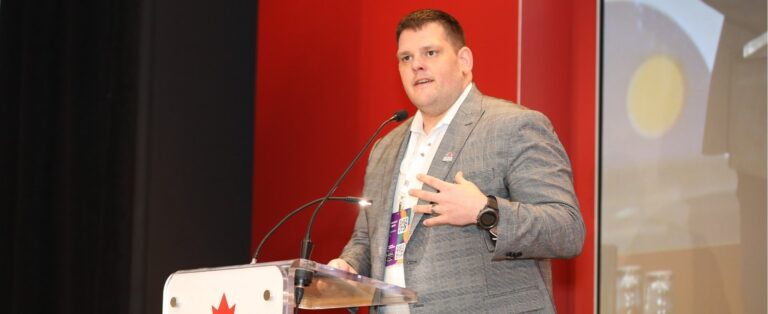
By Lisa Schaffer, Executive Director
Some years offer clear signs that change is possible.
2025 was one of those years.
Across Canada, we saw growing recognition that obesity is not a personal failing but a complex, chronic disease that deserves evidence-based care, thoughtful policy, and public understanding. While significant gaps remain, this year brought meaningful progress in how obesity is discussed, understood, and addressed.
We know obesity is a chronic disease. We know it is shaped by biology, environment, and the systems people live in, not by a lack of character or willpower. We know weight bias harms health and keeps people from getting the care they deserve. None of that is new. What felt different in 2025 was how much less room there was to dismiss those truths.
That shift showed up in policy. It showed up in care. It showed up in the public conversation. And for Obesity Canada, it sharpened the role we are here to play: changing how Canada sees, supports, and understands people affected by obesity.
Obesity policy in Canada started to shift
One of the clearest moments came on World Obesity Day, March 4, 2025, when Alberta became the first province to formally recognize obesity as a chronic disease. Obesity Canada played an important role in advancing that recognition through years of evidence-based advocacy, stakeholder engagement, and public education.
That recognition did something important. It moved obesity further away from the old story of personal responsibility and closer to where it belongs: health policy, access to care, and public accountability.
Evidence also carried more weight in the conversation this year.
Our Cost of Inaction work gained peer-reviewed publication in BMC Public Health, adding scientific weight to a message that should concern anyone shaping health policy in this country: the cost of inaction in treating obesity in Canada reached $27.6 billion in 2023, including $5.9 billion in direct healthcare costs and $21.7 billion in indirect costs.
We also finalized The State of Obesity Care in Canada, which made another uncomfortable truth harder to look away from. Obesity care in Canada remains inconsistent, difficult to measure, and too often invisible.
That is the kind of evidence that changes the conversation. It gives policymakers, healthcare leaders, and advocates fewer places to hide when the conversation turns to what is missing.
More healthcare professionals were equipped to deliver better obesity care
One of the realities people living with obesity still face is being treated by systems where many healthcare professionals were never properly taught the science and complexity of obesity in the first place. If care is going to improve, that gap has to close.
In 2025, we launched five new education courses for healthcare professionals. We ended the year with 251 Certified Bariatric Educators in Canada. We also supported 137 Calibre graduates whose collective care reaches an estimated 136,699 patients.
Behind each of those numbers is a healthcare professional better equipped to provide compassionate, evidence-informed obesity care. Together, these clinicians have the potential to influence the health experiences of hundreds of thousands of Canadians living with obesity.
Lasting system change happens one interaction at a time. By investing in education, we are helping ensure that more people encounter understanding, evidence-based support, and respectful care when they seek help.
We also saw strong uptake in newer formats. Our Basics & Bias video series surpassed 1 million views, helping more healthcare professionals understand obesity as a chronic disease and better recognize how weight bias shows up in care. Scale Up Your Practice, our new podcast for healthcare professionals, reached more than 9,000 streams and downloads in its first season.
And in pediatric care, a long overdue piece of guidance finally arrived. The Canadian Pediatric Obesity Clinical Practice Guideline was published in CMAJ, became the second most-read article in the journal that year and reached 23,400 downloads. We followed it with a free online course so the guidance could move into practice, not just sit on a page.
Obesity Canada became stronger for the work ahead
Some of the year’s progress was public-facing. Some of it was structural.
We strengthened leadership and capacity, built a clearer research pathway, refreshed our brand, relaunched our website, and created a more consistent public platform for learning, engagement, and giving.
These investments may be less visible than policy announcements or program launches, but they are essential to our long-term impact. A stronger Obesity Canada is better positioned to steward evidence, support healthcare professionals, influence policy, and amplify the voices of people living with obesity.
What I’m taking from 2025
Two things stay with me from 2025.
First, progress is possible. We saw meaningful movement in policy, education, research, and public awareness that would have seemed unlikely only a few years ago.
Second, progress is not inevitable. Advancing obesity care requires sustained effort, collaboration, and a willingness to challenge outdated assumptions wherever they persist.
That is why Obesity Canada’s work has to keep moving on all three fronts of our strategic plan: shifting systems, advancing care, and reshaping narratives. Real change happens when all three move together.
2025 did not close the gap between science and society. But it did start to narrow in ways that felt real.
Read the full 2025 annual report
What I’ve shared here is only part of the story. The full annual report goes deeper into what changed across policy, care, research, and public understanding, and where that momentum needs to go next.
None of this work happens in isolation. I want to thank our healthcare professional community, researchers, volunteers, partners, funders, Board of Directors, staff team, and the many people living with obesity who continue to share their experiences and advocate for change. Your commitment strengthens this movement and helps make progress possible.