Scale Up Your Practice podcast

Episode Catalog

Scale up your practice podcast logo

Never miss an episode

Subscribe on your favourite podcast platform and to get the latest insights shaping the future of obesity care.

Metabolic dysfunction–associated steatotic liver disease (MASLD) affects an estimated 38% of adults in North America — yet many patients have never heard the term before receiving a diagnosis. Confusion, stigma, outdated language, and misconceptions often contribute to delayed recognition and missed opportunities for early intervention.
Polycystic ovary syndrome (PCOS) is one of the most common—and most misunderstood—conditions in women’s health. It affects an estimated 6–13% of women globally, yet up to 70% remain undiagnosed. PCOS isn’t just a reproductive issue. At its core is metabolic dysfunction: insulin resistance, adipose tissue inflammation, and hormonal disruption—all of which intersect closely with obesity. These biological drivers influence ovulation, fertility, mental health, metabolic health, and long-term risks like diabetes, cardiovascular disease, sleep apnea, and MASLD.  In this episode of Scale Up Your Practice, we’re joined by Dr. Emilia Huvinen, Finnish gynaecologist, researcher, and associate professor at the University of Helsinki, whose work focuses on the intersection of obesity and women’s health.
Multidisciplinary care can transform obesity management for patients — but what does it actually look like in practice? We sit down with Dr. Rishi Handa, internal medicine specialist, and pharmacist Khalid Bhatti, co-founders of Durham Care Clinic + Pharmacy in Oshawa, Ontario, a collaborative care model bringing physicians, pharmacists, and allied health professionals together to support patients living with obesity and related chronic diseases.
Dr. Harman Chaudhry discusses new Canadian Orthopaedic Association recommendations on knee and hip replacements, tackling BMI cut-offs, bias, & equitable access to surgery.
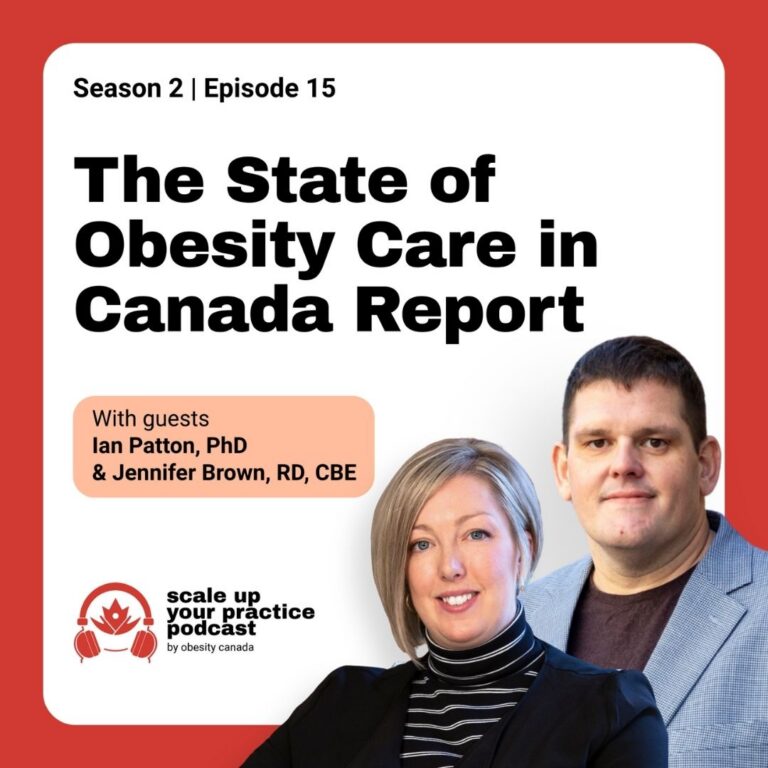
Access to obesity treatment in Canada can feel like a maze—for both patients and healthcare professionals. In this episode of Scale Up Your Practice, we sit down with Dr. Ian Patton, Obesity Canada’s Director of Advocacy and Public Engagement, to explore what fair and timely access to care really looks like. 
Behaviour change in obesity and chronic disease care is complex, relational, and happens far beyond the clinic visit—so our conversations with patients need to reflect that reality. We sit down with health psychologists Dr. Michael Vallis and Dr. Tiffany Shepherd to rethink how we teach behavioural change counselling skills.
In this episode of Scale Up Your Practice, we sit down with Dr. Stasia Hadjiyannakis, pediatric endocrinologist, clinician, researcher, and advocate, to explore what compassionate, evidence-based support for children, youth, and their families can look like.
Nutrition in obesity management is complex, deeply personal, and shaped by biology, culture, mental health, access, and lived experience. In this episode, we sit down with Dr. Flavio Vieira, Postdoctoral Fellow at the University of Alberta, to explore what personalized, evidence-informed nutrition can really look like in practice.
Discover what’s new in Obesity Canada’s 2025 pharmacotherapy for obesity management guideline update with lead author, Dr. Sue Pedersen.
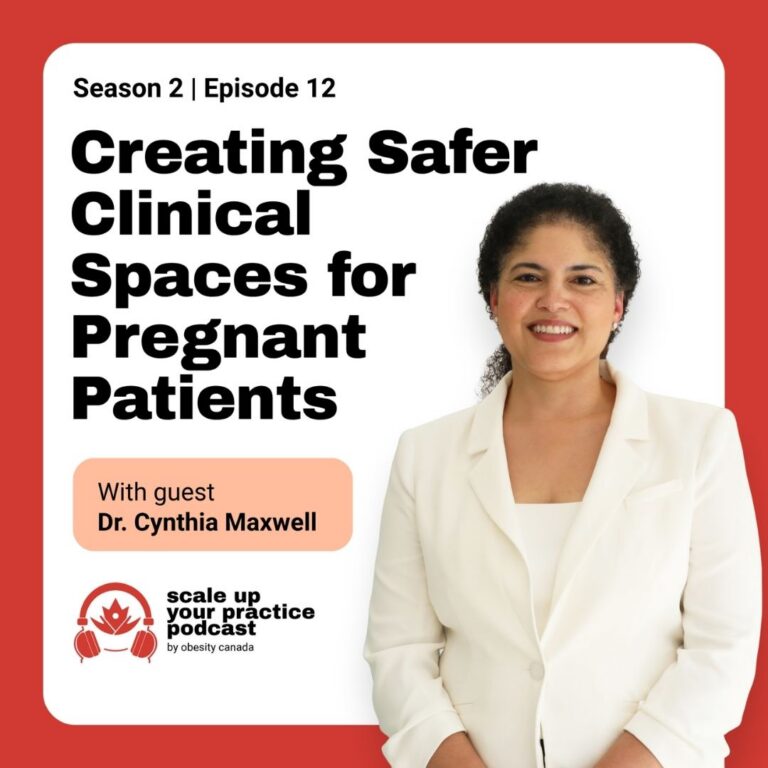
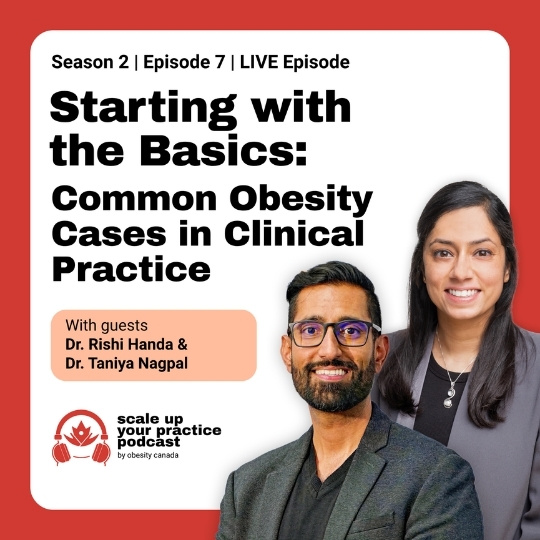
What happens when assumptions shape pregnancy care? Dr. Taniya Nagpal joins us to unpack how weight bias affects pregnant people living with obesity—and what clinicians can do to help create safer, more respectful care.
Psychiatrist and sleep medicine specialist Dr. Michael Mak returns to explore how sleep health fits into the patient journey of obesity care. For many people living with obesity, sleep challenges are part of the story—but they’re often left out of the care conversation. In this episode, we take a practical look at how poor sleep contributes to obesity, how obesity impacts sleep, and what clinicians can do to better support patients at every step.
Psychiatrist and sleep medicine specialist Dr. Michael Mak joins us to explore one of the most overlooked intersections: sleep, mental health, and metabolic health.
National obesity researcher Dr. Angela Alberga returns for a deep dive into one of the most pervasive and harmful forces in society: weight bias and stigma. From subtle stereotypes to systemic barriers, weight bias shows up in ways we often don’t even see—especially in schools, sports, and healthcare.
Dr. Angela Alberga joins us to explore weight bias, its impact on kids, and how clinicians can lead with equity and empathy.
Dive into the kind of discomfort that sparks real change—in ourselves, in our conversations, and in how we support people living with obesity. Registered Dietitian and Certified Bariatric Educator Jennifer Brown shares how her experiences—both personal and professional—have shaped the way she supports people living with obesity.
Dr. Sue Pedersen shares her journey, key lessons from 20+ years in obesity care, and why early, stigma-free, long-term treatment is crucial for better outcomes.
In this episode, we dive into Canada’s new pediatric obesity clinical practice guideline with authors Dr. Geoff Ball and Dr. Catherine Birken. Learn what’s changed, why it matters, and how a more compassionate, evidence-based approach is reshaping care for children and families.
Dr. Michael Vallis returns to unpack why weight isn’t a behaviour, how to prevent learned helplessness, & why patient-defined success is essential.
Dr. Michael Vallis shares insights on relational care, behaviour change, and what it really takes to support people living with obesity.
Dr. Sean Wharton unpacks why obesity is a chronic disease, how Canada’s Adult CPGs were developed, and why it's time to move beyond BMI in clinical care.
Dr. Sean Wharton shares his journey into obesity medicine, tackling bias, stigma, & why kindness is the key to compassionate, effective care.
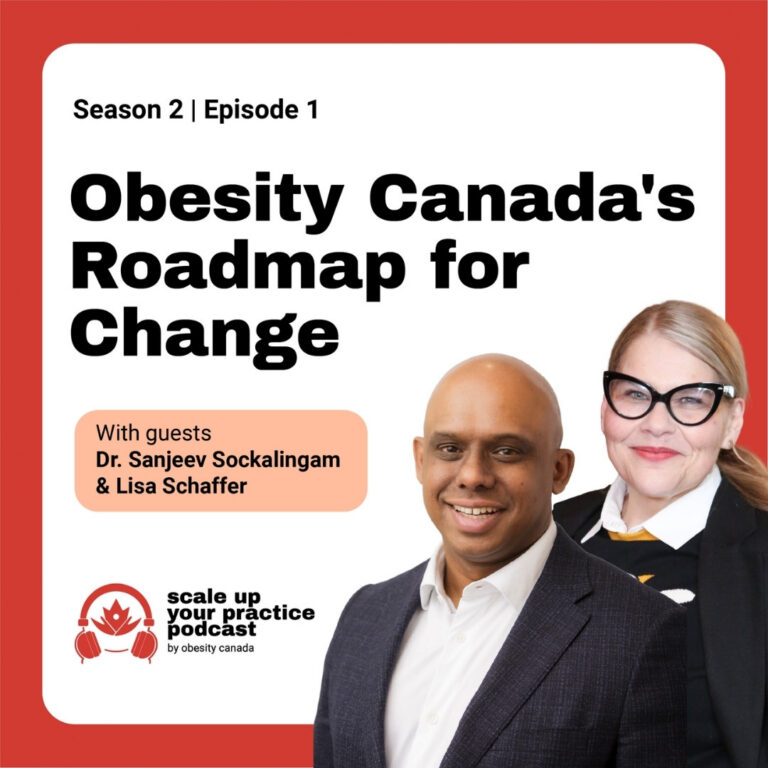
Explore Obesity Canada’s vision with Lisa Schaffer, and learn how bias, stigma, and system gaps shape obesity care—and how we can do better.
Meet your hosts & explore why obesity is a chronic disease—not a choice. Hear real stories, challenge bias, & rethink obesity care.

Tools for better care, delivered to your inbox.

Be the first to know about new education and resources for healthcare professionals from Obesity Canada.

Make an impact this Giving Tuesday

Support the priorities at the heart of our 2026–2029 plan: Shifting systems, advancing care, and reshaping narratives.